
Attic Insulation Removal & Replacement Near Me
Starting price: Call for pricing
Attic insulation that is soaked from roof leaks, compressed with age, or contaminated by rodent activity cannot do its job anymore. Pest Control Services Usa removes the old material completely, sanitizes the attic surfaces, and installs fresh insulation to the proper depth. You get a clean, efficient attic without the problems of the old one.
What attic insulation removal and replacement is
Attic insulation removal and replacement is a two-part service that starts with a completely clean slate. First, every bit of the old insulation comes out of the attic. Then fresh material goes in at the correct depth for your climate zone.
It is different from a simple top-up, where new material is blown over the old. A top-up traps whatever is wrong underneath, from moisture to contamination. Removal addresses the root condition instead of covering it.
Most attics contain loose-fill fiberglass, blown cellulose, or fiberglass batts. Each type breaks down differently over time. Pest Control Services Usa removes all of them with contained equipment that keeps dust and debris out of your living space.
The replacement material can match what you had or upgrade to a higher-performing option. Blown-in fiberglass and cellulose are the most common choices for existing homes. Your technician will explain the trade-offs of each during the attic assessment.
Removal is not the same as a roof repair or a framing restoration. If the inspection finds active leaks, damaged decking, or compromised wood, we point those out so you can address them with the right trade. Our scope covers the insulation system and the attic envelope around it.
When your attic insulation needs to come out
Rodent contamination is the most frequent reason homeowners call us for removal. Mice and rats nest in loose insulation, and their droppings and urine soak into the material. No amount of topping up makes that sanitary again.
Water damage is another major reason. A roof leak, failed flashing, or condensation can saturate insulation and destroy its thermal performance. Wet material also invites mold growth on the surrounding wood.
Age alone can justify removal. Insulation that has compressed flat over decades has lost much of its resistance to heat flow. Dust, settled material, and pest debris can reduce an old attic to a fraction of its original effectiveness.
Strong odors are a clear signal as well. If you notice a stale or ammonia-like smell drifting from the ceiling, the insulation may be holding contamination. A visual inspection tells us quickly whether removal is warranted.
Past trade work is an overlooked cause. Electricians, plumbers, and HVAC technicians often push insulation aside to reach what they need and never put it back. Years of that leave bare patches and thin zones that no top-up can properly fix.
- Insulation that is flattened, matted, or uneven across the attic floor
- Visible droppings, nesting material, or chewed areas in the insulation
- Water staining on the ceiling below or on the attic decking
- Upstairs rooms that stay hot in summer and cold in winter
- Odor complaints that seem to trace back to the attic space
How the process works
The visit begins with a full attic inspection and photo documentation of current conditions. We measure depth, check for moisture, and note any pest activity or entry points. You see exactly what we see before any work starts.
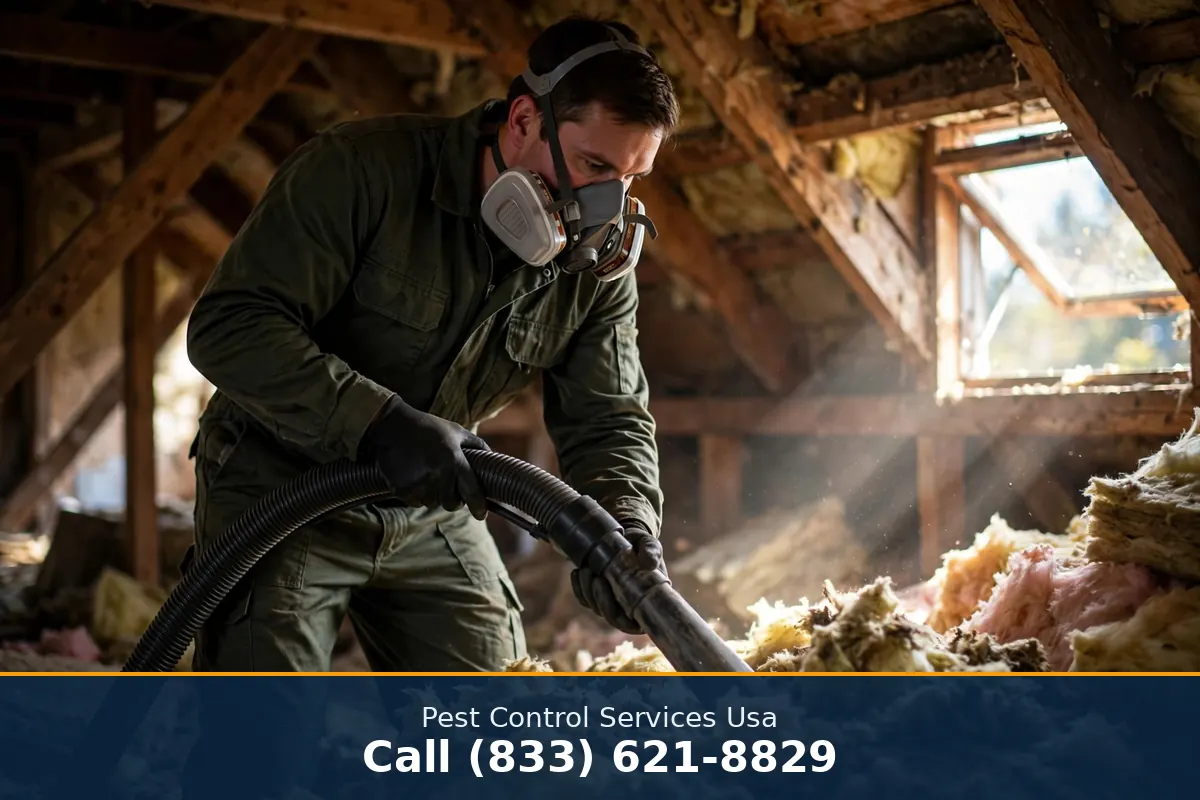
Next, the removal phase uses high-capacity vacuum equipment connected through a sealed hose run. The old material is extracted into contained bags staged outside the home. Nothing loose travels through your hallways or living areas.
With the rafters exposed, we sanitize the attic surfaces and address what the inspection revealed. This is when air leaks get sealed, entry points get closed, and damaged baffles get replaced. The open attic is the right moment for all of it.
Then the new insulation goes in, blown to the target depth for even coverage. We verify depth in multiple spots and rake the material level where needed. Before leaving, we photograph the finished attic so you have a record of the result.
The final walkthrough happens with you, not after you. We go through the photos together, show the depth readings, and explain what was sealed. You should never have to wonder what happened above your ceiling.
What affects the cost
Attic size is the biggest factor, since more square footage means more material to remove and replace. Access also matters. A tight scuttle hatch or steep roofline changes the labor picture compared with a roomy pull-down stair.
The condition of the existing insulation affects the work as well. Heavily contaminated or waterlogged material takes longer to extract safely than dry loose-fill that vacuums up cleanly. Sanitizing needs vary from attic to attic too.
The replacement material you choose plays a role. Different products carry different installed characteristics, and target depth depends on your region's climate zone. Air sealing and exclusion add-ons, when needed, are quoted as separate line items.
We provide a written, itemized quote after the inspection so you know exactly what each part involves. Nothing is bundled into vague totals. You approve the scope before any work begins.
Timing can matter for comfort. Many homeowners schedule assessments in the milder months so the work is done before the hardest heating or cooling season arrives. That said, contaminated insulation should not wait, because the problem only compounds.
How Pest Control Services Usa serves your area
Pest Control Services Usa provides attic insulation removal and replacement for single-family homes, duplexes, and light commercial buildings with accessible attics. Our own crews handle everything from the inspection through the final depth check.
Because insulation work so often follows pest activity, we pair removal with exclusion as a standard option. Sealing the entry points first means the new insulation stays clean. Many of our attic customers found us through pest concerns.
Scheduling is straightforward. Call (833) 621-8829 to describe what you are seeing, and we will set up an attic assessment at a time that works for you. Most assessments take under an hour, and the report arrives with photos.
Whether your attic needs a full removal or just an honest opinion that a top-up will do, we will tell you plainly. Our job is to fix what is actually wrong. That straightforward approach is why customers across our service area call us back for their next project.
Property managers and landlords use this service too. Turnover between tenants is the ideal moment to assess an attic, since the unit is empty and access is simple. We provide the photo documentation that makes the decision easy to explain to an owner.
Features
- Complete extraction of all old insulation using contained vacuum systems
- Full attic sanitizing treatment that targets odors and biological residue
- Sealing of air leaks and bypasses found during the open-rafters inspection
- Entry-point exclusion work to stop rodents from re-entering the attic
- Fresh blown-in fiberglass or cellulose installed to target R-value depth
- Baffle installation to keep soffit vents open and airflow correct
- Post-job depth verification and photo documentation of the finished attic
Benefits
- Lower heating and cooling bills from properly performing insulation
- Elimination of musty and urine-like odors drifting from the attic
- Cleaner indoor air with the contaminated material gone for good
- A sealed envelope that blocks future pest entry through the attic
- Even room temperatures upstairs instead of hot and cold zones
- Protection for stored belongings from moisture and pest contamination
- Documentation that supports home resale conversations with buyers
Frequently asked questions
How do I know if my insulation needs removal instead of a top-up?
Removal is the right call when insulation is contaminated by rodents, soaked by water, or compressed flat with age. If the material is clean and simply thin, a top-up usually does the job. Our inspection tells you which situation you have.
Will the removal process make a mess inside my home?
No. We run a sealed vacuum hose from the attic to contained collection bags outside, so old insulation never travels through your living space. We lay drop cloths at the access point and clean up before leaving.
Do you sanitize the attic after the old insulation is out?
Yes. Once the rafters are exposed, we treat the surfaces to address odors and biological residue from pest activity. Sanitizing is a standard part of the removal phase, not an add-on you have to request.
Should entry points be sealed before new insulation goes in?
Absolutely. Installing fresh insulation over open entry points invites a repeat infestation. We seal gaps and penetrations while the attic is open, so the new material stays clean.
What type of replacement insulation do you install?
We most commonly install blown-in fiberglass or blown cellulose, chosen for your climate zone and attic conditions. Your technician will walk through the differences and recommend the fit for your home.
How long does a typical removal and replacement take?
Most single-family attics are completed in one to two working days, depending on size, access, and the condition of the old material. The inspection visit happens first, and the work is scheduled after you approve the written quote.
Will new insulation really lower my energy bills?
Properly installed insulation at the right depth reduces heat transfer through the ceiling, which is one of the largest sources of energy loss in a home. Results vary by house, but customers typically notice more even temperatures upstairs right away.