Bat Exclusion Near Me
Starting price: Call for pricing
Bats slip through gaps as small as a quarter inch and can form roosting colonies in attics, soffits, and wall voids. Pest Control Services Usa performs humane bat exclusion with one-way exits that let bats leave but never return. Every job ends with entry-point sealing and cleanup guidance, so the colony stays out for good.
What Bat Exclusion Is — and Is Not
Bat exclusion is the process of letting bats out of a building while making sure they cannot get back in. Bats are protected wildlife in many states, and lethal methods or chemical treatments are not appropriate for them. One-way devices are placed over each entry point so bats can fly out at dusk to feed and can never find their way back inside. Once every bat is confirmed out, all gaps are sealed with durable materials that stand up to weather and time.
This work is different from ordinary pest control. Bats are mammals, not insects or rodents, and standard trapping programs are rarely the answer for them. A sound exclusion plan protects both your property and the bats themselves. It also avoids the worst possible outcome: sealing animals inside the structure.
Signs Bats Are Living in Your Home
- Scratching, fluttering, or chattering sounds in the attic or walls after dark
- Small dark droppings piled below soffits, gable vents, or along exterior walls
- A sharp, musky odor in the attic during the warm months
- Oily rub marks around tiny gaps near the roofline where fur brushes the surface
- Bats seen streaming out of the roof at dusk or returning just before dawn
Most homeowners notice the sounds first. Scratching that starts right after sunset and repeats nightly is a classic sign of a roosting colony. Droppings below the eaves confirm it.
How the Exclusion Process Works
The job starts with a careful inspection of the roofline and attic. Pest Control Services Usa looks for active entry points and for gaps bats could use in the future. Because bats can slip through openings as small as a quarter inch, the inspection has to be thorough and unhurried. Everything found during the inspection shapes the exclusion plan that follows.
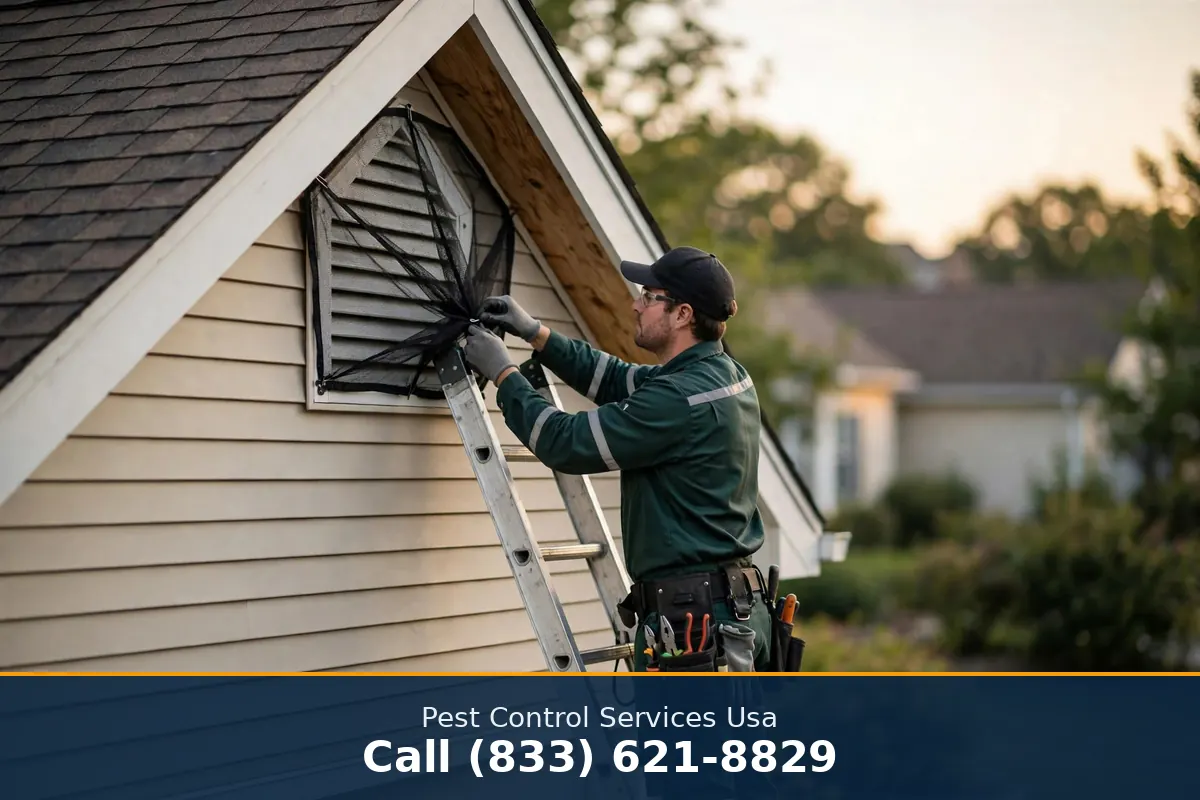
One-way devices are fitted over the active entries. These let bats exit at night to feed and stop them from getting back inside. The devices stay in place long enough for every bat in the colony to leave on its own schedule. This part of the process cannot be rushed. Sealing too early would trap bats inside the structure.
Once the exits have done their job, every gap is closed with long-lasting materials. Ridge vents receive screening, soffit gaps are sealed, and damaged flashing is repaired. A follow-up visit confirms that no bats remain inside and that every seal is holding firm against weather and curious wildlife.
Timing and Legal Windows for Bat Work
Timing matters more with bats than with almost any other kind of wildlife. During maternity season, female bats gather in colonies and their pups cannot yet fly. Excluding bats at this time would trap flightless young inside the building. Responsible operators avoid this window entirely so no animals are sealed in.
In colder months, some bats enter a torpid state and may not leave the roost for weeks at a time. Exclusion works best when bats are active and moving in and out each night. Scheduling around their natural cycles keeps the work effective and within legal guidelines.
If a bat gets into your living space, the response is different. A bat flying through a bedroom or living room calls for prompt attention rather than a scheduled exclusion. Call (833) 621-8829 and keep people and pets away from the animal until help arrives.
What Happens After the Bats Are Gone
Exclusion is the core of the job, but the attic often needs attention afterward. Colonies that have roosted for seasons leave guano, urine staining, and compressed insulation behind. Pest Control Services Usa inspects the attic after the bats are out and tells you honestly what the cleanup involves.
Light accumulation can often be left alone once the bats are gone. Heavy buildup should be removed with proper protective equipment. Soiled insulation may need replacement to restore its full value. You will get clear guidance on what is necessary and what can wait.
Why DIY Bat Work Usually Fails
Sealing gaps without knowing the colony's exits is the most common do-it-yourself mistake. Hardware-store caulk and foam look like a fix, but bats chew through foam and find the gaps you missed. Worse, sealing the wrong gaps first traps bats inside, which turns a wildlife problem into a dead-animal problem. One-way devices also need to stay up long enough for every bat to leave, and pulling them early undoes the whole effort. Professional exclusion solves the problem in one pass instead of creating a bigger one.
What Affects the Cost of Bat Exclusion
No two bat jobs are priced the same because no two rooflines are the same. The size of the home and the number of entry points are the biggest factors in any quote. A single small gap is a different project from a colony using a dozen entries across a large roof.
Access and height play a real role as well. Steep roofs, tall gables, and hard-to-reach dormers take more labor and more equipment to work on safely. The condition of the structure matters too. Rotting soffits or damaged fascia may need repair before sealing can hold properly.
The colony itself shapes the plan and the price. A small group that just moved in is simpler to exclude than one that has roosted there for several seasons. Call (833) 621-8829 for a quote based on what our inspection finds at your home.
How Pest Control Services Usa Serves Your Area
Pest Control Services Usa helps homeowners and businesses across the country resolve bat problems the right way. Our teams understand the bat species common to each region and the timing windows that apply there. They also know the building styles and roofline details that give bats their way in.
From suburban neighborhoods to rural properties, the approach stays the same. Find every entry, exclude humanely, seal durably, and verify the result. You get a clear explanation of what was found and what was done at your property. Call (833) 621-8829 to schedule an inspection and get bats out of your home for good.
Features
- Full-structure inspection that maps every active and potential entry point
- One-way exit devices that let bats leave at night but block re-entry
- Exclusion scheduled within legal activity windows, never during maternity season
- Humane methods only, with no lethal removal and no chemical treatments
- Sealing of ridge vents, soffits, fascia boards, and gable ends
- Attic check for guano buildup, staining, and insulation damage
- Follow-up visit to confirm every bat is out and seals are holding
Benefits
- Bats leave your home humanely and lawfully, with no animals sealed inside
- Sealed entries also block future access by other wildlife and pests
- Ends nighttime scratching, fluttering, and musky attic odors
- Reduces guano-related damage to insulation and wood framing
- Lowers the chance of accidental bat-to-human contact in living spaces
- One coordinated plan covers inspection, exclusion, sealing, and verification
- Clear cleanup guidance helps you handle droppings safely
Frequently asked questions
Why can't bats be removed during maternity season?
Newborn bats cannot fly, so exclusion during maternity season would trap them inside. Operators wait until the pups can fly out on their own.
Will the bats leave on their own if I wait?
Established colonies rarely leave on their own. They return to the same roosts year after year.
How do you know every bat is out before sealing?
One-way devices stay up through several full nights so every bat can exit. A follow-up check confirms no activity remains before final sealing.
Is bat guano dangerous?
Accumulated droppings can harbor a fungus linked to a lung infection called histoplasmosis. Large buildup should be handled with protective equipment.
How small a gap can a bat squeeze through?
Most common species can pass through an opening as small as a quarter inch. That is why a proper inspection covers the entire roofline, not just the obvious holes.
What should I do if a bat is inside my house?
Close the room off, keep people and pets away, and call (833) 621-8829. Do not try to catch it yourself.