Bed Bug Chemical Treatment Near Me
Starting price: Call for pricing
Bed bug chemical treatment uses targeted residual products applied to the cracks, seams, and voids where bed bugs hide and travel. Pest Control Services Usa technicians apply them precisely, then return for follow-up visits timed to break the egg-hatch cycle. It is a practical option where heat is impractical or budgets are tighter.
What bed bug chemical treatment is
Bed bug chemical treatment is the precise application of residual insecticide products to the places bed bugs hide and travel. A technician treats mattress seams and tufts, box spring edges, bed frame joints, baseboards, and the cracks around headboards and nightstands. The products keep working after application, so bed bugs that cross treated surfaces pick up a lethal dose days later. Modern programs pair these residuals with non-chemical steps like vacuuming, laundering, and mattress encasements.
No product kills bed bug eggs reliably, and that fact shapes the entire protocol. Eggs hatch roughly a week after laying, so a single visit can never finish the job. Follow-up visits are timed to catch newly hatched nymphs before they mature and lay the next generation. This is why reputable companies sell chemical treatment as a program of visits, not a one-time spray.
Product rotation matters because some bed bug populations resist older chemistries. Professionals choose current, effective products and may combine classes with different modes of action. Desiccant dusts, which kill by drying the insect out, are sometimes added in wall voids where liquids cannot go. The strategy is layered: several tools, each doing what it does best.
Integrated steps make the chemistry work harder. Vacuuming with a crevice tool physically removes bugs and eggs before products go down. Laundering bedding and clothing on high heat kills stragglers the vacuum missed. Mattress encasements trap any survivors inside, where they eventually die without feeding. Decluttering removes the harborages that shelter bed bugs from treated surfaces. None of these replace the products, but each one raises the odds.
When chemical treatment makes sense
Chemical treatment is the workhorse of bed bug control, and it fits many real-world situations. It is often the right call when:
- The budget does not stretch to a full heat treatment
- Rooms are heavily furnished or cluttered, blocking even airflow
- The home contains items that heat would damage
- Only one or two rooms show activity and the job is contained
- A landlord needs a cost-effective protocol across multiple units
- Occupants cannot vacate the home for an entire treatment day
- You prefer a quiet, low-disruption approach spread over weeks
It is less suited to severe, whole-house infestations where a single decisive visit would serve better. It also demands cooperation: missed preparation or skipped follow-ups weaken the program. We assess all of this during the inspection and recommend the method that fits, not the one that bills highest.
Rental situations deserve a special note. When one apartment has bed bugs, adjoining units often do too, because the insects travel through wall voids and along pipes. Treating a single unit while neighbors go unchecked invites reinfestation. We recommend inspecting adjacent units and coordinating treatment, and we document everything for the property manager.
How the treatment process works
The first visit begins with preparation guidance, and your effort here directly affects results. Beds get stripped and linens laundered on high heat. Clutter around sleeping areas is reduced so the technician can reach every harborage. Furniture stays in place; moving infested pieces through the house spreads bed bugs to clean rooms.
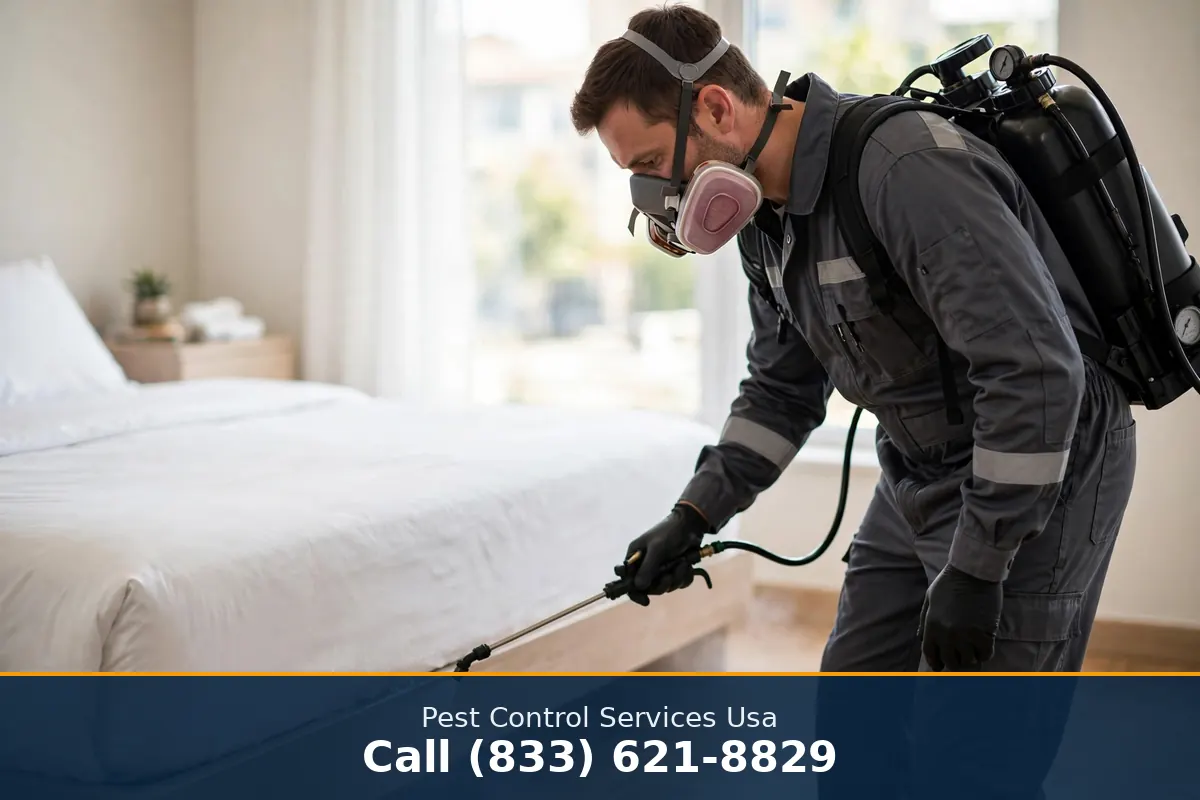
Our technician then treats methodically, room by room. Residual products go into cracks and crevices rather than broadcast across open surfaces. Mattress seams receive careful attention, as do box spring edges, bed frame joints, and baseboard gaps. Wall voids and outlet boxes may get desiccant dust where appropriate. Every application follows the product label exactly, which is both the law and the reason the treatment works.
Follow-up visits come at intervals matched to the bed bug life cycle, usually two to three weeks apart. At each visit we check interceptor traps and harborage points for remaining activity. Products are reapplied where needed and the plan adjusts to what we find. Most programs run two to three visits, with an extra visit if activity persists.
Between visits, your job is simple: sleep in the bed. It sounds odd, but bed bugs are drawn to a sleeping host, which pulls them across treated surfaces. Avoid moving to the couch, since that only teaches them a new feeding location. Keep up the laundering routine and leave the traps in place. Cooperation turns a good protocol into a finished job.
What affects the cost
Chemical program pricing reflects the number of visits and the size of the treated area. A contained single-room program with two visits costs less than a multi-room program needing three or four. The infestation level matters: heavy activity takes more product and more technician time per visit. Preparation state plays a role too, since cluttered rooms slow the work down.
The building type adds its own variables. Apartments with shared walls may need coordination with neighbors to stop reintroduction from adjoining units. Hotels and care facilities involve more rooms, more reporting, and tighter scheduling windows. None of this is guesswork: we scope the program during the inspection and explain exactly what each visit covers.
Follow-up needs are the last variable. Most programs resolve in the planned visits, but stubborn cases sometimes need an extra round. We discuss that possibility upfront rather than surprising you later. For a straight answer on your situation, call (833) 621-8829 and describe what you have found. Honest scoping is part of the service.
How we serve your area
Pest Control Services Usa runs bed bug chemical treatment programs for homes, apartments, and businesses across our service area. Our technicians arrive with the products, traps, and encasement guidance each visit requires. We schedule follow-ups at the right intervals and keep you informed after every appointment. Most programs are scheduled to start within days of the inspection.
Local experience shapes better programs. We know which apartment complexes and neighborhoods see repeat introductions, and we plan monitoring accordingly. Property managers rely on us for unit-turn protocols that document each step. That neighborhood-level knowledge means we place traps and schedule visits where they count most. When you need a thorough, budget-conscious path to a space without bed bugs, this program delivers it.
Features
- Targeted residual applications to harborages and travel paths
- Crack-and-crevice treatment along baseboards and bed frames
- Follow-up visits timed to the bed bug life cycle
- Mattress-safe encasement recommendations after treatment
- Low-odor products suited to occupied homes
- Written preparation and aftercare instructions
- Progress checks with interceptor trap monitoring
Benefits
- A lower-cost path to a home without bed bugs
- Residual products keep working between visits
- Follow-ups catch newly hatched nymphs before they breed
- No need to vacate the home for a full day
- Targeted application keeps products where pests travel
- Works in cluttered rooms where heat cannot reach evenly
- Clear aftercare steps protect your results
Frequently asked questions
Are the products safe around kids and pets?
Yes, when applied by trained technicians who follow the product label. Applications target the voids and seams where bed bugs travel, not open living surfaces.
How many visits will I need?
Most programs run two to three visits spaced a few weeks apart, timed so newly hatched nymphs are caught before they breed. Stubborn cases sometimes need an extra visit.
Why can't one treatment kill them all?
No product reliably kills bed bug eggs, which hatch about a week after laying. Nymphs emerge after the first visit no matter how thorough it was, so follow-ups exist to eliminate each new hatch.
Do I need to leave during treatment?
You step out of treated rooms while we work and return once products have dried.
Will I still see bed bugs after the first visit?
Possibly, and that does not mean the treatment failed. Residual products take time to work through the population, and eggs keep hatching between visits. Activity should decline steadily with each appointment.
What should I do between visits?
Keep sleeping in the bed, keep up hot laundering, and leave interceptor traps undisturbed. Avoid moving furniture between rooms.