Bird Control Near Me
Starting price: Call for pricing
Roosting birds leave droppings that stain facades, clog gutters, and corrode roofing and signage. Pest Control Services Usa removes problem birds humanely, cleans up the mess, and installs deterrents that stop them returning. We serve homes, warehouses, retail centers, and offices.
What bird control covers
Bird control is the humane management of nuisance birds that roost, nest, and feed on buildings. We deal most often with pigeons, starlings, sparrows, and gulls. Each settles into a property in its own way. Starlings claim louvers and vents. Pigeons pick ledges they return to for years. Sparrows squeeze into gaps under eaves. Gulls favor flat rooftops near food sources. Our job is to read those habits on your property and put the right deterrents in the right spots.
The service has three parts. Removal gets birds and nesting material off the building using humane methods. Cleanup clears droppings and sanitizes the surfaces underneath. Prevention installs deterrents or exclusion hardware so the same birds do not settle back in next week, and deterrents grip far better on a clean surface.
Some native birds are protected by federal law, so active nests of those species are handled on a specific timeline rather than removed on the spot. We plan around those rules during the inspection. Songbirds passing through for a few days in spring usually need no action at all, and we will tell you honestly when that is the case.
Signs you need bird control
Most properties show the same warning signs before a bird problem gets serious. The earlier you catch them, the simpler the fix.
- Droppings under ledges, sills, or walkways
- Staining or streaks on facades, signs, and awnings
- Nesting material in gutters, vents, or rooftop drains
- Birds gathering at the same spots each morning and evening
- Noise, feathers, or debris near docks and entryways
- Customers or tenants mentioning the mess
- Slippery patches on stairs, ramps, or dock plates
One or two of these can mean a passing flock. Several together usually mean birds have claimed the building as a roost, and that is when a plan beats a one-time cleanup.
Roosting birds are creatures of habit. Once a group claims a ledge or beam, it returns night after night and adds to the mess each time. Droppings are acidic enough to etch paint, corrode metal, and stain stone if they sit for months. Nesting material in gutters and drains backs water up against the roof edge. A building that looks fine in spring can have real damage by fall when the first nests went unaddressed.
How the process works
Every job starts with an inspection of the property. We walk the roof, facades, loading areas, and covered walkways, looking for roost sites, nesting spots, entry points, and food sources like open dumpsters. We note which species are present, since a deterrent that works on pigeons may do nothing for starlings. We also check the surfaces, because old droppings can need a deeper cleaning before deterrents go up.
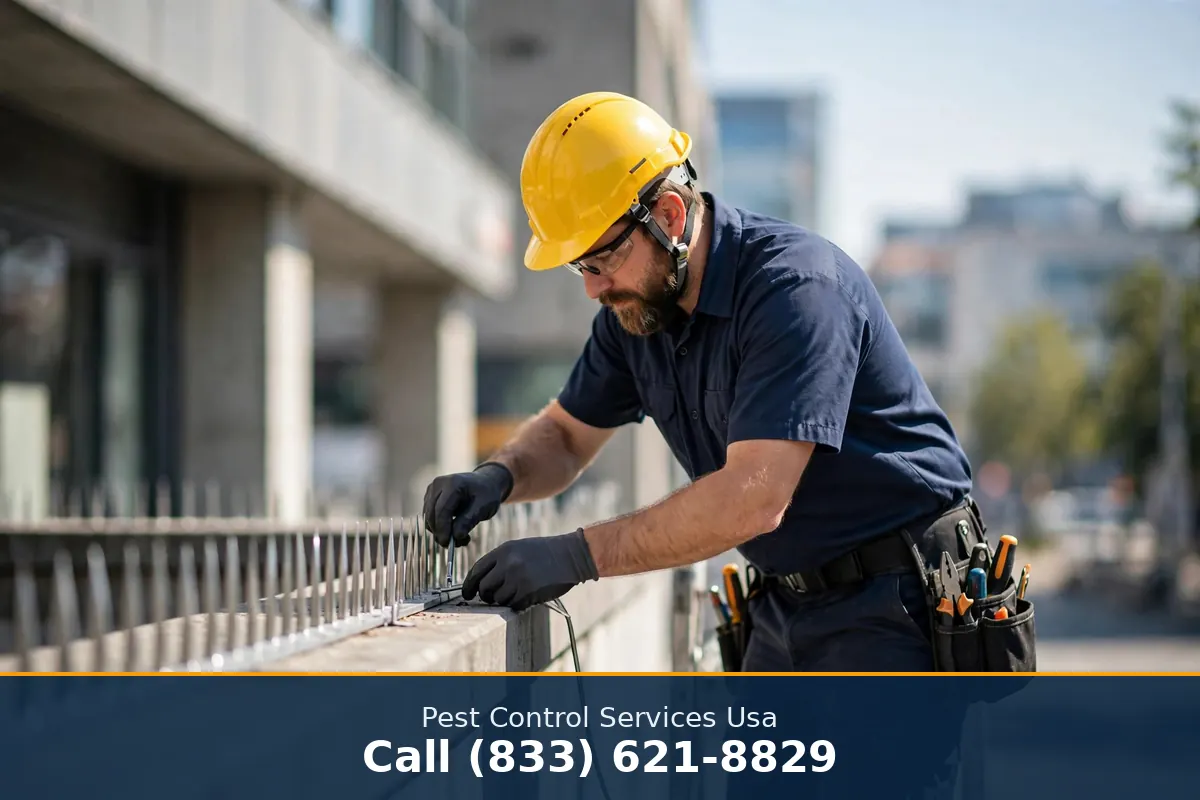
Next we build a plan matched to the inspection. Heavy roost sites usually call for physical exclusion, like netting over a courtyard or spikes along a parapet. Lighter pressure might only need a few targeted deterrents and a cleanup. Commercial sites often need a phased approach so the business keeps running while we work. We explain the plan in plain terms: what each part does and what it will look like finished.
Then comes the hands-on work. We remove birds and nesting material humanely, clear the droppings, and sanitize the surfaces. Clean surfaces hold deterrents better and erase the scent markers that mark a good roost. We then install the deterrents the plan calls for, fitted to the building, because a spike strip with gaps or a net with slack invites birds to work around it.
Finally we return for follow-up visits. Birds are persistent, and a flock that lost its favorite ledge will test nearby ones before giving up. We confirm the hardware is holding, adjust anything the birds are probing, and make sure the roost has broken up. Follow-up turns a good installation into a lasting result.
What affects the cost of bird control
The biggest factor is the size and layout of the building. A single-story shop with one problem ledge is a different job than a warehouse with roost sites on every dock door. Height and access matter too, because tall facades and steep roofs need lift equipment and extra crew time. The deterrent type changes the picture as well, since a run of spike strips and a full courtyard net are very different installations.
Site condition plays a role. A light, recent mess cleans up with straightforward labor, while droppings layered on for years take serious effort to sanitize. Many commercial customers add ongoing monitoring, which keeps small problems from growing. For an exact figure on your property, call (833) 621-8829 and we will price the real job, not a vague range.
Keeping birds away for good
Deterrents are only part of the answer. Birds return to buildings that feed them, so food sources deserve attention. Dumpsters with lids that do not close, spilled grain near a loading dock, and dining areas left uncleared at night all invite birds to stay. Sealing small gaps under eaves and behind signs removes the sheltered spots sparrows and starlings love. Trimming limbs that touch the roof takes away a natural bridge onto the building.
Consistency is the other half. A deterrent that works gets ignored once it falls into disrepair, so an occasional walk-around pays off. Most long-term customers fold that check into regular building maintenance. The goal is simple: make your building the hardest roost on the block, and the birds will choose an easier one.
How Pest Control Services Usa serves your area
Pest Control Services Usa handles bird problems for homes and businesses across the area, from houses with sparrows in the vents to distribution centers with pigeon flocks on the docks. Homeowners usually need a focused fix, like clearing a vent or proofing a patio cover. Commercial properties usually need a fuller plan with inspection, cleanup, exclusion, and scheduled follow-up. Property managers can put several buildings on one plan.
Every job begins with an inspection and a straight explanation of what we found. If the birds are a passing nuisance, we say so. If the building needs work, we lay out the options. To schedule that inspection, call (833) 621-8829.
Features
- Humane deterrents that discourage birds without harming them
- Roost and nest removal from ledges, rooftops, and canopies
- Dropping cleanup and surface decontamination
- Custom bird management plans for commercial properties
- Bird-proofing for vents, signs, and loading docks
- Scheduled follow-up visits to stop new roosts forming
- Service for homes and businesses across the area
Benefits
- Protects facades and signage from corrosive droppings
- Lowers health risks linked to accumulated droppings
- Keeps entrances, docks, and walkways clean for customers
- Stops nesting damage before it spreads through a building
- Humane methods that avoid harm to surrounding wildlife
- Fewer repeat cleanups once lasting deterrents are in place
- One team for removal, cleanup, and long-term prevention
Frequently asked questions
Are bird control methods humane?
Yes. We use deterrents, exclusion, and cleanup rather than harming birds. The goal is to move birds off the building and keep them off.
How long do bird deterrents last?
Quality hardware installed correctly holds up for years of outdoor exposure. We check it during follow-up visits and adjust anything that shifts.
Can bird droppings really damage a building?
Yes. Over time, droppings etch paint, pit metal, and stain stone and roofing. Regular cleanup prevents most of that damage.
How much does bird control cost?
It depends on the building size, roost locations, deterrent type, and cleanup needed. Call (833) 621-8829 for a figure based on your property.
Can you remove an active nest?
That depends on the species and season. Some native birds are federally protected, so active nests may need to wait for the right window. We plan the timing with you during the inspection.
Will the birds just move to another part of my building?
They will try, which is why we plan for the whole property rather than one spot. Follow-up visits catch birds probing new ledges before a new roost takes hold.