Child-Safe Pest Control Near Me
Starting price: Call for pricing
Pest Control Services Usa child-safe pest control protects nurseries, playrooms, and kitchens with methods designed around how children actually behave. Treatments stay out of reach of little hands and mouths while still reaching the pests hiding in walls and voids. Your home gets full protection without you worrying about what your toddler might touch.
What child-safe pest control is
Children do not interact with a home the way adults do. Toddlers crawl across floors, put toys and fingers in their mouths, and explore every low cabinet and corner. Standard pest control can leave residues exactly where small children spend their time. Child-safe pest control is designed around that reality from the first step.
The approach rests on three habits: place treatments where children cannot reach, choose products with lower toxicity, and keep families informed. Baits go inside locked stations mounted or tucked out of sight. Liquid products go into wall voids, cracks, and crevices instead of across open surfaces. Every visit ends with clear guidance on when each room is ready for normal use.
This is the same standard schools and daycare centers expect, brought into the home. Those facilities operate under strict rules about which products can be used around children and how they must be applied. We bring that discipline to residential visits: documented products, careful placement, and no shortcuts in rooms where children play and sleep.
When you need it
Parents usually start searching for child-safe pest control at a life milestone: a baby on the way, a toddler starting to crawl, or a move into a new home. Those are exactly the right moments, because each one changes how children use the space. A nursery that was once a spare bedroom now needs the most careful treatment in the house.
Consider child-safe service when:
- A baby or toddler lives in or regularly visits the home
- Children play on floors, rugs, or in the yard daily
- You want the nursery and bedrooms treated with extra care
- A family member has asthma or chemical sensitivities
- Wasps or other stinging insects threaten outdoor play areas
- Your daycare or school needs a documented low-impact program
Grandparents hosting young grandchildren face the same questions, and the same methods apply. If children spend regular time in your home, even part-time, it is worth treating the space with their habits in mind. The adjustments are small; the peace of mind is not. Ask for the child-safe approach by name when you call, so the visit is planned that way from the start.
Child-safe methods also suit shared custody schedules and visiting relatives. When children split time between homes, both households can request the same careful approach. Consistency matters: treatments placed out of reach in one home should be out of reach in the other.
How the process works
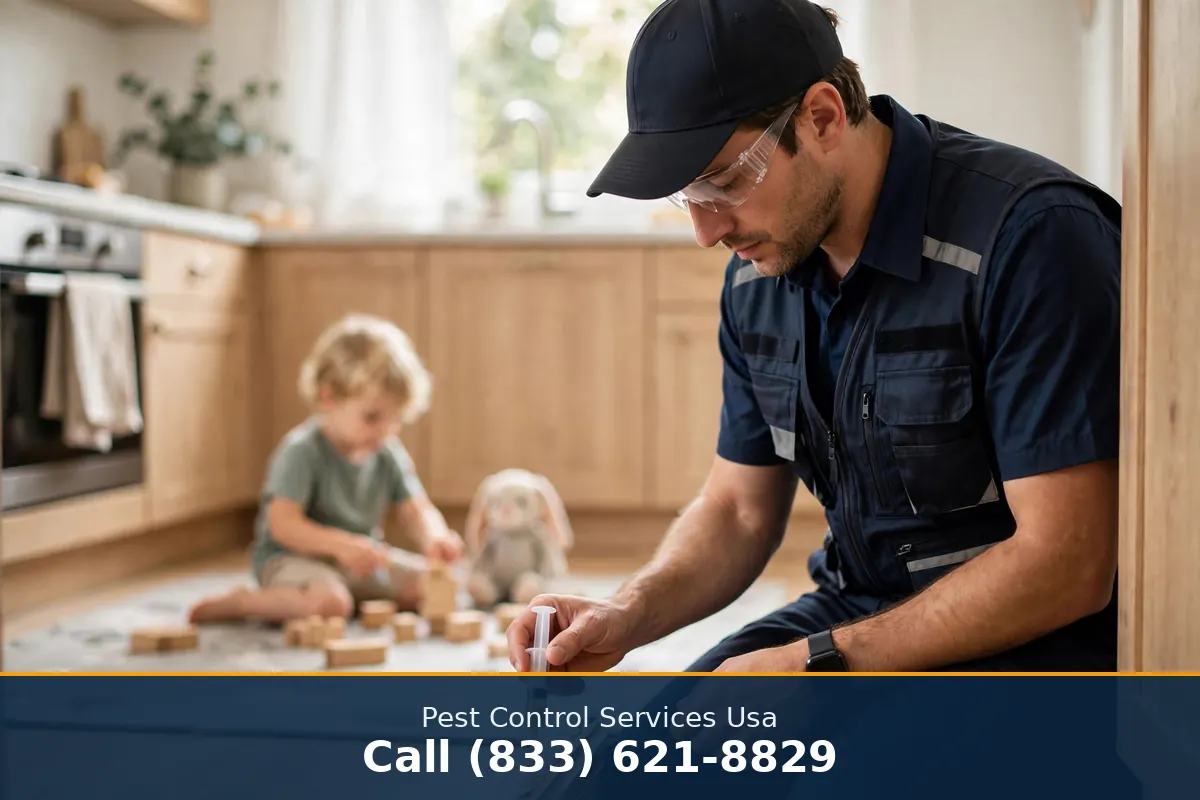
Your technician starts by learning the household: ages of the children, which rooms they use, and where they play outside. Cribs, high chairs, toy bins, and play mats get noted so treatments can be planned around them. Nothing is sprayed over or near items children put in their mouths.
The work itself stays targeted. Crack-and-crevice applications reach the pests inside walls and voids without coating open surfaces. Baits go into locked stations placed where children cannot access them. Outdoor treatments focus on nests and entry points rather than broad coverage of play areas, and flowering plants visited by pollinators are left alone. Play structures, sandboxes, and swing sets are worked around, never sprayed over.
After the visit, you get written re-entry guidance for each treated space. Bedrooms and playrooms usually need only a short wait after crack-and-crevice work, since children never contact the treated surfaces. Rooms with other application types get a specific wait time from the technician. Questions afterward go to (833) 621-8829.
Newborns, allergies, and other special situations
Newborns change the equation because they spend nearly all their time in one or two rooms. Those rooms get the most conservative treatment in the house: inspection, exclusion, and placements deep inside voids, with nothing applied to open surfaces. Many families schedule the nursery visit before the baby arrives home, so everything is settled and dry well in advance.
Households with asthma or chemical sensitivities get a similar level of care. Lower-toxicity product choices, minimal indoor application, and thorough ventilation guidance are standard for these visits. Tell the technician about any respiratory conditions during booking so the plan reflects them from the start rather than being adjusted on the day.
Renters can request child-safe methods for work inside their own unit, and we coordinate with property managers regularly. Call (833) 621-8829 if you need help explaining the approach to a landlord.
What affects the cost
Cost follows the pest situation, not the child-safe designation. Treating a few ants in the kitchen is a smaller job than resolving a roach issue across a multi-story home. The number of rooms, the age and layout of the building, and how far the infestation has spread all factor in.
Recurring plans spread protection across the year and catch seasonal pests before they build up indoors. One-time visits handle contained problems at a single point in time. Either way, the child-safe methods themselves do not add mystery fees; the work is the work. Call (833) 621-8829 to describe your home and get an exact quote.
What saves money here is the same as anywhere in pest control: catching problems early. A single wasp nest costs less to remove than an established colony, and sealing entry points costs less than treating the same invasion twice. Regular monitoring as part of a plan spots new activity while it is still small.
How we serve your area
Pest Control Services Usa provides child-safe pest control to families across our service area. New parents get nursery-first plans that treat the baby's room with the greatest care, and many book a pre-baby visit to get the nursery settled before the due date. Growing families get whole-home programs covering playrooms, kitchens, and yards together. Multi-generational households get plans that account for both the youngest and oldest residents.
Schools, daycares, and camps can request our facility protocols with full documentation of products and placements. Property managers with young tenants get building-wide plans that keep common areas and playgrounds protected. Wherever children spend their days, call (833) 621-8829 and ask for the child-safe approach.
Features
- Child-first safety review of every room before treatment begins
- All treatments placed where small hands cannot reach them
- Low-toxicity product choices for nurseries, playrooms, and bedrooms
- Locked bait stations secured well away from children
- No broadcast sprays across floors, toys, or play surfaces
- Written re-entry guidance for every treated space
- Daycare- and school-friendly protocols available on request
Benefits
- Nurseries and bedrooms handled with extra caution on every visit
- Clear guidance on when each room is ready for kids again
- Less chemical product used inside your home overall
- Protection from stinging insects around outdoor play areas
- Technicians who work around toys and child items instead of over them
- Methods that suit households with newborns, toddlers, and teens
- Peace of mind from honest, transparent communication
Frequently asked questions
Is pest control safe for babies and toddlers?
Yes, with the right methods. Treatments stay where small hands cannot reach, and nurseries get lower-toxicity products. Tell the technician your children's ages so the plan fits.
Will you spray in the nursery?
Not across open surfaces. Nurseries get crack-and-crevice applications inside walls and voids, plus locked stations placed out of reach. Cribs and changing tables stay clear of all applications.
How long until my kids can use a treated room?
Most rooms need only a short wait after crack-and-crevice work, since children never contact the treated surfaces. Your technician will give you a specific time for each room before leaving.
What about the yard and play equipment?
Outdoor work targets nests and entry points rather than broad coverage of play areas. Tell the technician where the kids play so those spots get an extra-wide berth.
Do you service schools and daycare centers?
Yes. Facilities get documented protocols showing which products were used and where they were placed, following the same child-first rules.
What should I do before the technician arrives?
Pick up toys and clear floors so the technician can reach baseboards and entry points. Cover open food and put away pet bowls.