Chimney Cap Installation Near Me
Starting price: Call for pricing
An uncapped chimney lets in rain, birds, bats, and rodents — and lets sparks out. Pest Control Services Usa installs fitted chimney caps in galvanized steel, stainless steel, or copper. Call (833) 621-8829 to cap your chimney the right way.
What a chimney cap does
A chimney cap is the lid on top of your flue, and it does more work than its size suggests. The solid top sheds rain and snow. The mesh sides keep birds, bats, and rodents from climbing or flying in. The same mesh catches sparks rising with the smoke.
Without a cap, a chimney is an open hole. Rain runs straight down the flue, soaks the liner, and rusts the damper and firebox. Birds drop in and nest on the smoke shelf, and their nests block the draft. Bats and rodents treat an open flue like a front door into your attic.
Caps come in a few styles. A single-flue cap covers one flue tile. A full-coverage cap spans the whole chimney crown, shielding several flues at once plus the crown itself. Materials run from galvanized steel to stainless steel to copper, each with its own look and lifespan. We help you pick what fits your chimney.
The mesh matters as much as the top. Proper spark-screen mesh is fine enough to stop animals and catch sparks, yet open enough to let smoke vent without resistance. A cap with torn or missing mesh is barely better than no cap at all, so we check the mesh on every visit.
When your chimney needs a cap
The obvious case is a chimney with no cap at all. Many older homes never had one, or a storm carried it off years ago. If you can see straight down the flue from the roof, you need a cap.
Watch for these signs:
- A cap that is bent, rusted through, or missing mesh
- Birds circling the chimney or perching on the flue edge
- Nesting material, feathers, or droppings in the firebox
- Water stains or rust inside the fireplace
- A damp, musty smell coming from the chimney in summer
- Smoke spilling into the room on windy days
- Pieces of the old cap found in the yard after storms
Nesting is the urgent one. Once birds or bats settle in, they cannot simply be capped over — the animals and the nest must come out first, and the flue must be clear. Water damage is the slow one. Every rain washes a little more life out of the mortar and liner. The bill for masonry repair dwarfs the cost of a cap.
A cap is expected on working chimneys in many areas, and home inspections flag missing caps routinely. Handling it now avoids the surprise later.
How chimney cap installation works
We start on the roof with an inspection. We check the flue tiles, the crown, and the flashing, and we look for signs of animals or blockages. If anything is living in the flue, we clear it before any cap goes on — capping over animals is never done.
Next we measure the flue precisely. A cap that is too small leaves gaps animals can squeeze through. One that is too large shifts in wind and lets rain run underneath. For full-coverage caps we measure the whole crown and note every flue opening, so the finished cap seats on solid masonry all around.
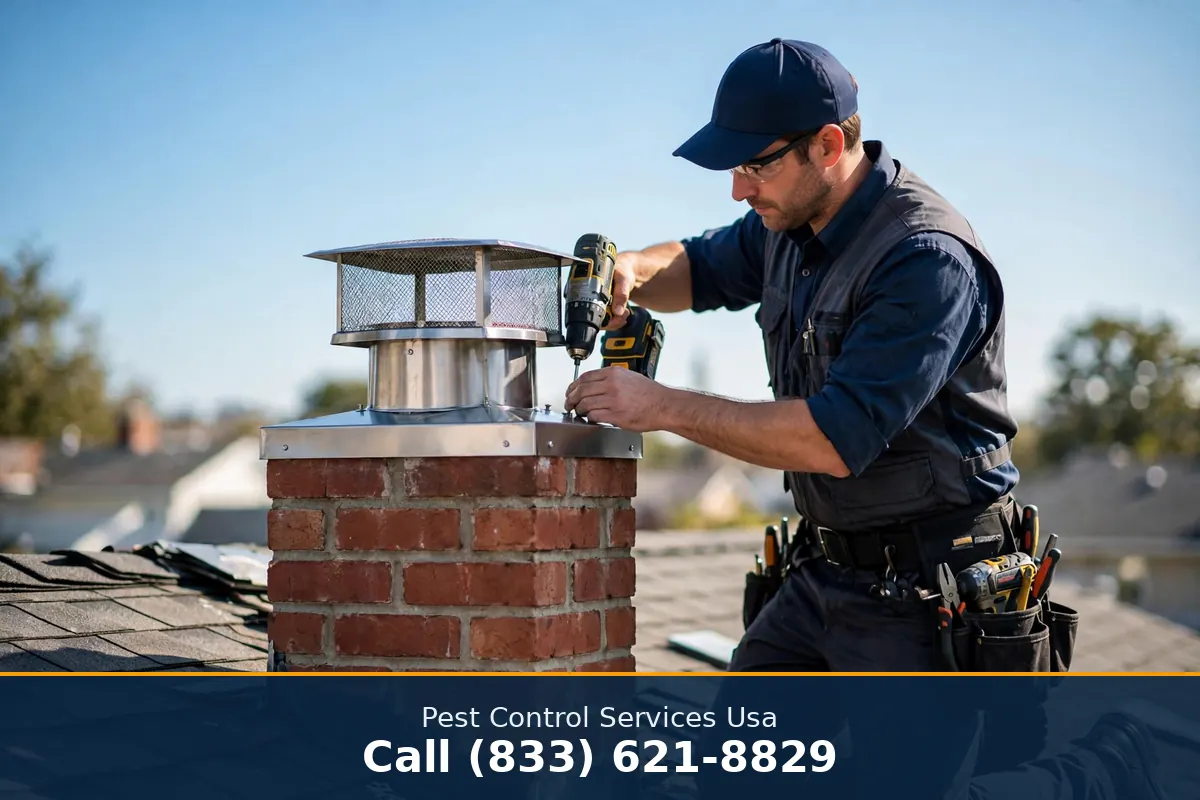
We fit the cap to the chimney. Stock single-flue caps mount with a slip-on fit or bolts, depending on the flue tile. Full-coverage caps are built to the measurements we took and bolt to the crown. Every cap gets checked for level, tightness, and a proper seat against the flue tile so wind cannot lift it.
Before we climb down, we check the draft. The fire should draw smoke up and out with the cap in place. If the draft was weak before, we tell you plainly what we see. A cap fixes entry and rain problems — not a chimney that was already drafting poorly for other reasons.
Cap materials compared
Galvanized steel is the economical choice and the most common. It does the job for years, though the coating eventually wears and rust sets in, especially in wet climates. For many homeowners it is the sensible balance of cost and service life.
Stainless steel steps up in durability. It resists rust far longer than galvanized steel and keeps its looks with almost no care. If you plan to stay in the home for decades, stainless usually earns back its higher material cost in longevity.
Whatever the metal, the mesh should be stainless. Galvanized mesh rusts out long before the cap top fails, leaving the chimney open again. We fit stainless spark-screen mesh on every cap we install, so the screening outlives the seasons.
What affects the cost
The biggest cost factors are size and material. A single stock cap on one flue costs less to supply and fit than a custom full-coverage cap spanning three flues. Galvanized steel is the economical choice, stainless steel steps up in durability, and copper carries the highest material cost with a distinctive look.
Roof access plays a role. A low, walkable roof is straightforward work. A steep pitch or a tall chimney adds setup time and safety equipment. Chimneys that need animal or nest removal first add that step to the job before capping can begin.
The condition of the chimney itself can change the scope. A sound crown and solid flue tiles make for a clean install. Cracked crowns or crumbling tiles may need masonry attention before a cap can seat properly. Call (833) 621-8829 and we will quote your chimney exactly as we find it.
How we serve your area
Pest Control Services Usa installs chimney caps as part of keeping wildlife out of homes. An uncapped chimney is one of the most common ways birds and bats reach an attic, so we often pair capping with wildlife exclusion work. One crew handles both the animal issue and the cap that keeps it from repeating.
We work on masonry and prefabricated chimneys on homes of every age. Rental owners, new homeowners, and seasonal residents all call when an inspection flags a missing cap or tenants report birds in the fireplace.
If your chimney is open to the sky, call (833) 621-8829. We will measure, fit, and cap it so rain and wildlife stay out for good.
Features
- Flue measurement and cap sizing
- Galvanized, stainless steel, and copper caps
- Single-flue and full-coverage multi-flue caps
- Slip-on and bolt-on mounting
- Animal and nest clearing before capping
- Spark-screen mesh on every cap
- Draft check after installation
Benefits
- Keeps rain out of the flue and firebox
- Blocks birds, bats, and rodents from nesting inside
- Reduces spark escape from the flue top
- Protects mortar and liners from water damage
- Cuts downdrafts that push smoke indoors
- Fitted to your exact flue — no loose cap
- Installed without damage to roof or shingles
Frequently asked questions
My chimney is never used. Does it still need a cap?
Yes. Rain and animals do not care whether you burn fires. An unused open flue still funnels water into the house and still invites nesting, so capping it protects the structure either way.
What is the cap made of?
We install galvanized steel, stainless steel, and copper caps. Galvanized is economical, stainless resists rust far longer, and copper lasts with a distinctive look. Every cap carries stainless spark-screen mesh.
Will a cap keep birds out of my chimney?
Yes, once any existing nest is cleared. The mesh blocks entry while still venting smoke. A nest is never capped over — it must be removed first, and we handle that before installing.
How do you size a chimney cap?
We measure the flue tile directly on the roof. Stock caps fit standard sizes; odd or multi-flue chimneys get a cap built to our measurements so it seats tightly with no gaps.
Can you install a cap if something is living in the flue?
Not until it is cleared. We remove the animals and nesting material first, then install the cap so they cannot return. The flue must be clear before capping.
Will a cap change how my fireplace drafts?
A properly fitted cap preserves the draft you have. An oversized or poorly seated cap can hurt draft, which is exactly why precise measurement matters. We check the draw before we leave.