Cluster Fly Control Near Me
Starting price: Call for pricing
Pest Control Services Usa provides cluster fly control built around the one thing that actually works: stopping them before they get inside. Late-summer exterior treatments and entry-point reviews keep overwintering flies out of your attic and wall voids. For flies already indoors, we remove them with targeted void treatments, vacuuming, and traps.
What Cluster Fly Control Is
Cluster flies are large, slow-moving flies that look similar to house flies but behave very differently. They spend the summer outdoors, where their larvae develop in soil. When late summer turns to fall, the adults seek sheltered spots to spend the winter — and the warm wall voids and attics of houses are ideal.
Cluster fly control from Pest Control Services Usa is built around that seasonal habit. The core of the service is prevention: treating the exterior of the home and reviewing entry points in late summer, before the flies move in. When flies are already inside, the service shifts to removal — targeted void treatments, vacuuming, and trapping — because broad indoor spraying rarely solves an established cluster fly problem.
Cluster flies do not bite people or pets, do not spread disease, and do not damage homes or reproduce indoors. They are a nuisance pest, but when hundreds of them share your attic, the nuisance is real. This service covers cluster flies and similar overwintering flies; it is not a general treatment for every fly species.
Why Cluster Flies Pick Your Home
Cluster flies are drawn to warmth and light. On late-summer afternoons, the south- and west-facing walls of a home soak up heat, and the flies gather there by the hundreds before crawling into any crack they can find. Taller homes and light-colored siding seem to attract more of them, and houses near open fields or lawns face the heaviest pressure.
Once a home has hosted them for a winter, it tends to get chosen again. The flies leave no marks or nests behind — they simply return to what worked. That is why a one-time cleanup never ends the problem, and why a timed exterior barrier before fall is the approach that breaks the cycle.
When You Need Cluster Fly Control
Cluster fly problems follow the calendar. The signs are distinct from other fly issues, and they tend to repeat at the same property year after year.
- Swarms of sluggish flies appear on the sunny sides of your home in late summer or fall.
- Hundreds of flies show up in your attic, upper windows, or light fixtures.
- Flies emerge around windows and doors on warm winter days.
- You dealt with cluster flies last year and they came back again.
- Your home is near fields, pasture, or open lawn where these flies thrive outdoors.
- You are buying a rural property and want to avoid a repeat infestation.
- Previous attempts with indoor sprays barely made a dent.
The best time to act is late summer, before the flies commit to your walls. If they are already inside, removal and a prevention plan for next season are the next best move.
How the Process Works
Timing drives everything with cluster flies. Your Pest Control Services Usa technician starts by confirming what you have — cluster flies have a distinct look and behavior — and mapping where they gather on and inside your home. South- and west-facing walls, rooflines, eaves, and upper-story windows get special attention.
For prevention, the exterior of the home is treated in late summer or early fall, before the seasonal migration begins. This barrier treatment covers the surfaces flies land on as they scout the building. Entry points are reviewed at the same time. Cracks around windows and doors, gaps in siding, open soffit vents, and utility penetrations all get flagged so you can seal the routes that matter most.
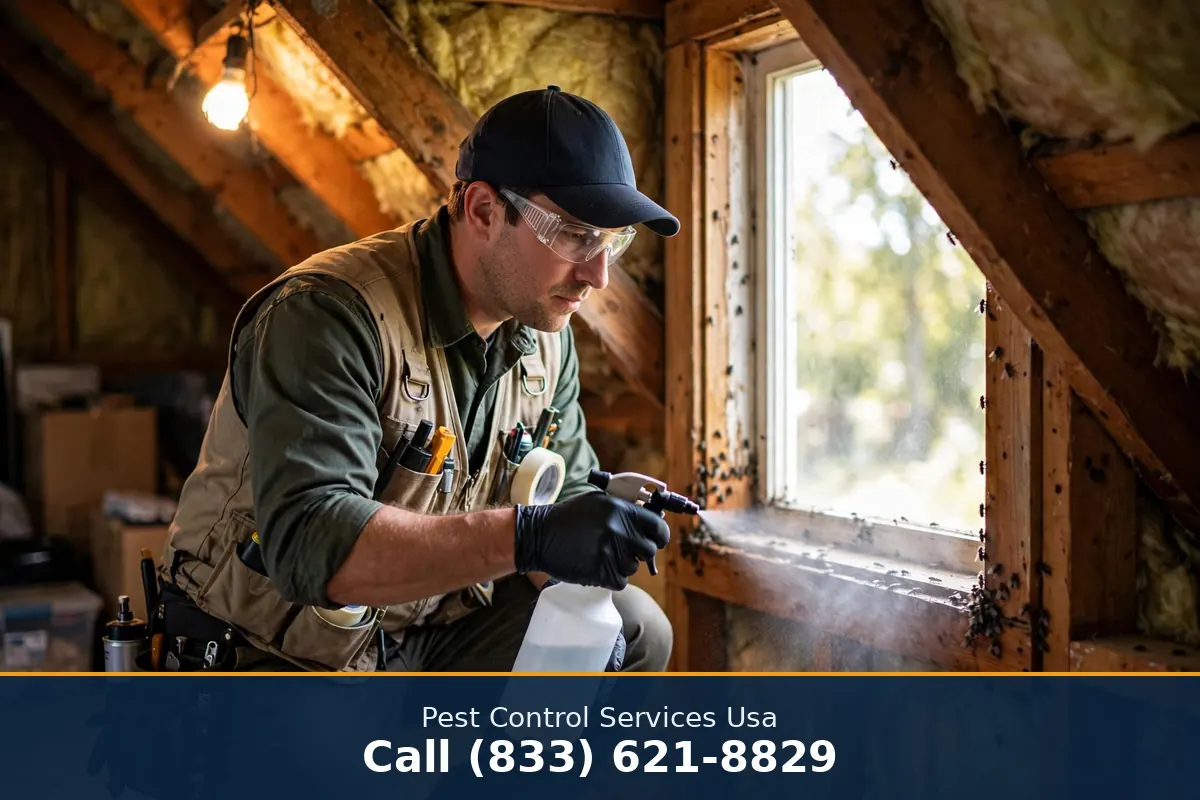
When flies are already overwintering inside, the approach changes. Insecticidal dusts are applied into the wall voids and attic spaces where the flies are harboring — dusts reach the hidden spaces sprays cannot. Visible flies are removed with vacuums and traps. Broad indoor spraying is avoided on purpose: once cluster flies are inside, sprays rarely reach them, and dead flies left in voids can attract other scavenger pests.
You will also get straight advice on sealing. Caulking and screening entry points helps a great deal, but sealing must be done before the flies enter — sealing them inside leaves you with a house full of flies. Your technician will explain the right order: treat and remove first, seal for next season.
The service wraps up with a seasonal plan. Because cluster flies return to the same structures year after year, scheduling next late-summer's prevention visit before your technician leaves keeps the cycle broken. Call (833) 621-8829 to get on the seasonal schedule.
What Affects the Cost
The size and shape of your home is the biggest factor. A small ranch with a simple roofline takes less exterior treatment than a large two-story home with dormers, multiple rooflines, and a wraparound deck.
The extent of the infestation matters. A preventive exterior visit costs less in effort than a home with flies already packed into attics and wall voids across multiple rooms. Attic access plays a role — finished attics and tight crawl spaces take more time than open, walkable ones.
The number of entry points that need review and the condition of existing screens, caulking, and weatherstripping also affect the scope. Seasonal timing matters too: booking prevention in the late-summer window is the most straightforward job, while mid-winter removal takes more labor. For an exact quote, call (833) 621-8829.
How We Serve Your Area
Pest Control Services Usa serves homes across the country, with special attention to the rural and suburban properties where cluster flies hit hardest. Homes near open fields, lawns, and pasture see the heaviest pressure, and our seasonal programs are built for exactly those properties.
Our technicians understand the overwintering calendar and time prevention visits to land before the fall migration in your area. That timing is the whole game with cluster flies, and it is what separates a quiet winter from another season of flies at the windows.
If cluster flies found your home last fall, make this the year you get ahead of them. Call (833) 621-8829 to schedule your late-summer prevention visit. One well-timed appointment each year is all it takes to keep your attic quiet through winter.
Features
- Late-summer exterior barrier timed before fall entry
- Attic and wall-void inspection for overwintering flies
- Entry-point review for rooflines, eaves, vents, and windows
- Targeted void treatments where flies are harboring
- Removal of indoor flies by vacuum and trap
- Guidance on sealing cracks without trapping flies inside
- Seasonal scheduling so prevention lands at the right time
Benefits
- Fewer flies gathering on sunny walls each fall
- A quieter winter without flies at windows and light fixtures
- Prevention timed to the season, not guesswork
- No broad indoor spraying once flies are already inside
- Advice on the sealing work that matters most
- Help for rural homes that get hit hardest each year
- A plan that breaks the year-after-year return cycle
Frequently asked questions
Do cluster flies bite or spread disease?
Not at all. These flies never bite people or pets, and they are not known to spread disease. They are strictly a nuisance pest — but a persistent one in large numbers.
Why do cluster flies come back to my house every year?
Cluster flies return to structures that sheltered them well, and their offspring follow the same pattern. Without an exterior barrier and sealed entry points before fall, the same house gets chosen again.
When is the best time to treat for cluster flies?
Late summer to early fall, before the flies start seeking shelter. Treating the exterior during this window stops them before they reach your wall voids.
Why not just spray all the flies I see indoors?
Indoor sprays rarely reach flies hidden in wall voids, so visible ones get replaced by more emerging from the walls. Targeted void treatments, vacuuming, and traps work better.
Can I seal the cracks to keep them out?
Yes — but only before they enter in the fall. Sealing after they are inside traps them in your living space. Prevention first, then sealing for lasting protection.
Will cluster flies damage my home or attic insulation?
No. Cluster flies do not chew, nest, or reproduce indoors. They rest in voids and attics through winter, then leave in spring.