
Crawl Space Encapsulation Near Me
Starting price: Call for pricing
A vented crawl space pulls in outside moisture that feeds mold growth and invites pests into your home. Pest Control Services Usa turns that damp space into a sealed, dry environment with a heavy vapor barrier, closed vents, and controlled humidity. The result is cleaner air, fewer pest problems, and a stronger home from the ground up.
What crawl space encapsulation is
Crawl space encapsulation is the process of sealing a vented crawl space and converting it into a controlled, dry environment. A thick vapor barrier covers the ground, piers, and foundation walls. Vents are closed, seams are sealed, and humidity is managed mechanically.
A traditional vented crawl space trades air with the outdoors through foundation vents. That design made sense decades ago, but it constantly pulls warm, humid air under the house. In summer, that moisture condenses on cool ductwork and floor joists.
Encapsulation reverses that dynamic. Once sealed, the crawl space becomes part of the building's conditioned envelope. Moisture from the ground cannot rise through the liner, and outside humidity cannot drift in through the vents.
The system usually includes a dehumidifier to keep relative humidity in a healthy range. Some homes also get drainage matting under the liner or a sump solution where groundwater is a known issue. Each system is designed around what the inspection finds.
Encapsulation is not the same as basement waterproofing. It addresses the crawl space under the home, not foundation walls holding back exterior water. Where bulk water is the main problem, drainage correction comes first and encapsulation completes the job.
When encapsulation makes sense
Musty odors inside the home are the classic sign of a troubled crawl space. Air from below rises into the living space through gaps around plumbing, wiring, and ductwork. If the crawl space smells musty, that odor travels upward too.
Visible moisture tells the same story. Standing water, damp soil, or condensation on ductwork all point to a space that needs intervention. Left alone, that moisture works on floor joists and subflooring year after year.
Pest activity in the crawl space is another strong signal. Insects and rodents thrive in dark, damp conditions, and an open vented crawl space is an easy place for them to settle. Sealing the space removes the habitat they depend on.
You may also notice the symptoms indoors: cold floors in winter, uneven humidity, or allergy flare-ups that ease when you leave the house. These all trace back to uncontrolled air moving up from below. Encapsulation addresses the source rather than the symptom.
Ductwork running through the crawl space suffers too. Leaky ducts in a damp crawl space pull in moist, dirty air and distribute it through the house. Sealing the space around the ducts improves both air quality and system efficiency.
- Musty or damp smells on the first floor of the home
- Standing water or consistently wet soil in the crawl space
- Visible mold or mildew on joists, insulation, or ductwork
- Sagging or damaged fiberglass insulation hanging below the floor
- Recurring pest activity traced to entry through foundation vents
- Cold floors and drafty rooms during the colder months
How the process works
We start with a full crawl space inspection, including moisture readings at the soil, wood, and air. Photos document everything from standing water to damaged insulation. The design of your system comes directly from these findings.
Cleanup comes first. Old, damaged insulation and debris are removed, and any standing water issues are addressed. The space needs to be clear before the barrier goes down.
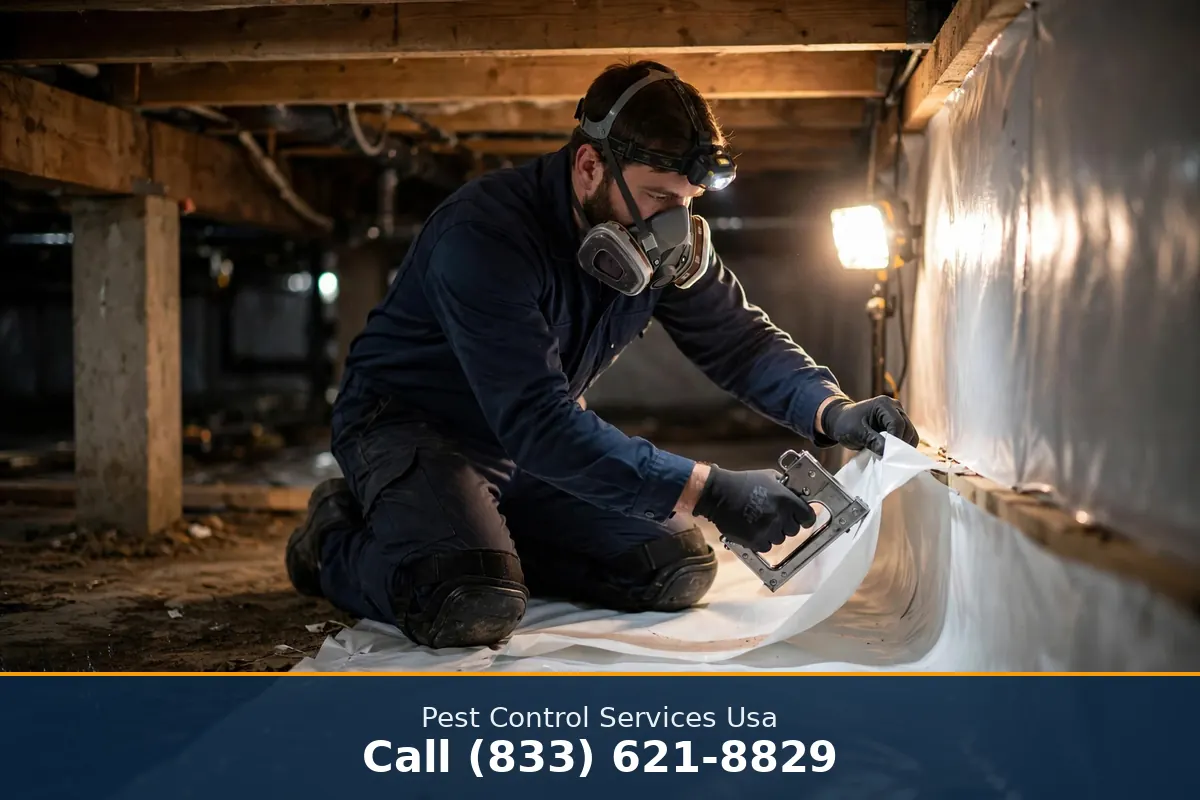
Next, drainage matting is laid where the design calls for it, directing ground moisture toward the perimeter. Then the vapor barrier is installed across the floor, up the piers, and up the foundation walls. Every seam is overlapped and sealed.
Foundation vents are closed and sealed, and the access door is replaced or sealed with a proper gasketed panel. A dehumidifier sized for the space is installed and set to maintain healthy humidity levels. Final readings confirm the system is performing before we leave.
Where fiberglass insulation hung below the floor, we replace it with material suited to the sealed environment. Rigid foam on the foundation walls is a common choice, since it performs well in the controlled conditions encapsulation creates.
What affects the cost
Crawl space size is the primary driver, since liner material is measured in square footage. A larger footprint needs more barrier, more seam sealing, and a larger dehumidifier.
Access and height matter too. A tall, walkable crawl space goes faster than a tight one that requires belly-crawling. Obstructions like ductwork, plumbing runs, and support piers add time to the liner installation.
Existing conditions shape the scope. Standing water, heavy debris, or damaged insulation add a cleanup phase. Wood that shows moisture damage may need treatment before the space is sealed.
Optional components are quoted separately. Dehumidifier sizing, drainage improvements, and door upgrades each carry their own line item. You will see the full breakdown in writing before deciding.
After installation, the system needs only light attention. We check humidity readings on follow-up visits and show you what to watch for. A quick seasonal glance at the dehumidifier and liner keeps everything performing as designed.
How Pest Control Services Usa serves your area
Pest Control Services Usa encapsulates crawl spaces for single-family homes, townhomes, and small commercial buildings across our service area. Each project gets a design based on actual moisture readings, not a one-size package.
We approach encapsulation as a pest and moisture company, not just a liner installer. That means entry points get closed, conducive conditions get corrected, and the system is built to stay dry for the long term.
To start, call (833) 621-8829 and describe what you are noticing. We will schedule a crawl space assessment and walk you through the findings with photos. You will know exactly what the space needs and why.
Encapsulation is one of the highest-impact improvements a homeowner can make below the living space. Drier air, fewer pests, and sounder framing all follow from the same sealed system. We are glad to show you what yours could look like.
Homebuyers are increasingly asking about crawl space condition during inspections. An encapsulated space with documented moisture readings answers those questions before they become objections. It is a strong selling point in any market with humidity concerns.
Features
- Heavy-duty vapor barrier sealed across floors, piers, and foundation walls
- Foundation vent sealing to block outside moisture and pest entry
- Dehumidifier installation sized for the crawl space volume
- Drainage matting under the liner to channel ground moisture away
- Sealed access door upgrade to close the largest remaining opening
- Wood surface treatment to address existing mold-friendly conditions
- Humidity monitoring plan with follow-up readings after the install
Benefits
- Drier air that slows mold growth on floor joists and subflooring
- Fewer insects and rodents moving between the crawl space and the home
- More comfortable floors with less cold rising from below in winter
- Lower risk of wood rot damage to the home's structural framing
- Cleaner crawl space that is safer and easier to enter for repairs
- Steadier indoor humidity levels throughout the living space
- A sealed system that protects the investment in the rest of the home
Frequently asked questions
What exactly is crawl space encapsulation?
It is the process of sealing a vented crawl space with a heavy vapor barrier, closing the foundation vents, and controlling humidity with a dehumidifier. The goal is a dry, sealed space that no longer feeds mold or shelters pests.
Will encapsulation get rid of the musty smell in my house?
In most cases, yes. Musty odors usually come from mold and dampness in the crawl space rising through gaps in the floor. Once the space is sealed and dried, the source of the odor is gone.
Does encapsulation help with pests?
Significantly. Open vents and damp soil create ideal conditions for insects and rodents. Sealing the vents, closing the access door, and drying the space removes the habitat pests depend on.
Do I need a dehumidifier as part of the system?
Most encapsulated crawl spaces need one. The liner blocks ground moisture, but a dehumidifier controls humidity in the trapped air so the space stays in a healthy range year-round. We size it to your specific space.
How long does an encapsulation project take?
Most residential projects take two to four working days, depending on crawl space size, access, and how much cleanup is needed first. You get a written scope and timeline before we begin.
Can you encapsulate a crawl space that has standing water?
Yes, but the water issue is addressed first. We correct drainage, and where groundwater is a recurring problem we add a sump solution before the liner goes down. Encapsulation is never installed over unresolved standing water.
Will my energy bills change after encapsulation?
Many homeowners notice improvement. Sealing the crawl space reduces the cold, damp air rising into the home, which means the heating and cooling system works less hard. Results depend on the house and climate.