Cricket Control Near Me
Starting price: Call for pricing
Crickets slip through tiny gaps in late summer and fall, then chirp all night from inside your walls and basement. Pest Control Services Usa finds where they are getting in, treats the entry zones and harborage areas, and helps make the home less inviting. Our cricket control covers house crickets, field crickets, and camel crickets in homes and businesses.
What cricket control covers
Cricket control targets the crickets invading your home and the conditions pulling them inside. House crickets, field crickets, and camel crickets each behave differently, and the program treats them accordingly. House and field crickets chirp through the night and chew fabrics, paper, and stored goods. Camel crickets, also called cave crickets, stay silent but startle homeowners by springing from dark corners of basements and crawl spaces.
Pest Control Services Usa starts by identifying which cricket is causing the trouble. House crickets are light brown with long antennae and gather near warmth and moisture. Field crickets are darker, push indoors in late summer and fall, and often show up in garages and ground-level rooms. Camel crickets are humpbacked and wingless, preferring damp, dark spaces like crawl spaces and storage cellars. Knowing the species tells us where to look and which entry points matter most.
The program treats entry zones, harborage areas, and the perimeter together. Interior work focuses on basements, crawl spaces, utility rooms, and wall voids where crickets shelter. Exterior work builds a barrier along the foundation before the fall invasion peaks. We also address the attractants: moisture from leaks and water pooling near the foundation, bright outdoor lighting that draws night insects, and clutter that gives crickets daytime cover.
The damage is easy to underestimate. Crickets chew natural fabrics like wool, cotton, and silk, leaving small holes in clothes, curtains, and upholstery. They nibble paper goods, cardboard boxes, and even houseplants. In storage areas their droppings stain surfaces. None of it happens overnight, which is why a quiet infestation can do real harm before anyone connects the damage to crickets.
Cricket control does not cover wildlife or bird issues. It focuses on crickets and the moisture, entry, and harborage conditions that let them thrive around structures. If another pest shows up during the program, call (833) 621-8829 and we will identify it and point you to the right service.
When you need cricket control
- Chirping keeps you awake, especially from inside walls, vents, or the basement
- You spot crickets in the garage, laundry room, or ground-floor rooms
- Camel crickets spring out of crawl spaces or storage rooms
- Fabrics, curtains, or stored papers show chew damage
- Crickets gather around bright porch lights and slip in through open doors
- Late summer arrives and the invasion starts all over again
Crickets are a seasonal story for most homes. As nights cool in late summer and fall, field crickets move toward the warmth of houses in large numbers. A few slipping in is normal. Dozens chirping from the walls means entry points are wide open and the population outside is heavy. That is the moment professional control earns its keep.
Pay attention to where you hear them. Chirping from a single room points to a nearby entry. Sound seeming to come from everywhere suggests wall voids or a basement population. The technician uses those clues to aim the inspection instead of treating blindly.
How the process works
Call (833) 621-8829 and describe what you are hearing and seeing. We will ask about the sounds, the rooms involved, and whether the problem is new or returns every fall. Those details tell the technician which cricket species to expect before the inspection begins.
The inspection maps how crickets enter and where they settle. The technician checks door sweeps, window frames, foundation cracks, utility penetrations, and garage doors for gaps. Inside, basements, crawl spaces, and ground-floor rooms get checked for moisture, harborage, and droppings. Outdoor lighting and landscaping near entry points get noted, since both influence cricket pressure.
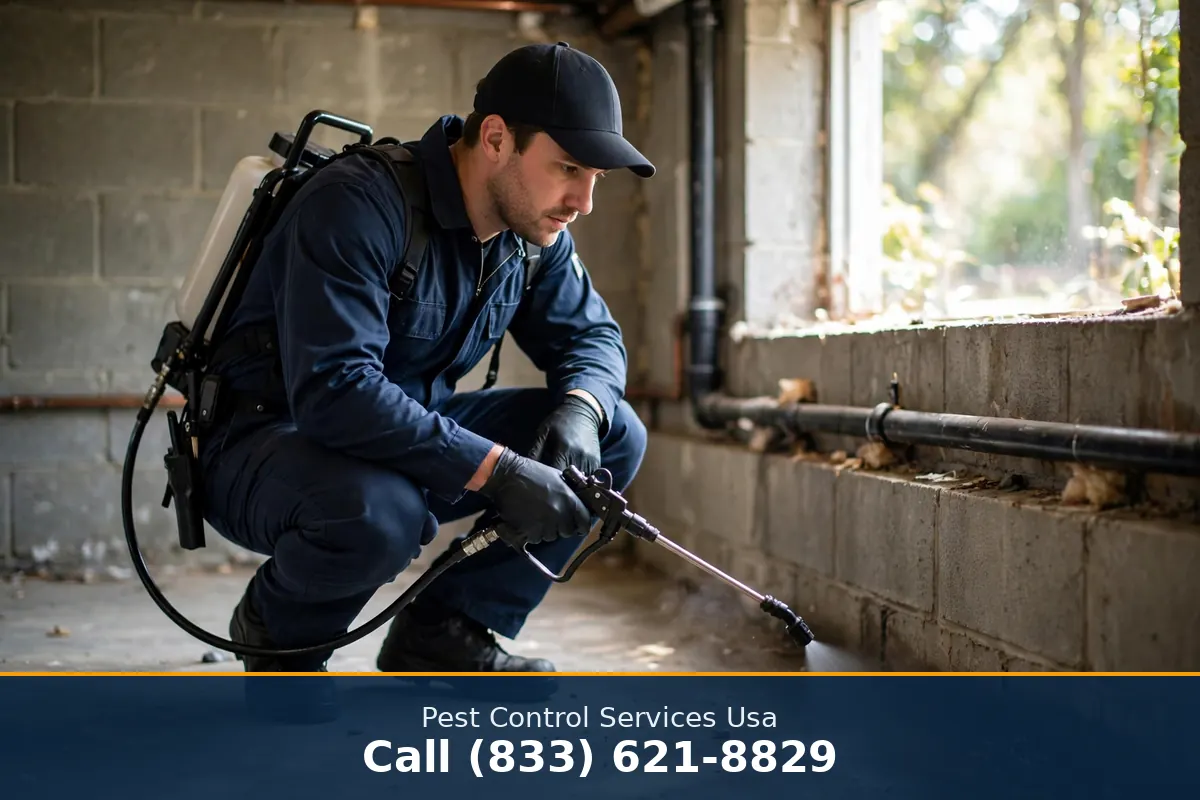
Treatment follows the findings. Entry zones and harborage areas receive targeted applications, and the exterior perimeter gets a barrier timed to block the fall invasion. Moisture issues get flagged with practical fixes, like extending downspouts or improving crawl space ventilation. Where clutter shelters crickets, the technician suggests simple cleanups that make the space less inviting.
Lighting often deserves its own mention. Bright white porch and flood lights pull night insects toward entries, and crickets follow. Switching to warm-toned bulbs near doors, or simply turning off unneeded lights, cuts the nightly gathering at your threshold. Small change, noticeable difference.
Follow-up visits confirm the program is working. The technician checks treated zones for new activity and adjusts as the season progresses. If chirping returns between visits, call (833) 621-8829 and we will return to handle it.
What affects the cost
Home size and layout set the baseline. A ranch home with a full basement and attached garage needs more inspection and treatment time than a small apartment. Crawl spaces add work, especially damp ones that need both treatment and moisture guidance.
Cricket pressure and species matter. A light house-cricket issue in one room is a smaller job than a heavy fall invasion with field crickets across the ground floor. Camel crickets in a large damp crawl space need a different approach than chirping house crickets in a laundry room.
Entry-point condition shapes the exclusion side. Older doors, worn sweeps, and cracked foundations mean more sealing recommendations. Program length matters too — a single treatment handles the current wave, while seasonal coverage protects through the full invasion window. An exact quote starts with the inspection, so call (833) 621-8829. We will explain every cost factor in plain terms.
How we serve your area
Pest Control Services Usa serves homes and businesses nationwide, and cricket invasions look different by region. In the Northeast and Midwest, fall field-cricket invasions hit hardest as temperatures drop. In the South, warm-season pressure lasts longer and camel crickets thrive in damp crawl spaces. Wherever you are, the approach adapts to local species and seasonal timing.
We protect single-family homes, apartments, and townhomes, plus restaurants, warehouses, and offices where crickets in storage or dining areas are unacceptable. Property managers get coordinated plans across units so treated and untreated spaces do not trade crickets back and forth.
If chirping is stealing your sleep, you do not have to wait out the season. Call (833) 621-8829 and let Pest Control Services Usa quiet things down.
Features
- Entry-point inspection covering doors, windows, and foundations
- Interior treatment of basements, crawl spaces, and wall voids
- Exterior perimeter barrier timed to the fall invasion
- Moisture assessment that finds what draws crickets in
- Targeted treatment in garages, sheds, and storage areas
- Fabric and stored-goods protection guidance
- Seasonal plans built around late-summer cricket movement
Benefits
- Quiet nights without chirping from walls and vents
- Clothes, curtains, and stored fabrics protected from chewing
- Fewer crickets means less prey for spiders and scorpions
- Entry points sealed against the next wave
- Damp spaces made less welcoming to camel crickets
- A plan timed to the invasion season, not guesswork
- Homes and businesses comfortable through the fall
Frequently asked questions
Why are crickets so loud at night?
Only male crickets chirp, rubbing their wings together in a process called stridulation to attract mates. The sound carries easily through walls and vents, which is why a few crickets can sound like many.
Do crickets actually damage anything?
Yes. They chew natural fabrics, paper, cardboard, and houseplants, and their droppings stain surfaces. Stored clothes and curtains in quiet rooms are common casualties.
Where do crickets hide in a house?
Basements, crawl spaces, wall voids, behind appliances, and laundry rooms — anywhere dark, warm, and a little damp. Camel crickets favor the dampest spots and rarely venture into bright rooms.
What attracts crickets indoors?
Moisture, warmth, bright outdoor lights at night, clutter for shelter, and easy entry through gaps. Pet food and crumbs add to the appeal once they are inside.
Are camel crickets different from regular crickets?
Very. Camel crickets do not chirp, cannot fly, and prefer dark, damp spaces. They startle people by jumping high when disturbed, but they are harmless and mainly a nuisance.
Can't I just use store-bought traps?
Traps catch the crickets you see, not the entry points they use or the population outside. Without sealing entries and treating harborage, new crickets replace trapped ones within days.
How do you keep them from coming back?
Seal the entries, manage moisture and lighting, and keep a perimeter barrier through the invasion season. Those three steps together break the yearly cycle.