Drywood Termite Treatment Near Me
Starting price: Call for pricing
Drywood termites live entirely inside the wood they consume, from framing and furniture to door and window frames. They leave behind tiny piles of pellets called frass, which is often the first visible sign of an infestation. Pest Control Services Usa treats drywood termites with targeted no-tent applications for localized colonies and whole-structure fumigation for widespread activity.
What drywood termite treatment is
Drywood termites differ from subterranean termites in one important way: they need no contact with the soil. The entire colony lives inside dry wood, tunneling through framing, furniture, flooring, and trim. A single piece of infested lumber can hold a complete colony with its own king and queen. Because they live inside the wood itself, drywood termites spread when infested items move from place to place. Treatment must reach the galleries where the colony actually lives, which is why inspection accuracy matters so much.
The signature sign of drywood termites is frass, the six-sided pellets they push out of tiny kick-out holes. These piles collect on floors, windowsills, and inside cabinets below the infested wood. Kick-out holes are small and round, often resealed by the termites after pellets are ejected. Swarming is another sign: winged drywood termites emerge in warm months to start new colonies nearby. Pest Control Services Usa inspectors know where to look, including attics, eaves, and the tops of door and window frames.
Unlike subterranean termites, drywood colonies leave no mud tubes and no soil connection to trace. That makes them easy to miss until the damage is advanced or frass appears. Their galleries run along the grain in clean, smooth tunnels, which weakens beams and furniture from the inside. Catching them early is the difference between a targeted spot treatment and a full fumigation.
Our treatment approach follows a clear ladder based on what the inspection finds. Localized colonies in accessible wood receive no-tent treatments applied directly into the galleries. This can include liquid termiticide injections, foam that expands through the gallery system, or borate solutions on unfinished wood. When drywood termite activity is widespread or hidden in inaccessible areas, whole-structure fumigation becomes the appropriate choice. Fumigation encloses the building in a sealed tent and fills it with a gas that penetrates every board. The inspection findings decide which option fits, and we explain the reasoning in plain terms.
When you need it
Schedule an inspection when you notice any of these signs. Drywood termite damage progresses quietly, so acting early keeps repairs manageable. Bring any pellets you find to the inspection, since frass helps confirm the species.
- Small piles of wood-colored pellets beneath furniture, windowsills, or beams.
- Tiny round holes in wood surfaces, sometimes with pellets stuck nearby.
- Hollow or papery wood in door frames, baseboards, or furniture.
- Winged insects emerging indoors during warm months.
- Blistered or uneven paint on wood that hides gallery damage.
- A neighbor's fumigation tent, since swarms can reach nearby homes.
Drywood termites are most common in warm coastal regions, including California, Florida, Hawaii, and the Gulf Coast states. Homes with exposed wood beams, hardwood floors, and wooden siding give colonies more places to start. Secondhand furniture and salvaged lumber can carry colonies into any home, even in cooler states. Wherever you live, the signs above deserve a professional look.
How the process works
The inspection covers every accessible wooden element, from the attic to the foundation sill. We tap and probe suspect wood, look for frass and kick-out holes, and map each activity point. A diagram of the structure shows exactly where colonies were found and how many separate points are active. This map becomes the treatment plan, so nothing is guessed at on treatment day.
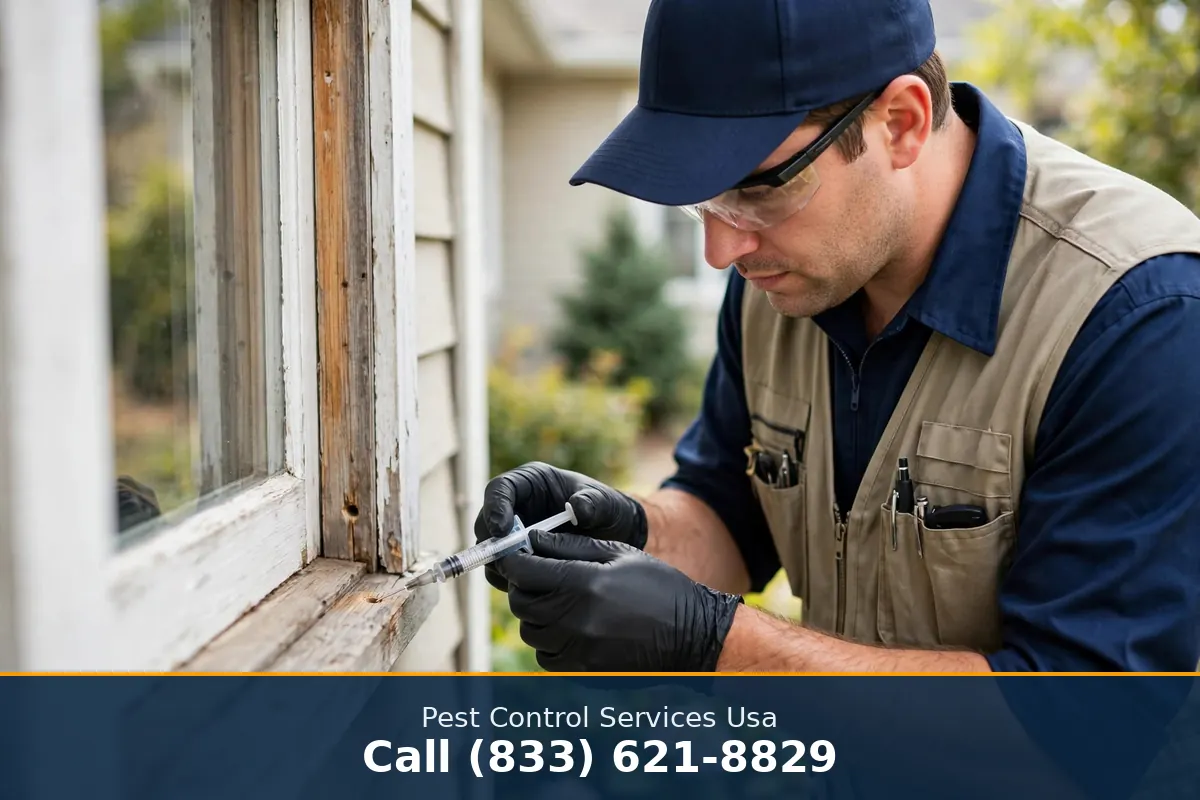
For localized colonies, treatment day usually needs no tent and no move-out. The technician drills small access points into the infested wood and injects termiticide directly into the galleries. Foam formulations expand through the connected tunnels, reaching termites the liquid alone might miss. Borate solutions are brushed or sprayed onto unfinished wood in attics and crawl spaces, where they soak in and remain as a long-term deterrent. Most no-tent treatments finish in a few hours, and you can stay in the home.
When the infestation is widespread, we recommend whole-structure fumigation. The building is sealed under a gas-tight tent, and a measured dose of fumigant is introduced to penetrate every board and beam. You, your family, and your pets leave the property for the fumigation period, and we give you a detailed preparation checklist in advance. After aeration and clearance testing, you return to a structure where every drywood termite colony has been addressed. We schedule a follow-up inspection to confirm the results and discuss prevention.
Preparation for fumigation is straightforward but important. Food, medicines, and pet supplies are bagged or removed according to the checklist we provide. Plants near the foundation are trimmed back so the tent seals properly, and exterior items like antennas or decorations are secured. We walk through every step with you before tent day, so the process feels organized rather than stressful.
What affects the cost
The number and location of active colonies is the main cost driver. A single localized colony in one window frame needs far less work than colonies spread across an attic and multiple rooms. The choice between no-tent treatment and full fumigation also shapes the investment, since fumigation involves tenting, gas, and clearance testing. Building size and roof complexity affect fumigation logistics, while accessibility affects spot-treatment labor. Pest Control Services Usa puts every cost factor in writing before you decide, with the inspection map attached to the estimate.
After treatment, simple habits reduce the chance of a new colony settling in. Store firewood and lumber away from the house, and keep attic vents screened against swarmers. Seal cracks around eaves and window frames where winged termites enter during swarm season. These steps support the treatment but never replace a professional inspection when signs appear.
How we serve your area
Pest Control Services Usa treats drywood termites in homes, condos, and commercial buildings nationwide. Coastal and southern regions see the heaviest pressure, but our no-tent and fumigation options are available wherever drywood termites appear. We coordinate fumigation schedules with your household or business calendar to limit disruption. To begin, call (833) 621-8829 and describe the signs you have found. A trained inspector will map every colony and recommend the treatment that fits your situation.
Landlords and property managers rely on us to protect multi-unit buildings, where one infested unit can threaten the whole structure. Real estate professionals schedule our inspections before sales close, since drywood findings can stall a transaction. Whatever the property type, the treatment recommendation comes from the inspection map, never from a preset package. That keeps the scope honest and the results verifiable.
Features
- Detailed inspection to locate frass, kick-out holes, and galleries
- No-tent localized treatments for accessible colonies
- Whole-structure fumigation for widespread infestations
- Direct wood injection into identified termite galleries
- Borate treatments for exposed, unfinished wood
- Attic and crawl space treatment options
- Clear guidance on when spot treatment vs. fumigation fits
Benefits
- Treats the colony inside the wood, not just the surface
- No-tent option avoids moving out during treatment
- Fumigation reaches every colony hidden in the structure
- Protects furniture, framing, and hardwood from further damage
- Written findings with photos of every activity point
- Preparation checklist provided before fumigation day
- Follow-up checks confirm the colonies are gone
Frequently asked questions
Can drywood termites be treated without tenting the house?
Yes, when the inspection shows colonies are localized and accessible. The technician injects termiticide directly into the galleries, and you stay in the home.
How do I know if I have drywood termites or subterranean termites?
Drywood termites leave piles of six-sided pellets called frass and live entirely in wood. Subterranean termites build mud tubes and need soil contact. Our inspection confirms the species.
Does fumigation protect against future termites?
Fumigation eliminates every colony in the structure at the time of treatment, but it leaves no lasting residue. New swarmers can still enter later, which is why inspections matter.
What do I need to do before fumigation?
We provide a detailed checklist covering food, medicines, plants, and pets. Our team walks through every preparation step with you beforehand.
Are no-tent treatments as effective as fumigation?
For localized colonies they are, because the product goes directly into the galleries where termites live. Fumigation is the better choice when colonies are widespread or hidden.