Flea Control Near Me
Starting price: Call for pricing
Pest Control Services Usa provides professional flea control that targets fleas at every life stage — eggs, larvae, pupae, and biting adults. Our technicians treat the areas where fleas actually live and develop, from carpets and pet resting spots to shaded yard areas. Follow-up visits are timed to the flea life cycle so reinfestation never gets a foothold.
What Flea Control Is
Fleas are small, wingless insects that feed on the blood of pets and people. The fleas you see jumping are only part of the story. For every adult flea on a pet, far more eggs, larvae, and pupae are developing in carpets, upholstery, pet bedding, and shaded yard areas. That hidden majority is why flea problems feel impossible to end.
Flea control from Pest Control Services Usa targets the full life cycle, not just the biting adults. The service includes a detailed inspection, targeted indoor treatments with insect growth regulators that stop young fleas from maturing, and yard treatment where outdoor harborage is feeding the indoor problem. It covers homes, apartments, rentals, and pet-heavy households.
This service treats your home and yard. It does not replace veterinary flea products applied directly to your pet. Those are a separate and important part of the picture, and your technician will explain how the two work together.
When You Need Flea Control
Flea infestations start small and escalate quickly. Warm weather speeds the life cycle, but indoor heating keeps it going through winter, so do not wait for spring to act.
- Your pets are scratching, chewing, or losing fur more than usual.
- You or family members have small, itchy bites around the ankles and lower legs.
- You see tiny dark specks — flea droppings — on pet bedding or light-colored rugs.
- You notice small insects jumping when you walk across carpet.
- A new home or rental had pets living there before you.
- You recently boarded pets, visited a dog park, or brought a stray indoors.
- Store-bought sprays and foggers have not solved the problem.
- Stray animals frequent your yard and may be bringing fleas in.
If bites and jumping fleas are part of your daily routine, the infestation has likely been building for weeks. An inspection will show how far it has spread.
The Pet Connection
Your pet is the reason fleas are in your home, but your pet is also the smallest part of the treatment area. Adult fleas spend most of their time on the animal, feeding and laying eggs. Those eggs fall off wherever your pet goes — the couch, the rug by the door, the shady spot under the porch.
This is why treating only the pet never ends an infestation, and why treating only the home sometimes fails too. The winning combination is professional home and yard treatment plus the flea prevention your veterinarian recommends for the animal itself. Neither one works fully without the other.
Tell your technician what products your pets are already on. Some combinations work better than others. Your technician can help you avoid gaps — like a pet on prevention but a yard full of untreated harborage — that let the cycle restart.
How the Process Works
Your Pest Control Services Usa technician starts with a thorough inspection, focusing on where fleas live rather than where you happen to see them. Carpets, area rugs, upholstered furniture, pet bedding, baseboards, and the shaded, moist areas of the yard all get checked. Flea droppings and hot spots tell the technician where treatment will matter most.
Before treatment, you will get a simple prep checklist. Vacuuming thoroughly — especially under furniture and along baseboards — removes many eggs and larvae and stimulates pupae to emerge, which actually makes treatment more effective. Washing pet bedding and throws in hot water clears another major reservoir.
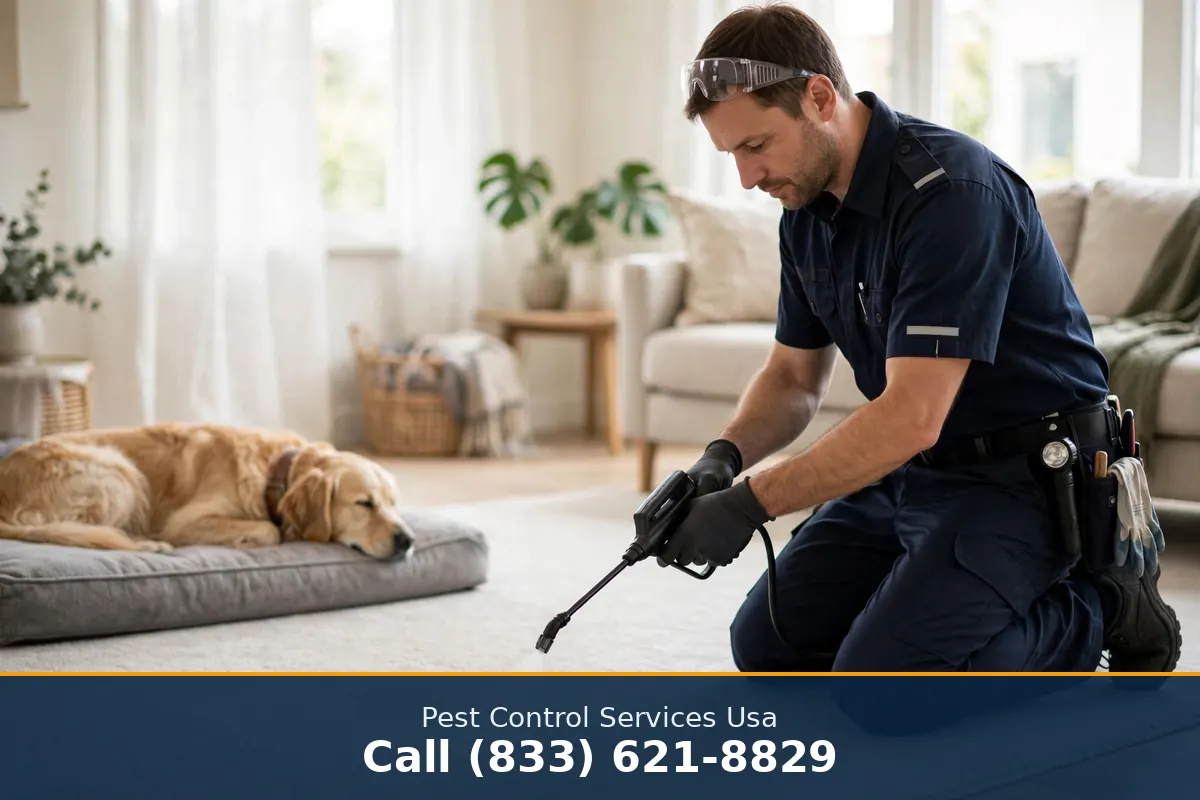
Treatment day covers the indoor areas where fleas develop. Residual products target adult fleas, while insect growth regulators stop eggs and larvae from maturing into biters. These products go into carpets, along baseboards, under furniture, and in pet resting areas — the places fleas actually live. Yard treatment follows for shaded harborage spots where pets pick fleas up outside.
Return visits are scheduled around the flea life cycle. Pupae are the toughest stage — they can sit dormant in carpet fibers for weeks and shrug off treatments that kill every other stage. Scheduling follow-ups to catch newly emerged adults is what finally ends the cycle. Between visits, keep vacuuming on schedule; it is one of the most effective things you can do. Questions any time: call (833) 621-8829.
After treatment, expect to keep seeing some adult fleas for a week or two. That is normal — the products are working through the remaining life stages, and vacuuming keeps drawing pupae out where treatments can reach them. Do not re-spray with store-bought products between visits, since that can interfere with the plan your technician set.
Keep pets on their veterinarian-recommended prevention throughout the program. When the home treatment and the pet's own protection work together, each new flea that hatches meets a barrier instead of a host — and the cycle finally ends.
What Affects the Cost
The size of your home and yard sets the baseline — more square footage means more area to inspect and treat. The number of pets matters because each pet adds resting spots, bedding, and outdoor routes that need attention.
The severity and spread of the infestation is a major factor. A problem caught early in one room takes less work than fleas established throughout the house and yard. Whether the yard needs treatment, how many follow-up visits the life cycle demands, and access to areas like crawl spaces or cluttered storage rooms all shape the scope. For an exact quote for your home, call (833) 621-8829.
How We Serve Your Area
Pest Control Services Usa serves pet households, renters, landlords, and property managers across the country. Flea pressure is year-round indoors and peaks in the warm months, so our programs cover both urgent infestations and the follow-through that keeps them from returning.
Our technicians treat flea jobs as life-cycle jobs, not spray jobs. That means honest timelines: we will tell you up front that pupae make this a multi-visit process. Your plan also coordinates with whatever flea prevention your pets are already on.
Tired of the scratching, the bites, and the sprays that do not work? Call (833) 621-8829 to schedule an inspection and start the plan that actually ends it.
Features
- Inspection of carpets, pet areas, and yard hot spots
- Treatments targeting eggs, larvae, pupae, and adults
- Insect growth regulators that disrupt the flea life cycle
- Focused treatment of pet bedding and resting areas
- Yard treatment for shaded, moist harborage areas
- Follow-up visits timed to pupae emergence
- Coordination guidance with your pet's flea prevention
Benefits
- Relief from bites for your family and your pets
- Treatment of hidden life stages, not just visible fleas
- Fewer repeat infestations through life-cycle timing
- A clear prep checklist before each visit
- Honest advice on what your pets need too
- Coverage for both indoor areas and the yard
- Support until the infestation is fully resolved
Frequently asked questions
Why do fleas keep coming back after I treat my pet?
Pet products kill fleas on the animal, but eggs, larvae, and pupae remain in carpets and bedding. Until those are treated, new adults keep emerging. Home and pet treatment must happen together.
How long does it take to get rid of fleas completely?
Most infestations need several weeks and at least one follow-up visit, because dormant pupae emerge later. Your technician will set a realistic timeline for your home.
Are flea treatments safe for my pets and children?
Yes, when applied according to the label. Treatments go into carpets and along baseboards — not on pets themselves — and your technician will give you clear guidance on when rooms are ready to re-enter.
Should I vacuum before or after treatment?
Both. Vacuum thoroughly before treatment to remove eggs and stimulate pupae, and keep vacuuming between visits. It is one of the most effective parts of a flea program.
Can fleas infest a home with no pets?
Yes. Fleas can arrive on clothing, in used furniture, or from a previous tenant's pets. Homes without pets still need the full life-cycle treatment.
Do I need to treat my yard too?
Often, yes. Shaded, moist yard areas are where pets pick fleas up. If the inspection finds outdoor harborage, yard treatment is part of the plan.