Foundation Crack Sealing Near Me
Starting price: Call for pricing
Cracks in foundation walls and slabs are one of the most common ways insects and rodents walk into a home. Pest Control Services Usa locates every gap along the foundation, seals them with professional-grade materials, and pairs the sealing with pest exclusion so the barrier holds. One thorough sealing visit removes the entry points pests depend on.
What foundation crack sealing is
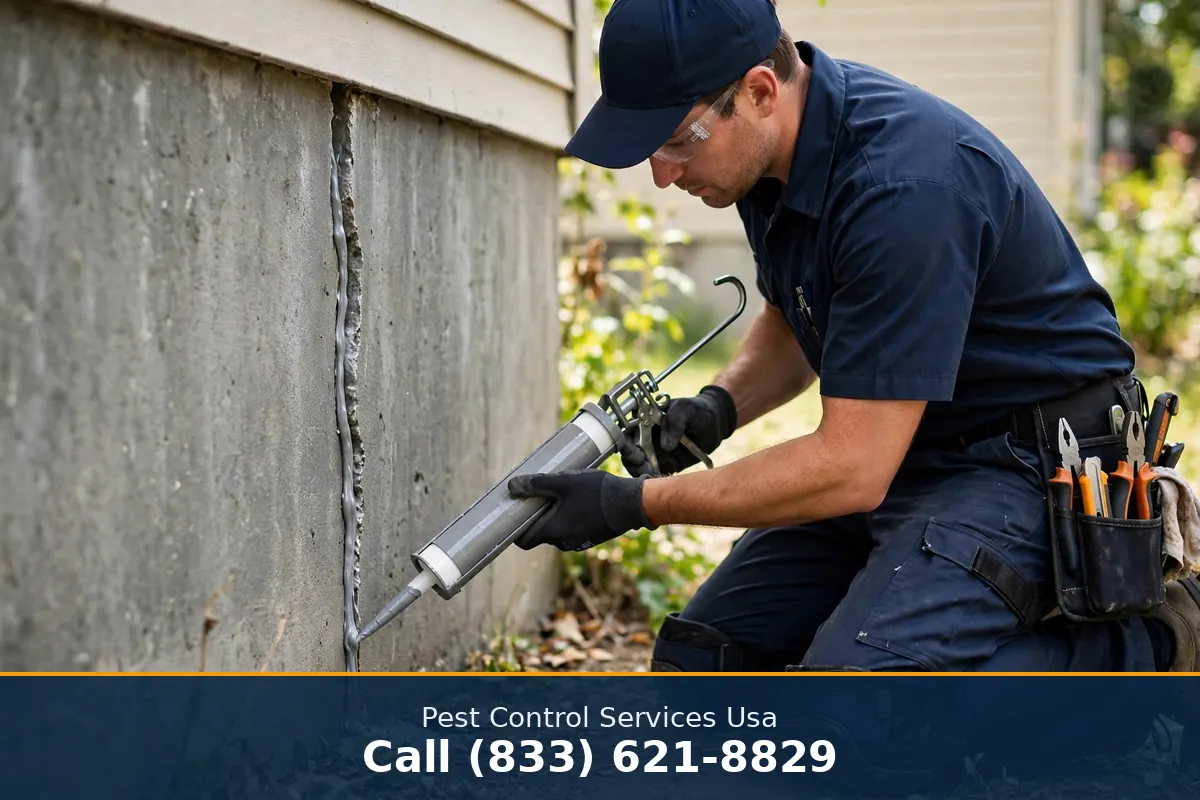
Foundation crack sealing is the systematic closing of cracks and gaps in your home's foundation walls, slab, and sill plate. Each opening is cleaned, backed with the right material, and sealed with products made for concrete and masonry.
Hairline cracks from concrete curing are common and often harmless structurally. Pests do not care about the structural question, though. Ants, spiders, and mice use any opening they can fit through, and a hairline crack is plenty for an insect.
Larger cracks from settling or soil pressure need attention for both water and pests. These openings can widen over time as moisture moves through them and freezes. Sealing them early keeps small problems from becoming large ones.
Our approach goes beyond a bead of caulk. Larger voids get packed with rodent-resistant mesh first, then sealed with professional-grade compounds. The result is a barrier that resists gnawing and weather alike.
Surface sealing and injection are different tools for different cracks. Narrow, stable cracks seal well from the surface. Wider cracks that show movement may call for deeper treatment before the surface is finished. We choose the method that fits the crack in front of us.
When you need foundation crack sealing
Pest sightings near the base of your home are the clearest signal. If you regularly see ants trailing along the foundation or spiders clustering at the sill, they are likely entering through gaps you cannot see from standing height.
Rodent activity in the basement or ground floor points the same direction. Mice can squeeze through openings the width of a pencil, and foundation cracks are a favorite route. Droppings along the basement perimeter often trace back to a foundation gap.
Water staining or damp spots on basement walls suggest cracks that admit moisture as well as pests. Where water can enter, insects follow, because damp soil against the foundation is ideal habitat.
Seasonal timing matters too. As temperatures drop, pests push harder to get indoors, and foundation gaps become highways. Sealing before that pressure builds is the most effective approach.
Older homes and newer builds fail in different ways. Older foundations develop cracks from decades of soil movement and freeze cycles. Newer homes more often show gaps where contractors left utility penetrations loosely finished. We look for both patterns on every assessment.
- Visible cracks in poured concrete or block foundation walls
- Gaps around pipes, cables, and conduits entering the home
- Daylight visible between the sill plate and the foundation top
- Ants, roaches, or spiders concentrated along the foundation line
- Mouse droppings or nesting material in the basement or crawl space
- Damp or stained areas on interior foundation walls
How the process works
The visit starts with a full perimeter walk, inside and out, to map every crack and penetration. We check the foundation walls, the slab edge, utility entries, and the sill plate line. Photos record each location we plan to seal.
Preparation comes next. Cracks are cleaned of loose material, old failed sealant, and debris so the new material bonds properly. Larger voids are packed with stainless mesh that rodents cannot chew through.
Then each opening is sealed with the compound matched to its size and location. Narrow cracks get polyurethane or concrete caulk, while wider gaps get layered treatments. Utility penetrations are finished with commercial-grade foam set beneath a protective caulk cap.
We finish with a walkthrough of everything sealed and guidance on seasonal checks. You will know which areas to watch and what early cracking looks like. The written summary lists every location we treated.
Most sealing is done from the interior and exterior where each crack is reachable. Exterior work includes grading awareness, since soil piled against the wall hides cracks and holds moisture. We note grading issues so you can correct them.
What affects the cost
The number and size of openings is the main factor. A foundation with a handful of hairline cracks is a different job than one with long settling cracks and open utility penetrations.
Access shapes the work as well. Finished basement walls, tight crawl spaces, and buried foundation sections all affect how long preparation and sealing take. Exterior grading that traps water against the wall may need correction first.
Material selection follows the crack type. Deeper treatments for wider cracks differ from surface sealants for hairline ones. Each product is chosen for the specific condition it is sealing.
Cracks that suggest structural movement get flagged for evaluation before sealing. We will tell you honestly when a crack is beyond a sealing scope. Your quote lists each treatment area as its own line item.
Crack sealing is exclusion work, not structural repair. It closes pest and moisture entry points; it does not lift, brace, or stabilize a moving foundation. When we see signs of real movement, we say so and point you toward the right specialist. Knowing the difference protects you from paying for the wrong fix.
How Pest Control Services Usa serves your area
Pest Control Services Usa seals foundations for homes, townhomes, and commercial buildings across our service area. We treat crack sealing as pest exclusion first, which means the barrier is designed to stop insects and rodents, not just look neat.
Because we handle pest control too, sealed foundations connect directly to your broader protection plan. Entry points closed here mean fewer interior treatments needed later. Many customers bundle sealing with their ongoing service.
Getting started is simple. Call (833) 621-8829, tell us what you are seeing, and we will schedule a foundation assessment. Most perimeter inspections take under an hour.
A sealed foundation is quiet work that pays off every season. Fewer pests, less moisture, and a tighter home all start at the base of the walls. We would be glad to show you what your foundation needs.
Commercial buildings benefit just as much. Restaurants, warehouses, and offices face the same pest pressure through foundation gaps, with health and inventory on the line. We scope commercial perimeters the same thorough way, scheduled around your operations.
Features
- Full perimeter inspection to find cracks, gaps, and utility penetrations
- Mechanical packing of larger voids with rodent-resistant mesh before sealing
- Professional polyurethane and concrete sealants matched to each crack type
- Utility line penetration sealing with layered commercial-grade materials
- Crawl space vent screening with hardware cloth that keeps airflow open
- Sill plate gap treatment where the framing meets the foundation top
- Seasonal re-check guidance so the seal stays intact year after year
Benefits
- Blocked entry for mice, rats, ants, roaches, and spiders at the source
- Less moisture intrusion seeping through cracks into basements
- Reduced indoor drafts and more stable indoor temperatures
- Fewer repeat pest treatments needed once entry points are closed
- Protection against wood-destroying insects reaching the sill plate
- A tighter home envelope that supports lower energy use
- Peace of mind knowing every visible gap has been professionally addressed
Frequently asked questions
Can pests really get through small foundation cracks?
Yes. Most insects need only a hairline opening, and a mouse can fit through a gap the width of a pencil. Foundation cracks are one of the most common entry routes we find during inspections.
What materials do you use to seal the cracks?
We match the product to the crack: polyurethane or concrete caulk for narrow cracks, layered treatments for wider gaps, and stainless mesh backing in voids where rodents could gnaw. Utility penetrations get commercial-grade foam plus a caulk cap.
Will sealing cracks also stop water from coming in?
Sealing reduces moisture intrusion through the treated cracks, and many customers notice drier basements afterward. If you have active water entry from grading or drainage issues, we will point that out so it gets addressed properly.
How do you handle cracks that look structural?
We flag them before sealing anything. A crack that suggests ongoing structural movement is beyond a sealing scope, and we will tell you so honestly. Cosmetic and pest-entry cracks are sealed as planned.
Should crack sealing be done before or after pest treatment?
Sealing works best alongside treatment. We usually treat the current activity first, then seal the entry points so new pests cannot follow. Bundling the two is the most effective approach.
How long does the sealing last?
Professional-grade sealants hold up for years under normal conditions. We give you guidance on seasonal checks, since new hairline cracks can appear as concrete ages and soil shifts.