Gopher Control Near Me
Starting price: Call for pricing
Pocket gophers can turn a healthy lawn into a field of mounds in a single season. Pest Control Services Usa removes them with professional trapping and targeted baiting programs built around your property's tunnel systems. We map active burrows, place equipment where gophers actually travel, and monitor until the activity stops.
What Gopher Control Is
Pocket gophers live almost entirely underground and feed on roots, bulbs, stems, and the occasional irrigation line. A single gopher maintains its own tunnel system and defends it fiercely against other gophers. While it works that territory, it pushes up fresh mounds of loose soil almost daily. Left alone, one animal can scar a lawn badly over a season.
Pest Control Services Usa provides professional gopher control for homes, ranches, HOAs, golf courses, schools, and commercial campuses. Our work centers on proven trapping programs, with targeted baiting added when pressure is heavy or ground is extensive. We focus on the burrowing rodents covered by this service and say so plainly. If your signs point to a different pest, we tell you which service fits instead of forcing this one.
Everything starts with locating the live tunnels. Gophers plug their mound holes and travel through side tunnels, so surface mounds alone do not show where to set equipment. We probe the soil around fresh mounds to find the main runs. That mapping step is the difference between professional control and guesswork.
When You Need It
The classic gopher sign is a crescent-shaped mound with the hole plugged and pushed to one side. These fan-shaped piles look different from the tidy volcano cones left by moles. If you see plugs of soil blocking every hole you find, gophers are the likely culprit. Plants that wilt despite steady watering are another strong clue, since their roots may be eaten away.
Watch for these warning signs:
- Fresh mounds appearing on a regular schedule across the lawn or beds.
- Vegetables, bulbs, or young trees vanishing or dying back without disease.
- Drip lines or sprinkler heads failing repeatedly in the same zones.
- Soil sinking along shallow runs or under walkway edges.
- Mounds multiplying along fence lines shared with open land.
Acting early keeps the job small. A new mound may mean one gopher working a small area. Months of ignored activity usually means an established tunnel network and possibly young gophers spreading outward.
Why Gophers Are Hard to Control Alone
Store-bought repellents and noisemakers rarely move a gopher out of a productive tunnel system. These animals are solitary and territorial, so removing one simply opens the ground for a neighbor. Flooding tunnels wastes water and seldom reaches the nest chambers. Surface poisons put non-target animals at risk and often get ignored by the gopher entirely.
Timing also works against do-it-yourself efforts. Gophers breed in the spring, and young animals disperse to dig new systems nearby. A yard cleared in winter can be recolonized by summer if nobody watches for fresh activity. Professional control combines correct placement, the right equipment, and scheduled return visits. That combination is what finally ends the cycle.
Pressure also varies by season and setting. Spring brings breeding and dispersing young, while irrigated summer ground stays attractive all season. Properties next to open fields, vacant lots, or agricultural land face constant re-invasion. That is why a program built on monitoring outperforms any single treatment event.
How the Process Works
We begin with a full walk-through of your property. Our technician maps fresh mounds and probes for the main tunnels feeding them. We note soil type, irrigation layout, and any areas where equipment should be hidden or marked. Then we explain the plan in plain terms before any work starts.
Mapping also reveals how many animals you are dealing with. Fresh fan-shaped mounds with soft soil point to current activity. Older, crusted mounds mark abandoned runs we can ignore. This triage keeps equipment focused where it matters and avoids wasted visits.
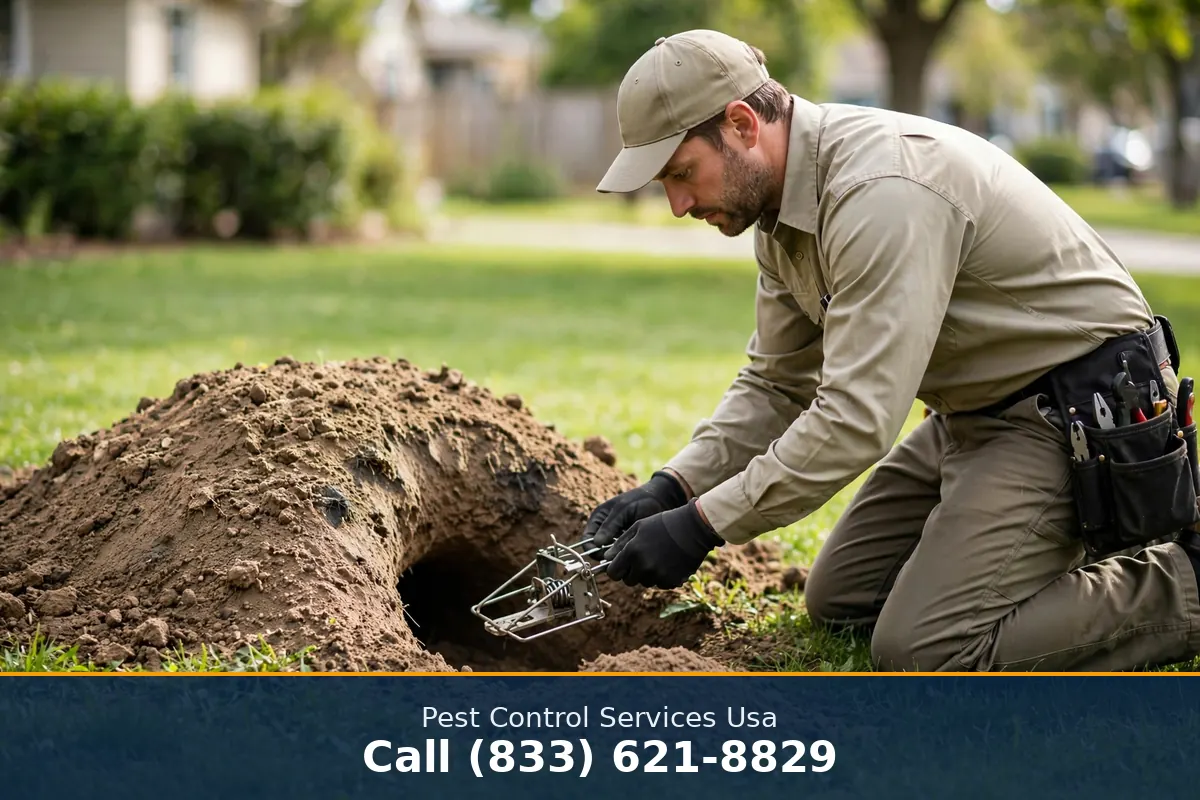
Next we set professional-grade traps directly into the active runs. We place sets in pairs facing opposite directions so a gopher meets one whichever way it travels. Every set gets covered and marked for your safety and ours. On larger properties with heavy pressure, we add targeted bait placements deep inside the tunnel system where only gophers travel.
Then we return on a schedule to check every set. We remove caught gophers, reposition traps that missed, and refresh bait as needed. Each visit includes fresh mapping because surrounding gophers move in to claim emptied territory. Once catches stop and no new mounds appear, we run a monitoring period to catch late re-invaders. The job closes with mound flattening and a final surface tidy-up.
What Affects the Cost
Property size is the biggest factor, since more ground holds more tunnel systems to map and treat. Infestation level matters too: a single new mound needs fewer visits than a yard full of old runs. Access shapes the work as well, because fenced yards, dense plantings, and locked gates slow every visit.
Soil conditions play a real role in western ground. Rocky or heavily compacted soil makes probing and trap placement harder. Irrigated land with soft, moist soil probes easily but also attracts more gophers. Program type rounds out the picture: one-time removal involves fewer visits than a seasonal program that guards through the breeding months. Travel and access details round out the quote. Gated communities, steep slopes, and large rural parcels each change how we schedule. Properties with both lawns and growing areas may need a blended approach. Your assessment covers all of this before you commit. For an exact figure for your property, call (833) 621-8829 and describe what you are seeing.
How We Serve Your Area
Pest Control Services Usa serves homeowners, property managers, farms, and commercial grounds across our coverage area. Gopher pressure runs heaviest in the West, including California, Arizona, Texas, and nearby states where irrigated landscaping stays green all year. We adjust trap density and visit timing to local soil and seasonal patterns.
Wherever you are, the method stays consistent: map the tunnels, place equipment correctly, and monitor until activity ends. We keep vehicles unmarked on request and schedule visits around your day. Every property file guides the next visit. Call (833) 621-8829 for a property assessment and a clear plan to end your gopher problem.
Features
- Hands-on mapping of active tunnel systems at every visit
- Professional traps set directly inside live gopher runs
- Targeted bait placements for heavy or widespread pressure
- Mound flattening and surface tidy-up when work finishes
- Scheduled rechecks that catch re-invading gophers early
- Programs for lawns, gardens, orchards, and commercial grounds
- Seasonal monitoring that guards against new burrowing cycles
Benefits
- Reclaim a smooth, even lawn with no new mounds
- Protect roots, bulbs, vegetables, and young trees
- Stop chewed irrigation lines and failed sprinkler zones
- Remove tripping hazards from mounds and sunken runs
- Targeted approach keeps treatment inside the tunnels
- Fewer repeat problems with scheduled follow-up visits
- One point of contact from assessment through final check
Frequently asked questions
How can I tell if I have gophers or moles?
Gophers leave crescent-shaped mounds with a plugged hole off to one side. Moles leave neat volcano-shaped cones with no visible hole. Plants dying from eaten roots also points to gophers, since moles feed on insects instead.
How long does gopher control take?
Light activity often resolves within a few scheduled visits. Heavy infestations with established tunnel networks take longer and need more rechecks. Your technician gives you a realistic timeline after the first property walk-through.
Are your methods safe around pets and children?
Traps go underground inside the tunnels and stay covered and marked. Bait, when used, is placed deep inside tunnel systems where only gophers travel. We review every placement with you during the visit.
Will gophers come back after treatment?
Neighboring gophers can move into emptied tunnel systems, especially near open land. That is why our programs include scheduled rechecks and a monitoring period. Ongoing seasonal programs offer the strongest long-term protection.
Do you fix the mounds and damaged lawn?
We flatten mounds and tidy the surface when the job closes. Severely damaged turf may need reseeding or sod, which your landscaper can handle once the gophers are gone.
How much does gopher control cost?
Cost depends on property size, infestation level, soil conditions, and whether you choose one-time removal or a seasonal program. Call (833) 621-8829 for an exact quote based on your property.