
Green / Eco-Friendly Pest Control Near Me
Starting price: Call for pricing
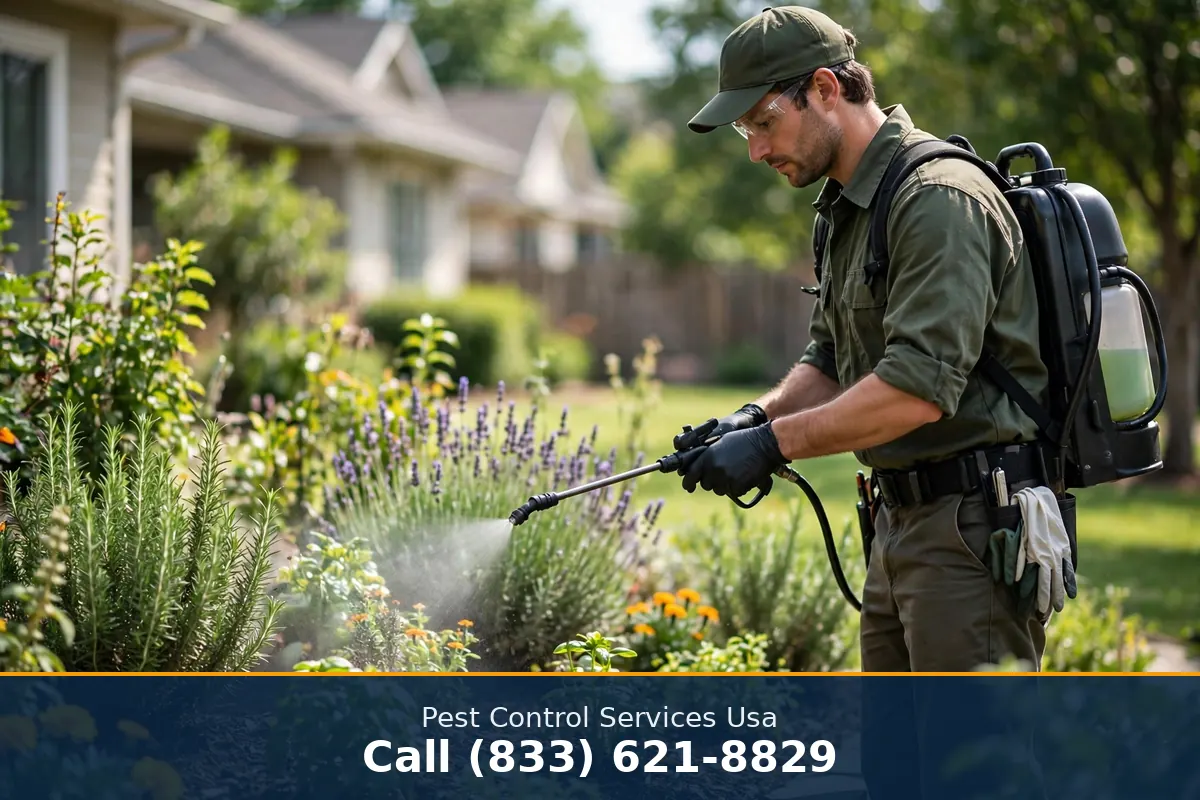
Pest Control Services Usa green pest control pairs plant-based and minimum-risk products with prevention-first methods to manage ants, roaches, spiders, and rodents. Treatments go only where pests live, travel, and breed, so your home stays protected with far less chemical exposure.
What green pest control is
Green pest control is not a single product. It is a way of working that starts with careful inspection, leans on prevention, and reaches for the gentlest effective tool first. Many conventional programs begin with a fixed spray schedule. Ours begins with questions: which pest is present, how it entered, and what is feeding it. Only after those answers do we choose a treatment, and the treatment fits the problem instead of the calendar.
Botanical products come from plant oils such as peppermint, cedarwood, and rosemary. These oils disrupt how insects feed, breed, and navigate, which makes treated areas unlivable for pests while breaking down naturally outdoors. Minimum-risk products recognized under the EPA's 25(b) exemption offer another reduced-toxicity option for homes that want the lightest possible footprint. Neither approach asks you to accept pests in exchange for principles.
Green methods also rely on tools that use no pesticide at all. Snap traps, glue monitors, vacuums, and targeted heat all remove pests through physics rather than chemistry. Exclusion work — sealing gaps, screening vents, and repairing weather stripping — stops new pests from replacing the old ones. The result is control that lasts because the causes were fixed, not because a chemical barrier was sprayed and left to fade.
When you need it
You do not have to be a strict environmentalist to choose green pest control. Many customers simply want fewer chemicals around children, pets, or the vegetable garden. Others near waterways or pollinator gardens want outdoor treatments that respect those neighbors. Offices with green building goals choose it to match their own policies.
Common situations that call for a green approach include:
- Recurring ant trails in the kitchen that keep returning after store-bought sprays
- Roach activity in apartments where neighbors share walls and ventilation
- Spider webs and egg sacs around eaves, porches, and window frames
- Rodents in the garage or attic where poison baits feel too risky
- Mosquito pressure in a yard with a garden, pond, or play area
- A business that must meet customer or tenant expectations for low-impact practices
Green programs also work well as ongoing prevention rather than one-time fixes. Seasonal visits keep monitors in place, refresh exterior treatments, and catch new entry points before pests settle in. For households that want year-round protection with the lightest footprint, that rhythm beats reacting to each new invasion.
How the process works
We start with a full inspection of your home or business, inside and out, looking for entry points, moisture problems, food sources, and the signs each pest leaves behind. You get a plain-language explanation of the findings and a plan that puts the gentlest effective methods first. Expect the technician to spend real time in the attic, crawl space, and around the foundation, since those are the highways pests use.
Next comes the hands-on work: sealing gaps, setting monitors or traps, placing baits where pests feed, and applying gentler products only where the inspection showed they are needed. The first visit often takes longer than a routine spray visit, and that time pays off in results that hold.
Follow-up visits are part of the plan, not an afterthought. Monitors get checked, bait stations get refreshed, and any new entry points get sealed. You receive a short summary after each visit: what was found, what was done, and what to watch for. Call (833) 621-8829 if activity returns between visits so we can adjust the plan.
What products we use and why
Product choice starts with the pest and the setting, not with a brand preference. Botanical oils handle many ant, spider, and occasional-invader problems well, especially when paired with exclusion. Minimum-risk 25(b) products fill gaps where a longer residual is needed without moving up to conventional chemistry. For rodents, mechanical traps and exclusion do the heavy lifting with no bait exposure at all. Ask which products are planned for your home and why; a good technician welcomes the question.
Conventional products still have a sparing, precise role. A targeted application inside a wall void or locked station can resolve a deep infestation that botanicals alone would take months to wear down. You are told exactly what is used, where, and why.
Heat treatment deserves special mention for bed bugs, since it kills all life stages, including eggs, with no chemical residue at all. Vacuuming with HEPA filtration removes live insects and debris from mattresses and furniture before any product is considered. These physical methods are the backbone of green bed bug work and a good example of the whole philosophy: solve it with the simplest effective tool.
What affects the cost
What you pay for green pest control depends on the same factors as any quality pest service, not on a menu of products. The type of pest matters most: a few ant trails cost less to resolve than a deep-seated roach population spread through shared walls. The size and layout of the property shape the work too, since larger buildings have more entry points to seal and more ground to cover.
Frequency plays a role as well. A one-time treatment for a contained problem differs from an ongoing plan that visits each season and keeps monitors in place year-round. Specialty work such as heat treatment for bed bugs or full exclusion for rodents adds labor and materials. For an exact figure based on your situation, call (833) 621-8829 and describe what you are seeing.
How we serve your area
Pest Control Services Usa brings green pest control to homes, apartments, and businesses throughout our service area. Single-family homes get full-perimeter protection with garden-conscious and pet-conscious methods. Apartments and multi-family buildings get unit-by-unit plans that respect shared walls and common areas. Restaurants, offices, schools, and warehouses get discreet programs that meet their own environmental standards.
We treat the yard as part of the home, focusing on harborage reduction, standing-water management for mosquitoes, and targeted foundation treatments instead of wide broadcast applications. Mention gardens or compost piles during the visit. Call (833) 621-8829 to talk through a green plan.
Features
- Botanical treatments derived from plant oils like peppermint and cedarwood
- Minimum-risk product options meeting the EPA's 25(b) criteria
- Inspection-first Integrated Pest Management that finds the root cause
- Targeted crack-and-crevice applications, not broad baseboard spraying
- Exclusion work that seals the entry points pests use to get inside
- Non-chemical tools: traps, vacuums, and heat treatment where they fit
- Low-toxicity methods chosen with children and pets in mind
Benefits
- Less pesticide residue on floors, counters, and play surfaces
- A gentler option for asthma or chemical sensitivities
- Outdoor methods that protect pollinators, not broadcast spray everywhere
- Fewer repeats because entry points and food sources get fixed
- Plans for homes, apartments, and environmentally conscious businesses
- A clear explanation of every product before treatment begins
- Real pest control without the heavy chemical footprint of old-school spraying
Frequently asked questions
What makes pest control "green" or "eco-friendly"?
It is the method, not a magic product: inspection first, entry points and food sources fixed, and gentler products used only where needed. The goal matches conventional service, with less chemical exposure.
Is green pest control as effective as traditional treatments?
Yes, when done properly. Targeted applications and exclusion address why pests are there, often outlasting blanket spraying. Severe infestations may still need stronger tools.
Will green treatments harm my garden or pollinators?
Protecting them is the point: no broadcast sprays across flowering plants, and targeted applications keep products where pests travel. Mention garden beds during the visit.
Do you ever use conventional products in a green program?
Sometimes. A deep-seated infestation may need a targeted conventional product in a wall void or locked station. You will always be told what is used and why.
How long before I see results?
Many customers notice less activity within a week or two as entry points are sealed. Hidden harborages can take a few visits. Your technician will set expectations from the inspection.
What can I do between visits to help?
Store food in sealed containers, fix leaks that give pests water, and keep clutter down where pests hide. Your technician will leave specific suggestions after each visit.