Healthcare Facility Pest Control Near Me
Starting price: Call for pricing
Healthcare facility pest control from Pest Control Services Usa uses strict integrated pest management with minimal chemical use around patients, staff, and sensitive equipment. We monitor, exclude, and treat with precision, then document everything for your compliance team.
Why Healthcare Demands a Different Standard
Hospitals and senior living communities house the people least able to tolerate pest exposure. Patients with weakened immune systems face real harm from the bacteria pests carry. A single cockroach in a patient room can become a serious incident. The standard here is prevention, not reaction.
Healthcare buildings are also complex. Kitchens, laundries, loading docks, pharmacies, and waste rooms each attract different pests. Miles of pipe chases and wall voids let pests travel unseen between floors. Construction and renovation open new pathways every year.
Chemical sensitivity shapes every decision. Many patients react poorly to strong odors and residues. Staff work long shifts in the same air. Choosing the least intrusive effective method is both a medical and an ethical call.
Regulators and accreditors watch closely. Survey teams ask how pests get prevented, not just how they get treated. Missing documentation reads as a missing program. A written IPM plan with records answers those questions before they get asked.
Pest Control Services Usa builds programs for this environment from the ground up. We design around patient safety first and convenience second. Every method we propose passes a simple test: is it safe for the most vulnerable person in the building?
Construction and renovation deserve their own protocols. Open walls release dust and pests into occupied areas. We set barriers and increase monitoring during every project phase. The work finishes without a pest incident attached to it.
Pests That Threaten Patient Environments
Ants invade nourishment rooms and nurses' stations looking for sugar and moisture. They contaminate sterile surfaces on their way. Small colonies become big problems in warm wall voids.
Cockroaches favor the heat and moisture of commercial kitchens and laundries. They trigger asthma and carry bacteria across food-contact surfaces. Night activity means staff may never see them until the problem is large.
Bed bugs arrive with patients and their belongings. They hide in mattresses, bed frames, and waiting-room furniture. Early detection with targeted response keeps one room from becoming a floor.
Small flies breed in the organic buildup inside drains and mop sinks. They signal sanitation gaps more than anything else. Fixing the source beats treating the symptom.
Rodents threaten loading docks, waste areas, and mechanical rooms. They gnaw through packaging, wiring, and insulation. Flies move between waste handling and food service in a single flight.
Each pest needs a different answer. What works for ants fails for bed bugs. A monitoring program spots which species is active before treatments get chosen.
Stored food in nourishment rooms attracts pantry pests. Cereal, crackers, and dry goods sit for weeks between restocks. Sealed containers and rotation keep these zones quiet.
Ants in sterile processing areas are a special concern. They trail along warm equipment and enter through tiny gaps. We target the exterior colonies that feed these trails. Interior placements stay minimal by design.
How Our Healthcare IPM Program Works
Every engagement starts with a facility-wide inspection. We walk patient areas, kitchens, docks, mechanical rooms, and grounds. We identify entry points, moisture issues, and sanitation gaps. Findings go into a written IPM plan your team approves.
Monitoring comes before treatment. We place discreet monitors in non-patient areas and track activity over time. Data decides where effort goes. Chemicals stay on the shelf until monitoring says they are needed.
Non-chemical methods do the heavy lifting. We seal entry points with durable materials. We use vacuums, steam, and heat where they fit the situation. Traps and exclusion solve many problems without a single application.
Thresholds keep treatments honest. We define action thresholds for each zone: a set number of monitor captures that triggers a response. Below the threshold, we watch and wait. Above it, we act with the agreed method.
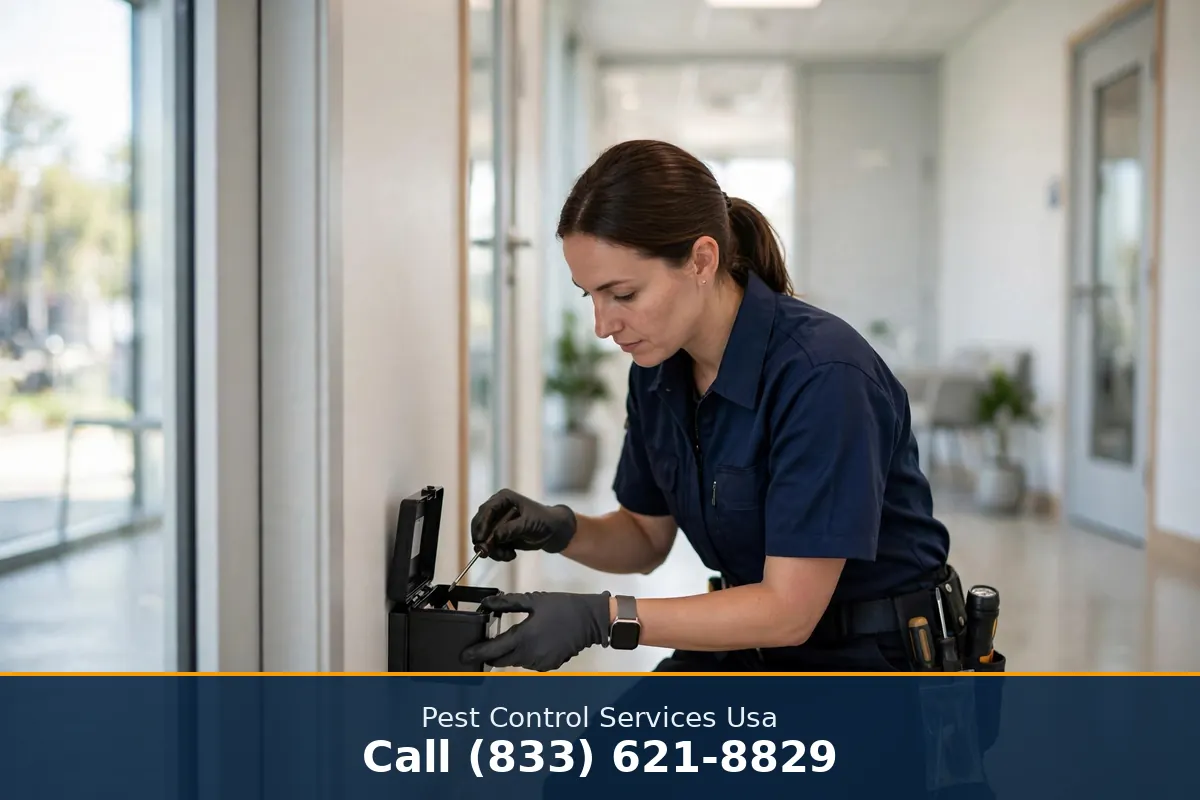
When treatment is necessary, precision rules. We apply targeted products in cracks, voids, and locked stations only. Patient rooms get treated with extra precautions and clear re-entry guidance. Your infection control team reviews the approach first.
Laundry and waste flows get mapped too. Soiled linen moves through corridors on tight schedules. Waste rooms hold organic material between pickups. We place monitors along both routes and check them on every visit.
Working Around Care, Not Through It
Timing is a clinical decision, not a scheduling convenience. We coordinate with nursing leadership to choose windows that avoid patient contact. High-risk units like oncology and maternity get the most restrictive protocols. Emergency responses follow a pre-approved escalation plan.
Communication stays tight. Your facilities team gets advance notice of every visit with the zones covered. Staff know what to expect and what to report afterward. No surprises, no confusion, no interruptions to care.
Our technicians work discreetly and keep a low profile in patient areas. Equipment stays out of sightlines whenever possible. The program remains invisible to patients and families.
Staff training closes the loop. We teach environmental services and nursing staff what to watch for. Simple reporting steps turn every employee into a monitor. Early reports keep small issues from reaching patients.
Family areas need the same discretion as patient rooms. Waiting rooms, chapels, and cafeterias stay calm and welcoming. Our work never draws attention in these spaces.
Discharge lounges and pharmacies get zone-specific plans. Each area has its own risk profile and its own schedule. One building, many micro-programs, all under one roof.
Compliance and Documentation Your Surveyors Expect
Surveyors ask for proof, and we make sure you have it. Every visit generates a dated report with findings and actions. The IPM plan, the facility map, and the trend logs live in one file. Corrective actions close with documented completion.
We align with your existing compliance calendar. Joint Commission surveys, state inspections, and internal audits all draw from the same records. Your team never scrambles to assemble documentation.
Trends tell the story better than single visits. Quarterly reviews show activity by zone and the actions taken. Patterns guide next quarter's focus. The program improves itself on evidence, not guesswork.
We also support your internal reporting. Incident logs from nursing staff feed into our trend analysis. Patterns across units reveal building-wide issues. The program learns from every report it receives.
Call (833) 621-8829 to discuss a healthcare IPM program for your facility. We inspect, plan, and document to the standard your patients deserve.
New construction gets a pre-opening review. We inspect before the first patient arrives and set the monitoring baseline. Day one starts with data, not assumptions.
We join your quality meetings when invited. Pest trends belong in the same conversation as other facility risks. A short quarterly briefing keeps leadership informed. The program earns its place at the table.
Features
- Strict IPM with minimal chemical use
- Patient-safe treatment scheduling by zone
- Coordination with infection control teams
- Bed bug response protocols for patient rooms
- Cockroach and ant control in kitchens and laundries
- Exterior rodent stations away from entrances
- Compliance-grade service documentation
Benefits
- Patients stay protected from pest-borne risks
- Treatments timed around care, not through it
- Survey readiness with complete records
- Staff gain clear reporting procedures
- Chemical exposure kept to the minimum
- Sensitive areas handled with extra care
- One accountable partner for the whole campus
Frequently asked questions
Is pest control safe around patients?
It is. Our healthcare program leads with inspection, monitoring, and exclusion, and uses chemical treatments only when necessary and in targeted placements. We coordinate timing with your clinical teams to avoid patient contact.
How do you handle bed bugs in patient rooms?
We respond with a defined protocol: inspection, targeted treatment with non-chemical methods where possible, and follow-up monitoring. The room returns to service only after our technician clears it.
Will service disrupt patient care?
It will not. We schedule around care routines and coordinate with nursing leadership. High-sensitivity units receive the most restrictive protocols.
What documentation do you provide for surveys?
You receive dated service reports, a written IPM plan, facility monitoring maps, and trend logs. Everything surveyors ask for lives in one organized file.
Do you train our staff?
We do. We train environmental services, nursing, and facilities staff on pest recognition and reporting. Short sessions keep everyone aligned without taking them off the floor.
How do you treat kitchens and food service areas?
We focus on sanitation guidance, exclusion, and targeted crack-and-crevice treatments away from food-contact surfaces. Monitoring stations track activity so treatments stay minimal.