Norway Rat Control Near Me
Starting price: Call for pricing
Pest Control Services Usa specializes in Norway rat control for the heavy, burrowing rats that live under foundations, in crawl spaces, and along sewers. We map active burrows, trap the colony, and seal ground-level entry points with chew-proof materials. Call (833) 621-8829 for a full property inspection.
What Norway rat control is
The Norway rat is the heavyweight of American rodent problems. Also called the brown rat or sewer rat, it is a stocky burrower that lives at ground level rather than up in attics. Adults run a foot or more long with blunt noses and short tails, and they dig tunnel systems under foundations, porches, sheds, and mulch beds. Where roof rats climb, Norway rats dig, and that difference changes everything about how you fight them.
Norway rats are cautious animals. They avoid new objects in their territory for days, which is why traps set in a hurry often sit empty. They also follow the same runways night after night along walls, pipes, and fence lines, leaving greasy rub marks that show us exactly where to work. Pest Control Services Usa builds every Norway rat job around these habits, placing equipment on proven routes instead of guessing.
This species does its worst damage low to the ground. Burrows undermine walkways, patios, and slab edges. Gnawing reaches buried wiring, irrigation lines, and the soft wood of sill plates. Because Norway rats travel through sewers and storm drains, they also carry more bacteria than most people expect, and they spread it across every surface they touch. Control means collapsing that whole system: the burrows, the runways, the entry points, and the food that keeps the colony fed.
When you need it
- Thumping or rustling sounds under floors or inside low walls at night
- Burrow holes the width of a tennis ball around the foundation or in garden beds
- Droppings scattered along basement walls, in crawl spaces, or near trash areas
- Gnaw marks on door sweeps, garage seals, or the bottom edges of siding
- Smooth, packed runways through grass or mulch along the house
- A strong musky smell in the basement or crawl space
- Neighbors mentioning rats, since colonies often span several properties
If you see burrows, do not fill them in yourself. Sealed burrows just push the colony to dig new ones, often closer to the house. Let us map the system first.
How the process works
We start low. The inspection covers the foundation line, crawl space, basement, garage, yard, and anywhere pipes or wires enter the building. We map every active burrow, note rub marks and droppings, and identify what the colony is eating. Pet food left out overnight, open compost, fallen fruit, and unsecured trash are the usual suspects. You get a clear picture of the colony's size and a plan in plain language.
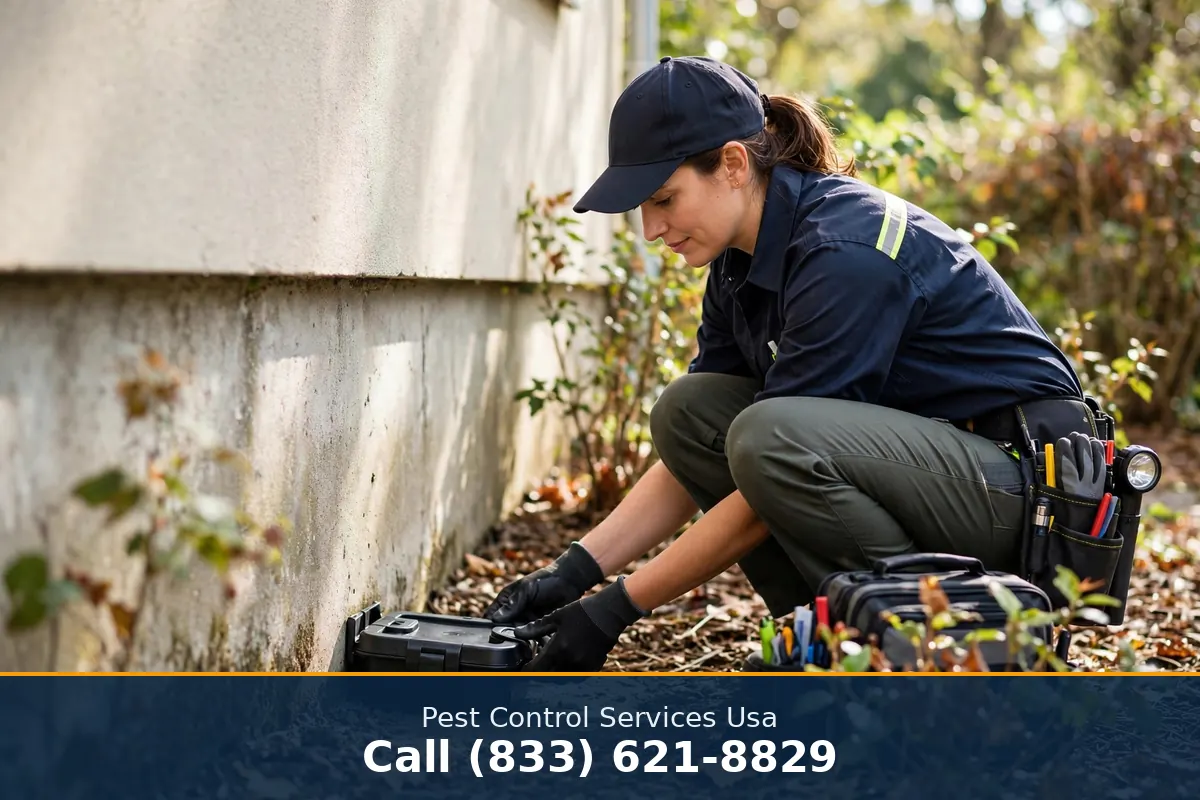
Trapping comes next. Snap traps go inside along basement and crawl space runways, where pets and kids cannot reach. Outside, tamper-resistant bait stations sit along fence lines and foundation runways, secured and monitored. Because Norway rats are shy of new objects, we often pre-bait for a few days so the rats feed comfortably before traps are armed. Patience here is what makes the difference between an empty trap and a caught rat.
While trapping runs, we seal the building. Ground-level gaps around pipes, vents, and doors get steel mesh and metal flashing that rats cannot chew through. Crawl space vents get heavy screening. We also check where drain and sewer lines enter, since Norway rats sometimes travel through damaged pipes. Any repair beyond our scope, like a broken sewer lateral, gets flagged for your plumber with clear photos and notes.
The final phase is starvation and follow-up. With the building sealed and stations maintained, the colony loses its food and shelter. We revisit on schedule, pull equipment as activity stops, and walk you through the habits that keep new rats from moving in. Burrow systems get collapsed or filled once we are sure they are empty.
What affects the cost
Colony size drives the job. A few rats around one corner of the house need fewer visits than a large colony spread across a whole property. Access matters too: a clean, dry crawl space is quick to work in, while a low, cluttered one slows every step. The number of entry points is the third factor, because each gap needs individual sealing with the right material.
The yard itself can add work. Overgrown vegetation, woodpiles against the house, and open compost give rats cover and food, and clearing those conditions is part of a lasting fix. Soil type even plays a role, since soft ground lets burrows spread wider and deeper. Call (833) 621-8829 and we will inspect the property, show you exactly what we find, and put together a clear quote.
How we serve your area
Norway rats are a problem in every state, but they look different from place to place. In older cities they run through combined sewers and alleyways. In suburbs they follow fence lines between yards, feeding on pet food and bird seed. Near farms and warehouses they move between outbuildings and stored grain. Pest Control Services Usa works nationwide, so our technicians have seen all of it and know which pattern they are looking at.
Restaurants, food plants, and apartment buildings get the documentation health departments and HOAs ask for: dated visit records, maps of station locations, and notes on sanitation fixes. Homeowners get the same thorough treatment scaled to a single property. Whatever the setting, the approach is identical: find the burrows, remove the rats, seal the building, and cut off the food.
Features
- Burrow mapping along foundations, fences, and crawl spaces
- Ground-level trapping tuned to Norway rat behavior
- Tamper-resistant exterior bait stations on active runways
- Foundation and crawl space entry-point sealing
- Sewer and drain access inspection and screening
- Sanitation coaching to remove food and water sources
- Scheduled rechecks until burrow activity stops
Benefits
- End the nighttime rustling and thumping you hear below your floors
- Protect foundations, slabs, and buried utilities from burrowing
- Keep droppings and contamination out of food storage areas
- Reduce the health risks that come with sewer-dwelling rats
- Stop new colonies from moving into old burrow systems
- Get documentation that satisfies HOAs and health departments
- One team handles burrows, trapping, and sealing together
Frequently asked questions
What is the difference between Norway rats and roof rats?
Norway rats are stocky burrowers that live at ground level in foundations, sewers, and crawl spaces. Roof rats are slimmer climbers that nest in attics and trees. We identify the species during inspection and match the method to it.
Will the rats just move to my neighbor's yard?
Rats follow food and shelter, so if your property is sealed and clean, the colony has no reason to stay. We also advise on talking with neighbors, since wide colonies sometimes need coordinated effort.
Can Norway rats come up through my drains?
They can travel through damaged or dry drain lines. We inspect where pipes enter the building and screen vulnerable openings, and we flag broken sewer lines for your plumber.
How long until the rats are gone?
Most Norway rat jobs take two to four weeks. Burrow colonies are cautious, so we build in time for pre-baiting and follow-up checks.
Should I fill in the burrow holes?
Not until the burrows are confirmed empty. Filling active burrows just forces new digging. We collapse or fill them as the last step.
Are your methods safe for my dog?
Yes. Indoor traps go where pets cannot reach, and outdoor stations are tamper-resistant and secured. We place everything with pets in mind.