
Office Pest Control Near Me
Starting price: Call for pricing
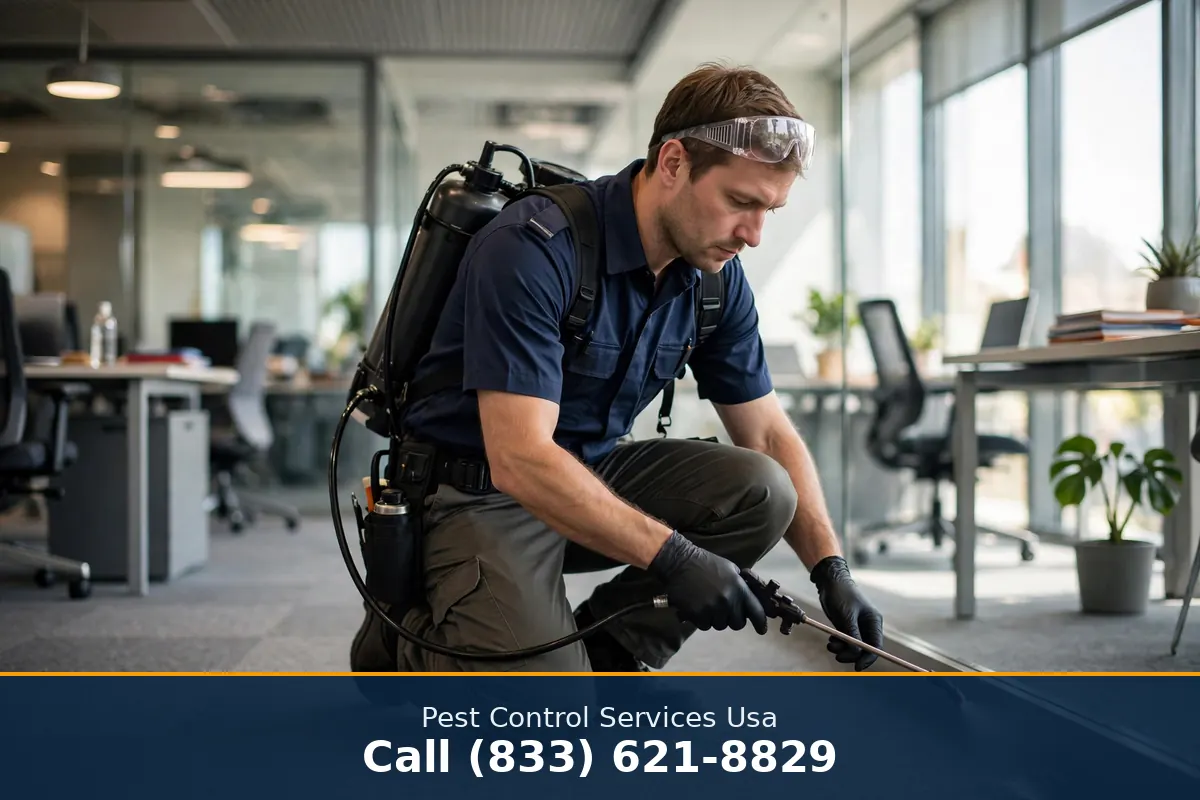
Office pest control from Pest Control Services Usa keeps break rooms, lobbies, restrooms and shared kitchens protected from ants, roaches, rodents and flies. We schedule service in the evening or on weekends so your team never sees a trap, a technician, or a treatment.
Offices Attract Pests in Surprising Ways
An office looks nothing like a restaurant, yet pests see it the same way. Break rooms hold crumbs, coffee spills, and trash. Shared refrigerators collect forgotten lunches for weeks. Restrooms and mop closets supply the moisture pests need.
Ants follow coffee spills from the kitchenette into desks and filing areas. German cockroaches settle behind break-room appliances where heat and grease collect. Mice slip through door gaps at the loading entrance and nest above ceiling tiles. Flies ride in on deliveries and hover around trash corrals.
Pests also exploit the rhythms of office life. Trash sits in bins from Friday evening until Monday morning. Break-room sinks drip over long weekends. Cleaning crews focus on visible areas and skip the backs of appliances. These gaps give pests exactly what they need.
A single sighting can undo months of workplace culture work. Employees lose confidence when they spot a roach near the microwave. Clients notice a mouse in the lobby before they notice your new signage. An ongoing plan costs less attention than a single incident.
Shared kitchens deserve special attention. Microwaves collect splatter that feeds roaches for weeks. Dishwashers leak slowly into cabinets where no one looks. Vending areas drop crumbs behind machines that rarely move.
Elevator lobbies and mail rooms get overlooked. Packages pile up and sit for days before anyone claims them. Cardboard harbors roaches and gives them a highway between floors. We check these transit zones on every visit.
When Your Office Needs Professional Pest Control
Call when you see repeat activity, not just a lone insect. Ants marching along baseboards signal a colony nearby. Droppings in a storage closet mean mice have moved in. A musty odor in the break room can point to roaches behind equipment.
Seasonal shifts push pests indoors. Cooling weather sends rodents looking for warm wall voids. Spring rains drive ants to higher, drier ground inside buildings. Summer heat makes flies bolder around dumpsters and dock doors.
Tenant complaints are a reliable early warning system. Listen when the break-room group chat mentions bugs. Ask cleaning crews what they sweep up after hours. Their sightings usually precede the ones your clients make.
Lease renewals and inspections create natural checkpoints. Property managers often require pest documentation before renewing commercial leases. New tenants ask about pest history during walkthroughs. A service record answers both questions cleanly.
Renovations stir hidden problems into the open. Opening a wall can release a roach population no one knew existed. New carpet and paint do not fix what lives underneath. A pre-renovation inspection saves embarrassment later.
How Our Office Service Works
We start with a walkthrough of your whole floor. Technicians check break rooms, restrooms, lobbies, stairwells, and utility closets. They look for entry points, moisture, and food sources. You get a plain-language summary of what they found.
Treatment focuses on where pests live, not where people work. We place tamper-resistant bait stations along exterior walls and in locked utility areas. We apply targeted treatments inside wall voids, under appliances, and around pipe chases. Gel baits go into cracks and crevices that fingers and mops never reach.
We note the conditions that invite pests back. A missing door sweep, a slow leak under a sink, or an overfilled dumpster gets flagged with a clear recommendation. Fixing the cause matters more than repeating the treatment.
Scheduling stays invisible to your staff. We book evening or weekend visits around your lease and your hours. Technicians work quietly and leave no trace in occupied areas. Morning staff walks into an office that looks exactly as they left it.
Each visit includes monitoring, not just treatment. We check every station and trap, note activity, and adjust the plan. Your manager receives a short report after every visit. Patterns get caught while they are still small.
High-touch zones get reviewed every visit. Door handles, elevator buttons, and lobby seating see the most human traffic. We check the pest pressures around them, not just the zones behind walls. The visible areas get as much thought as the hidden ones.
What Shapes an Office Pest Plan
No two offices need the same routine. A single-floor suite has fewer risk zones than a multi-tenant tower. Buildings with loading docks and dumpsters face more pressure than quiet upper floors. Food service on site raises the stakes for every zone.
Your surroundings matter too. Offices near restaurants, parks, or rail lines see more rodent pressure. Older buildings have more gaps around pipes and conduits. Newer buildings still need watching, because construction debris can harbor pests.
Service cadence follows what monitoring shows. Quiet buildings may settle into a steady monthly rhythm. Buildings with food service or heavy foot traffic need closer watching. Your technician adjusts the plan as the data changes.
Building age changes the risk profile. Pre-war buildings have generous voids and plenty of pipe runs. Glass towers have fewer hiding places but more food-service tenants. We read the building before we write the plan.
- Square footage and number of floors covered
- Presence of kitchens, cafeterias, or vending areas
- Dock, dumpster, and waste-compactor placement
- Landscaping and irrigation near the foundation
- Results of the first monitoring cycle
A Partner That Fits How Offices Run
Office managers need pest control that behaves like a good vendor: quiet, consistent, and easy to reach. Pest Control Services Usa assigns a regular technician to your building so nothing gets relearned each visit. We coordinate with your cleaning crew and property manager. One call to (833) 621-8829 reaches someone who knows your floor plan.
We also help your team prevent problems between visits. Simple habits make a big difference: sealing break-room trash nightly, reporting leaks under sinks, and keeping desks clear of food. We share a short checklist your office manager can post in the kitchen. Small changes keep treatments lighter over time.
Moves and remodels deserve a fresh look. New furniture can carry pests from the old space. Construction dust and open walls create temporary highways. We schedule a targeted visit around your move date.
We stay reachable between visits. Your manager can report a sighting and receive guidance without waiting for the next visit. Small questions get answered before they become work orders. The relationship runs on conversation, not just chemistry.
Documentation helps at budget time too. Your annual report shows every visit, every finding, and every recommendation. Facilities budgets get approved faster with a paper trail. Pest control stops looking like a cost and starts looking like management.
Features
- Evening and weekend scheduling
- Discreet, low-visibility service visits
- Break-room and kitchen zone treatments
- Rodent monitoring with tamper-resistant stations
- Cockroach control for restrooms and drains
- Entrance and lobby exclusion sealing
- Monthly inspection reports for managers
Benefits
- No disruption to the workday
- A cleaner impression on clients and visitors
- Fewer employee complaints about pests
- Health-code confidence in food areas
- Early detection before small issues spread
- A single point of contact for every visit
- A predictable routine that fits office life
Frequently asked questions
How often should an office have pest control service?
Most offices do well on a monthly routine, with monitoring stations checked on every visit. High-traffic buildings or those with food service may need closer attention. Your technician sets the cadence after the first inspection.
Will treatments disrupt our workday?
They will not. We schedule service in the evening or on weekends, and daytime visits stay out of occupied areas. Staff usually never know we were there.
Are the products safe around office equipment and food areas?
We use products selected for occupied workplaces and apply them in cracks, voids, and locked stations, away from desks and food-contact surfaces. Your technician explains every placement.
What can our staff do to help prevent pests?
Seal trash nightly, report leaks and spills, and keep food in sealed containers. We provide a short checklist for the break room that makes these habits stick.
Do you service multi-tenant buildings?
Yes. We map each tenant's risk zones separately and coordinate access with property managers. Shared areas like lobbies, docks, and trash rooms get their own plan.
What does the after-visit report include?
It lists stations checked, any activity found, treatments applied, and recommendations. You keep a running record for your files with no extra effort.