Oriental Cockroach Control Near Me
Starting price: Call for pricing
Oriental cockroaches, known as water bugs, infest the dampest parts of a home: basements, crawl spaces, drains, and sump pits. Pest Control Services Usa treats both the roaches and the moisture problems that sustain them. Our program combines targeted baiting, drain treatment, and exclusion for dry, comfortable lower levels.
What Oriental cockroach control is
Oriental cockroaches are dark brown to black roaches, about an inch long, often called water bugs. Females have tiny wings and males have longer ones, but neither can fly. They move slowly compared with other roaches and prefer cool, damp places: basements, crawl spaces, floor drains, and sump pits. Large populations give off a strong, musty odor that many homeowners notice before they ever see a roach.
This service covers inspection and treatment of Oriental cockroach activity in damp areas of homes and businesses. It targets the moisture-driven harborage this species depends on. It does not cover termites, bed bugs, or dry indoor roach species, which each need their own program. Our approach pairs moisture correction with targeted baiting, drain treatment, and exclusion.
Why moisture is the whole story
Oriental cockroaches need damp conditions to survive and breed. A leaking pipe, a wet crawl space, or a sump pit that never fully dries gives them everything they need. They feed on decaying organic matter in drains, leaf litter, and damp debris. Remove the moisture and the habitat collapses; leave it in place and no treatment holds for long. That is why our program treats water problems and roaches together, as one problem rather than two.
When you need it
- Dark, slow-moving roaches appear in the basement or crawl space
- A musty odor hangs in damp areas with no clear source
- Roaches cluster around floor drains, sump pits, or laundry tubs
- You find them under sinks or behind washing machines
- Dead roaches collect near the water heater or furnace
- Activity rises after heavy rain or plumbing leaks
Daytime sightings of Oriental roaches often mean the harborage is crowded or drying out. Because they stay near moisture, finding them far from damp areas suggests the population is large. Older homes with stone foundations and dirt crawl spaces see the most pressure, and so do properties with poor exterior drainage.
How the process works
Inspection focuses on water. The technician maps moisture sources: leaks, condensation, poor drainage, and damp debris around the foundation. Floor drains, sump pits, and crawl space entries get close attention as likely harborage. This moisture survey drives the entire plan, because treating roaches without addressing water only buys time.
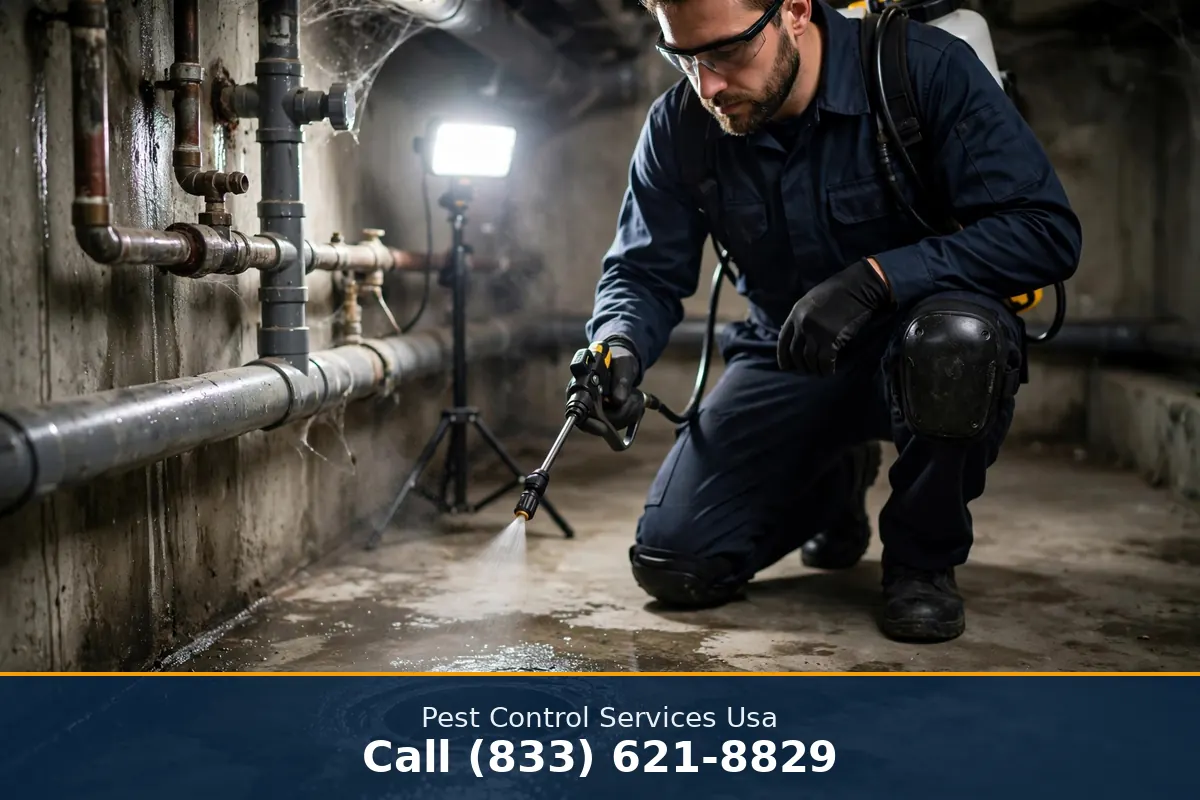
Treatment follows the water. Targeted baits and dust go into the damp voids and chases where roaches shelter. Drains receive treatment to cut off a major travel route into the home. The exterior perimeter gets attention where leaf litter and mulch hold moisture against the foundation. Interior living areas stay largely untouched, since this species rarely ventures into dry rooms.
Moisture correction and exclusion complete the work. The technician recommends fixing leaks, improving ventilation, and grading soil away from the foundation. Sealing gaps around pipes and doors blocks the entry routes roaches travel. Follow-up visits check that damp areas are drying and that activity is falling as the habitat shrinks.
Why Oriental roaches love older homes
Older homes give Oriental cockroaches nearly everything they want. Stone and block foundations develop cracks that stay cool and damp, and dirt crawl spaces hold moisture long after rain ends. Aging drain lines can seep, feeding the dampness roaches need. Sump pits in older basements cycle constantly during wet seasons. Add years of leaf litter settled against the foundation, and the habitat is complete.
In an older home, the inspection spends extra time on the foundation, the sewer lateral, and the grading around the house. Correcting even one major moisture source, such as a downspout that dumps water at the foundation, can change the picture. The treatment plan always pairs roach control with a punch list of moisture fixes matched to the age and build of the house.
What the musty odor tells you
That stale, musty smell in a damp basement is often the first clue of an Oriental cockroach problem. It comes from the aggregation pheromones roaches use to gather in harborage, and it grows stronger as the population grows. When the odor fades after treatment and moisture correction, the harborage is breaking up. When it lingers, hidden dampness is still sheltering roaches somewhere nearby.
How Oriental roaches affect health and comfort
Oriental cockroaches move between sewers, drains, and damp debris before crossing basement floors and storage areas. Along the way they pick up bacteria such as Salmonella and E. coli, which they leave on surfaces they cross. Their droppings and shed skins add to the allergen load in already-damp spaces. Drying out their habitat and removing the colony restores both cleanliness and comfort.
What affects the cost
The extent of moisture problems sets the scope of the program. A single leaky drain line costs less to address than a chronically wet crawl space. Access matters: tight, low crawl spaces take more time to inspect and treat than open basements. The amount of debris and organic matter around the foundation adds work as well.
The size of the roach population also factors in. Heavy, long-established populations need more baiting and more follow-up visits before activity ends. Homes with many floor drains or an aging sewer connection need extra attention at each entry point. The exclusion work recommended for the property rounds out the program and its scope.
What you can do between visits
Fix dripping pipes and faucets so damp areas can dry out. Run a dehumidifier in the basement during humid months. Clear leaf litter and debris away from the foundation. Keep floor drain traps filled with water. Improve ventilation in crawl spaces and under-sink cabinets. These steps remove the damp habitat Oriental roaches depend on, and they keep the results of treatment from unraveling.
How we serve your area
Pest Control Services Usa delivers Oriental cockroach control for homes and businesses across the country, with deep experience in older homes and humid regions where water bugs thrive. Our technicians treat the moisture and the roaches as one problem, not two. Call (833) 621-8829 to schedule an inspection and start drying out their habitat.
Features
- Moisture-source mapping across basements and crawl spaces
- Targeted baiting in damp voids and pipe chases
- Floor drain and sump pit treatments
- Exterior perimeter work at damp foundation zones
- Leak, ventilation, and drainage correction guidance
- Entry-point sealing around pipes and doors
- Follow-up checks confirming damp areas are drying out
Benefits
- Removes the damp habitat that Oriental roaches depend on
- Eliminates the musty odor produced by large populations
- Blocks drain and foundation entry routes into the home
- Protects stored items in basements from roach contamination
- Keeps dry living areas clear of unnecessary treatment
- Reduces allergy triggers from roach debris in damp spaces
- Prevents seasonal surges after heavy rain and plumbing leaks
Frequently asked questions
Why are Oriental cockroaches called water bugs?
The name describes where they live: the dampest parts of a property, from basements to sewers. True water bugs are a different insect that lives in ponds. Oriental cockroaches earned the nickname from their love of wet places.
Can Oriental cockroaches fly?
No. Males have wings but cannot fly, and females have only short wing stubs. They are slow-moving roaches that travel on foot, usually along damp floors and foundation walls.
What is that musty smell in my basement?
Quite possibly. Large Oriental roach populations produce a distinct musty odor that many homeowners notice before they ever see a roach. An inspection of the basement, drains, and crawl space confirms the source.
Are Oriental cockroaches dangerous?
They contaminate food and surfaces after traveling through drains, sewers, and decaying matter. Their droppings and shed skins can also aggravate allergies in damp indoor spaces. The risk grows with the size of the population.
Will running a dehumidifier get rid of them?
It helps enormously by removing the damp habitat they depend on, but an established population still needs targeted treatment. Pair moisture correction with professional baiting for the best result.
How do Oriental cockroaches get into my home?
Through floor drains, gaps under doors, pipe chases, and foundation cracks, always following moisture. Sealing these routes and drying the areas they lead to keeps new roaches from moving in.