Pet-Safe Pest Control Near Me
Starting price: Call for pricing
Pest Control Services Usa pet-safe pest control is built around one priority: getting rid of pests without putting your animals at risk. Every plan starts with your household's pets in mind: their habits, feeding areas, and the rooms they use most. Products, placements, and timing are all chosen so curious noses and paws stay safe.
What pet-safe pest control is
Pest control becomes risky for animals when products sit where pets walk, sniff, or chew. Dogs explore the world mouth-first, which means open bait blocks and fresh spray on floors are the real hazards. Pet-safe pest control redesigns the whole approach: products with lower toxicity, placements animals cannot reach, and timing that keeps pets away until surfaces are dry.
This is not a separate product line so much as a stricter method. The same pests get treated — ants, roaches, spiders, fleas, and rodents — but every decision passes one test: could a pet reach this or lick it? If the answer is yes, the method changes. Baits go inside locked stations. Sprays go into cracks and wall voids instead of across open floors. Granular products stay out of pet areas until they are watered in and dry.
Tell your technician about every animal in the home, not just the dog. Fish, birds, reptiles, and small mammals each react differently to products and application methods. Aquariums need their air pumps switched off and tanks covered during nearby treatments. A good technician asks; a great plan accounts for the answers.
Pet-safe planning also covers the products you use yourself. Flea collars, yard granules, and ant baits from the store can interact with professional treatments or create new risks. Bring a list of what you have used recently, and the technician will factor it into the plan.
When you need it
Most pet owners call us after a scare: the dog found a bait block, or a neighbor's pet got sick from a yard treatment. You do not need to wait for that moment. Any home with animals benefits from a pet-safe approach from the first visit, especially homes with puppies, senior dogs, or pets that chew everything in sight.
Call for pet-safe service when:
- You have dogs that spend time in the yard being treated
- A puppy or rescue is still learning what not to chew
- You keep fish, birds, reptiles, or other sensitive animals
- A previous company left bait or spray where your pet could reach it
- Fleas or ticks are bothering both your pets and your family
- You board animals at home or run a pet-related business
If you are unsure whether your current service is pet-safe, ask where every bait and spray was placed. Vague answers are a warning sign. A pet-safe provider can point to each placement and explain why it is safe, and should welcome the question. If a company cannot explain its pet safety approach in plain terms, keep looking.
How the process works
The visit starts with a conversation, not a sprayer. Your technician asks about every animal in the home, where they eat and sleep, and which areas they use. That shapes the plan: which products are used, where they go, and how long each area needs before pets return.
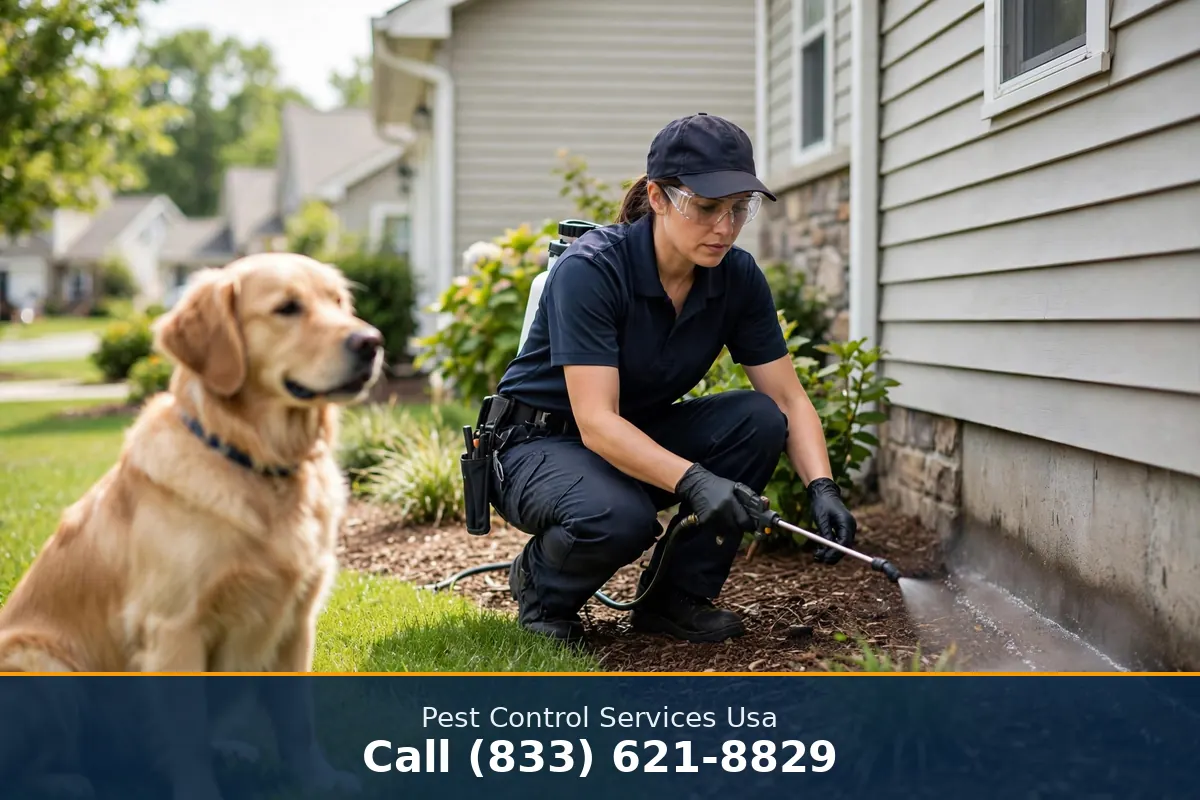
Treatments favor placements animals cannot access. Baits sit inside locked, tamper-resistant stations. Liquid applications go into cracks, crevices, and wall voids rather than across open floors. Outdoor work concentrates on the home's perimeter and pest harborage, keeping pet runs and play zones untouched wherever possible. Nothing is applied where your animals eat, sleep, or play. Yard treatments steer clear of vegetable gardens and water features where pets drink.
Before leaving, the technician walks you through re-entry times for each treated area. If anything unexpected happens — a station gets knocked over or a pet seems unwell — call (833) 621-8829 right away.
Which pests pet-safe methods handle
Pet-safe methods cover the full range of household pests; safety changes the placement, not the target list. Ants get baited at trails and entry points with stations pets cannot open, and monitored until activity stops. Roaches get crack-and-crevice treatment in kitchens and wall voids. Spiders get de-webbing and perimeter work that keeps products off patios where dogs lounge. Each pest gets a plan shaped around your animals.
Fleas need the pet and the environment treated as one problem. Your veterinarian handles on-pet products; we handle carpets, bedding areas, baseboards, and the yard. Coordinated timing between both breaks the cycle for good.
Rodents are handled without loose poison. Snap traps go inside tamper-resistant stations or voids pets cannot enter, and exclusion seals the gaps they used. You never have to worry about a pet finding an open bait block.
What affects the cost
What drives cost here is the pest problem itself, not the pet-safe label. A single wasp nest under the eaves takes one visit and little material. A flea infestation affecting pets, carpets, and the yard takes multiple visits across several weeks. The number of rooms treated, the size of the yard, and how established the infestation is all shape the final figure.
Ongoing plans cost more over a year than a one-time visit but keep protection continuous through each season's pest pressure. Specialty situations — a yard with heavy tick activity or a home with many animals — can add labor. Describe your household and your pest problem to (833) 621-8829 for an exact quote.
Pet-safe service does not carry a luxury markup for the label itself. The same labor and materials go into any careful job; the difference is the planning around your animals. A thorough pet review at the start prevents problems that would cost far more to fix later.
How we serve your area
Pest Control Services Usa serves pet-owning households across our entire service area with the same careful protocol on every visit. Suburban homes with fenced yards get perimeter-focused plans that leave play zones alone. Apartments and rentals get interior methods that respect shared walls and neighboring pets. Rural properties with acreage get targeted work around the home itself, not broadcast treatments across the land.
We also serve pet-adjacent businesses — boarding kennels, grooming shops, veterinary offices, and pet supply stores — with even stricter protocols. If your business cares for animals, call (833) 621-8829 to discuss a plan.
Features
- Pet-specific safety review before every treatment begins
- Locked, tamper-resistant bait stations where animals cannot reach them
- Low-toxicity product choices suited to homes with dogs and other pets
- Crack-and-crevice applications that keep treatments off open floors
- Outdoor barrier work applied away from pet runs, kennels, and play zones
- Clear re-entry times given for every treated area, inside and out
- Aquarium and terrarium guidance included on each visit
Benefits
- Confidence your dog can enjoy the yard again after each treatment
- You know exactly when each room is safe to re-enter
- Fewer repeat visits because nests and entry points are targeted
- Plans built around feeding stations, bedding, and favorite resting spots
- Relief from fleas and ticks that bother pets and people alike
- Technicians who ask about every animal before starting
- Straight answers about which products are used and where
Frequently asked questions
How long do pets need to stay away after treatment?
It depends on the application. Exterior surfaces are usually fine once dry, often within an hour on a warm day. Your technician will give you a specific time for each area.
What about fish tanks and terrariums?
Cover aquariums and switch off their air pumps during nearby treatments. Tell the technician about every tank before the visit so it can be planned around.
Are bait stations dangerous if my dog finds one?
Our stations are locked, tamper-resistant, and placed where animals cannot reach them. If one is ever knocked open, call (833) 621-8829 right away.
Can you treat fleas without harming my pets?
Yes. Flea work targets carpets, bedding areas, and the yard, not the animal itself. Your veterinarian handles on-pet products while we handle the environment. Coordinating both breaks the cycle.
Do I need to remove my pets during the visit?
Usually you only need to keep them out of treated rooms until the technician gives the all-clear. Your technician will confirm the plan before starting.
What should I tell the technician before the visit?
Mention every animal in the home, including fish, birds, and reptiles, plus feeding stations and resting spots. The more the technician knows, the safer the plan.