
Real Estate WDO Inspection Near Me
Starting price: Call for pricing
A WDO inspection documents evidence of termites, wood-boring beetles, and wood-decaying fungi in a structure. Most mortgage lenders require this report before closing on a home purchase. Pest Control Services Usa performs careful WDO inspections and delivers clear, transaction-ready reports.
What a real estate WDO inspection is
The WDO report goes by several names in real estate circles. You may hear it called a termite letter, a clearance letter, or a wood-destroying insect report. Every version refers to the same idea: documented findings about wood-destroying organisms before a property changes hands.
Inspection standards differ slightly from state to state. Some states recognize carpenter ants and carpenter bees as reportable; most do not. Your inspector applies the rules of the state where the property sits.
Lenders treat the WDO report as risk management. Wood damage hidden behind finished walls can reduce a home's value after closing. The report gives the lender confidence that the structure they are financing has been examined.
For buyers, the report is one of the cheapest protections in the whole transaction. Finding termite damage before closing is far better than finding it a year later. The inspection gives you facts instead of guesses about the home you are buying.
A WDO inspection is a visual examination of a structure for evidence of wood-destroying organisms. The reportable organisms are termites, wood-boring beetles, and wood-decaying fungi. Most states have an official report form that only qualified WDO inspectors may complete.
Buyers usually encounter the WDO report as part of the home purchase process. A lender or loan program may require one before the sale can close. The report gives everyone in the transaction a shared picture of the wood condition of the property.
Pest Control Services Usa performs WDO inspections for buyers, sellers, agents, and attorneys. We inspect all visible and accessible areas of the structure. We then complete the official report form and document our findings in plain language.
When you need one
New construction buyers sometimes assume inspections do not apply to them. Termites can enter a structure during construction when soil contacts framing. A WDO inspection still makes sense for recently built homes.
Cash buyers are not required to get one by any lender. Many still do, because the inspection costs little compared to the price of the property. It is a practical step for anyone spending significant money on a structure.
Condo buyers have a different situation. The association usually handles exterior and structural elements. Individual units still benefit from an inspection of interior woodwork and any exclusive-use areas.
Most buyers need a WDO inspection because their lender requires it. Conventional, FHA, and VA loans each carry their own rules, and WDO reports are common in every program. Ask your lender early so the inspection does not delay closing.
Sellers sometimes order their own inspection before listing. A pre-listing report uncovers problems while there is still time to address them. It also removes surprises during the buyer's inspection period.
Refinancing homeowners may be asked for one too. Some loan products require current WDO documentation. Anyone who suspects termite activity should also schedule an inspection right away.
- Buying a home with lender-required inspections
- Selling a home and wanting a clean pre-listing picture
- Refinancing under a loan that requires WDO documentation
- Visible damage or discarded wings noticed around the property
- A previous treatment history that needs re-confirmation
How the process works
Access preparation helps the inspection go smoothly. The seller or listing agent should unlock crawl spaces, attics, and outbuildings. Pets should be secured so the inspector can move through each room freely.
Moisture is one of the biggest factors we assess. Wood-decaying fungi thrive where moisture collects, and termites seek damp wood as well. We pay close attention to bathrooms, laundry areas, and exterior grading.
We also check for past treatment evidence. Drill marks in concrete slabs or bait stations around the perimeter tell us a property has treatment history. Prior treatment does not ensure current protection, but it is useful context.
Delivery of the report usually happens electronically. Agents and attorneys receive copies when the client authorizes it. The report becomes part of the transaction file.
Scheduling comes first, and we work around your closing timeline. You tell us the property address and any deadline your lender has set. We confirm the appointment and explain what we need to access.
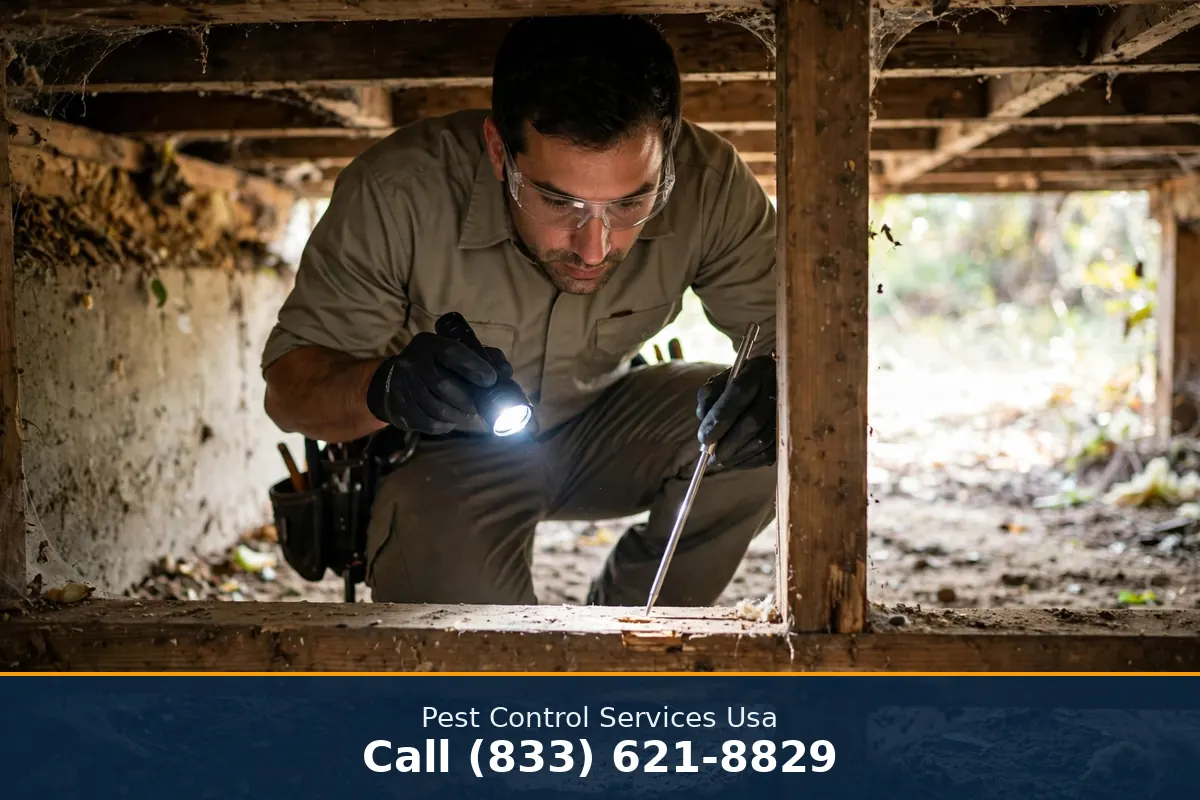
On inspection day, our WDO-trained inspector walks the interior of the structure. We examine basements, crawl spaces, attics, and garages for mud tubes, frass, blistered wood, and other evidence. We tap and probe wood members where damage is suspected.
Next we inspect the exterior from ground to roofline. We look at siding, trim, decks, porches, and the foundation perimeter. We note soil-to-wood contact and moisture conditions that attract wood-destroying organisms.
After the physical inspection we complete the official report form. We record evidence found, damage observed, and areas that could not be accessed. Photos support the written findings. You receive the finished report and can ask us to explain any line of it.
What the report covers and what it does not
If evidence is found, the report records the common name of the organism and the location. Active infestation, prior damage, and current damage are each noted separately. This detail matters because old damage and active infestation call for different responses.
Conducive conditions get their own section on most report forms. These are situations that invite future problems, such as wood touching soil or poor drainage. Buyers and sellers can address these conditions before closing.
Inaccessible areas must be listed with the reason. An attic with no access panel or a crawl space blocked by stored items gets disclosed. This protects everyone from misunderstandings about what was examined.
The report covers visible and accessible evidence of termites, wood-boring beetles, and wood-decaying fungi. It notes damage caused by those organisms and any prior treatment we can observe. It records the common name of each organism found and where the evidence was located.
The report is limited to what the inspector can see. Organisms hidden behind walls or under floors cannot be reported. The report cannot assure that no infestation exists in hidden areas.
The report is also not a structural engineering assessment. It does not certify the structural soundness of the building. Your home inspector or an engineer covers that part of the evaluation.
What affects the cost
The condition of the property can add time. A well-maintained home inspects faster than one with years of deferred maintenance. Cluttered interiors slow the walkthrough.
Report copies and photo documentation add administrative time. Every report needs accurate photos and clear notes. Rushing this step helps nobody.
Geographic distance from our routes is a smaller factor. Most inspections happen within our normal service area. Out-of-area requests may need special scheduling.
Property size is the main cost factor. A small condo takes less time than a large house with multiple outbuildings. Crawl spaces, finished basements, and detached structures add inspection time.
Accessibility matters as well. Cluttered attics or sealed crawl spaces slow the work. Areas we cannot enter must be disclosed rather than inspected, which may require a return visit.
Timing can play a role during busy closing seasons. Short-notice requests sometimes need schedule adjustments. Your location within our service area can also affect travel time.
How we serve your area
Buyers and sellers both benefit from an inspector who explains the report. We answer questions about findings without steering the transaction. Our job is documentation, not deal-making.
We also work with property managers and estate attorneys. Multi-property portfolios sometimes need several reports on one timeline. We coordinate those schedules so every report is ready for the closing table.
When you need a WDO inspection, reach out early in the process. The more lead time we have, the easier it is to fit your closing date. Call (833) 621-8829 or email info@pestcontrolservicesus.com to get started.
Pest Control Services Usa serves home buyers, sellers, and real estate professionals throughout our coverage area. We coordinate directly with your agent so the report lands in the right hands. We understand that closing dates move, and we communicate clearly when they do.
Real estate agents make up a large part of our referral network. They count on reports that read cleanly and arrive when promised. We welcome agent partnerships and repeat transaction business.
Features
- Subterranean and drywood termite evidence search
- Wood-boring beetle identification and damage mapping
- Wood-decaying fungi checks at moisture-prone areas
- Completion of the official state WDO report form
- Photo documentation of every finding
- Inaccessible areas clearly disclosed on the report
- Conducive-condition notes for buyer awareness
Benefits
- Satisfies lender and buyer inspection requirements
- Reveals hidden wood damage before you close
- Report language agents and attorneys can read easily
- Documented evidence that supports repair negotiations
- Scheduling built around your closing timeline
- Report copies kept on file for your transaction records
- Straightforward findings without technical jargon
Frequently asked questions
Who needs a WDO inspection?
Buyers whose lender requires one, sellers who want a pre-listing picture, and refinancing homeowners whose loan program asks for current documentation. Real estate agents order them on behalf of clients regularly.
What organisms does the report cover?
Termites, wood-boring beetles, and wood-decaying fungi. Carpenter ants and bees are not reportable WDO organisms under most state rules.
Does a clear report mean no pests are present?
No. A clear report means no visible, accessible evidence was found on the day of inspection. Organisms behind walls or in sealed spaces cannot be seen and are not covered.
Can the buyer or seller order the inspection?
Either party can order it. Buyers often schedule it because their lender requires the report. Sellers use pre-listing inspections to catch issues before they reach the negotiating table.
How long is a WDO report valid for closing?
Validity periods vary by lender and state, commonly 30 to 90 days. Ask your lender what timeframe they accept so the report does not expire before closing.
What happens if you find active termites?
We document the evidence, identify the organism, and note the location on the report. We then recommend treatment options and can perform the treatment after you approve a plan.