School Pest Control Near Me
Starting price: Call for pricing
Pest Control Services Usa protects classrooms, cafeterias, gyms, and playgrounds with pest control built on documented Integrated Pest Management. We inspect the campus, seal the entry points pests use, and reach for low-impact methods first so learning never stops. Every visit leaves bid-ready service records for your district.
What school pest control is
School pest control is a pest program built around how schools actually run. It covers classrooms, cafeterias, gyms, locker rooms, buses, and playgrounds under one plan. Pest Control Services Usa uses Integrated Pest Management, the approach the EPA recommends for schools, so inspection and prevention do the heavy lifting before any product is applied.
A school IPM program starts with the building itself. We look for gaps around doors, worn weather stripping, cracked caulking, and utility lines that give pests a way in. We check kitchens for sanitation gaps and watch storage rooms for clutter that shelters roaches. These fixes often matter more than anything we apply, because they remove the reason pests show up at all.
When a product is needed, we choose low-impact options first and apply them in a targeted way. Routine blanket spraying is not part of an IPM program. Staff and parents get notice before scheduled treatments, and treated areas stay secured until the re-entry time on the label passes. University extension programs report that schools using IPM have cut pesticide use by 70% or more while seeing fewer pest complaints.
When your district needs it
Some signs are obvious and some hide in plain sight. These are common reasons districts call us:
- Ants trailing through a classroom or the cafeteria serving line
- Mice droppings in storage rooms, food pantries, or near trash compactors
- Yellow jacket or wasp nests near playgrounds, stadium bleachers, or bus lines
- Roach sightings in kitchens during health inspections
- Spider webs and fly activity in gyms, locker rooms, and pool areas
- Rodent signs around dumpsters or in ground-level storage
Cafeterias deserve special attention. Health inspectors look closely at kitchens, and a single roach sighting can turn into a failed inspection. We set monitoring routes in food-service areas so problems get caught early. Early catches mean smaller fixes and fewer surprises on inspection day.
Playgrounds and fields bring their own liability. Stinging insects nesting near play equipment put children at risk and worry parents. We treat nests on play structures, fences, and bleachers with methods chosen for outdoor school spaces. Bus loading zones and walkways get checked too, since foot traffic tells pests where to gather.
How the process works
Everything starts with a walkthrough of your campus. We visit each building, the kitchen, mechanical rooms, the dumpster area, and the grounds. We note entry points, moisture problems, and sanitation gaps. Then we write an IPM plan for your district that lists the pests covered, the inspection route, and the schedule.
Next we make the building less friendly to pests. That means sealing entry points with caulk and mesh, fixing door sweeps, and correcting storage habits in kitchens and classrooms. Your maintenance staff gets simple guidance they can follow between visits. Small changes in how food is stored and trash is handled stop many problems before they start.
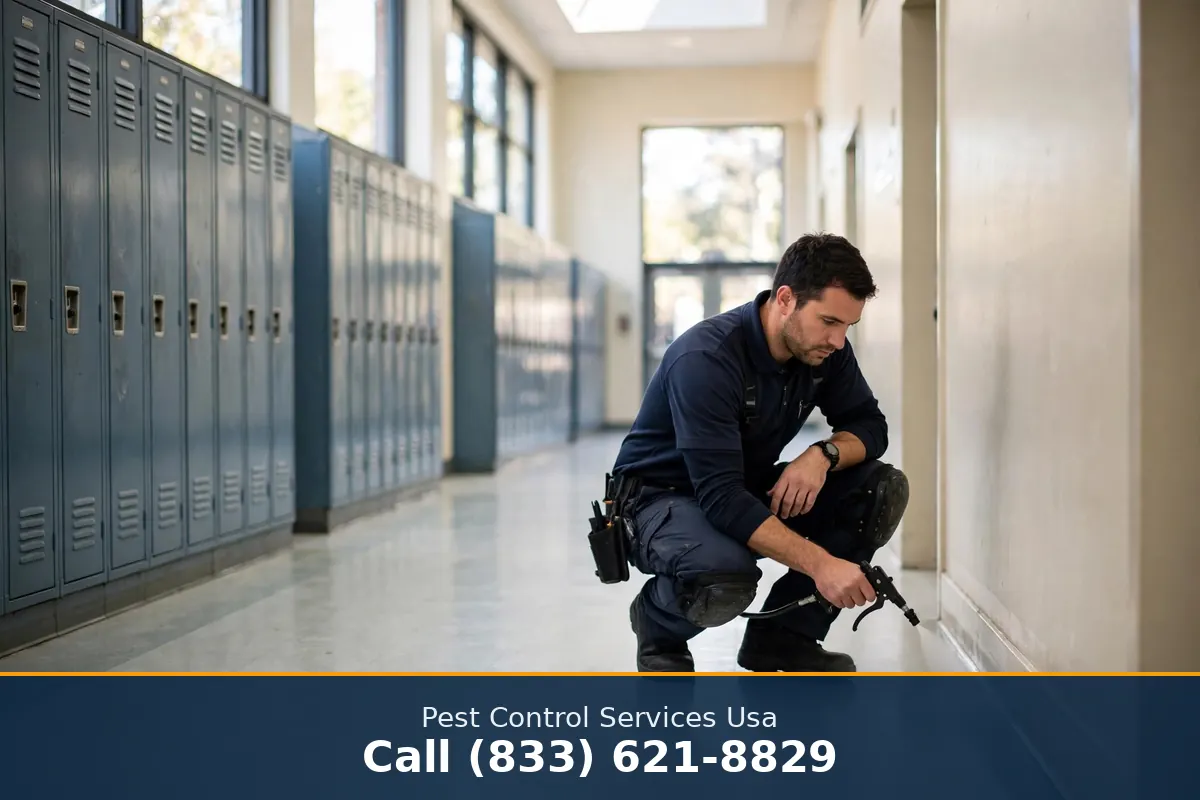
After the groundwork, we start the regular service route. Each visit follows the same pattern: inspect first, then act on what we find. We check monitors in kitchens, look at the entry points we sealed, and walk the playground and field edges. If a targeted application is needed, we place it where the pest is active and nowhere else.
Staff training is part of the program, not an add-on. We show teachers how to report sightings so we can track patterns across the campus. Simple habits like sealing snacks and wiping spills keep ants out of desks and cubbies. When everyone knows what to watch for, small problems get reported before they spread. Documentation goes with every visit. You get a service report that lists what was inspected, what was found, and what was done. These reports stack into the file your purchasing office needs for bid renewals and audits. Parents and staff on your notification list hear about scheduled treatments ahead of time.
What affects the cost
School pest control programs are priced for the campus, not off a chart. The biggest factor is the number and size of buildings on your property. A single elementary building costs less to cover than a multi-building campus with gyms, stadiums, and outbuildings. The age of your buildings matters too, since older buildings have more entry points that need sealing and checking.
Your kitchen and food-service footprint plays a role. A district with central kitchens serving many schools needs more monitoring than one with simple serving kitchens. The level of pest pressure on your grounds also counts. Campuses near wooded lots, waterways, or farmland tend to see more rodents and insects pushing in each season.
Service frequency is another factor. Some districts need monthly routes through the school year, while others do well with a seasonal schedule plus extra visits for specific problems. Playgrounds and athletic fields add coverage area when stinging insects are active. Call (833) 621-8829 and we will walk the campus with you to scope the program and explain every factor.
How we serve schools in your area
Pest Control Services Usa works with school districts of every size, from single rural schools to large multi-campus districts. We service elementary, middle, and high schools, plus charter and private campuses. Our routes cover classroom buildings, cafeterias, gyms, auditoriums, field houses, and bus barns.
We plan our visits around your school day. Early-morning and after-school appointments keep our work away from students. Summer break is a good time for deep entry-point work, since we can open up buildings without disrupting classes. Emergency calls for nests on playground equipment or wasp activity near entrances get priority.
Public-bid contracts fit our program well. Our documentation is built for procurement files: dated reports, inspection logs, and material lists for every visit. Multi-year agreements help your district budget with a fixed program cost instead of surprise callouts. Districts that sign on tend to stay, because the records make renewals simple and the campuses stay quiet.
If your district needs pest control that respects how schools work, call (833) 621-8829. We will tour your campus, build the IPM plan, and keep students, staff, and parents confident all year.
Features
- Campus-wide Integrated Pest Management inspections on every visit
- Documented service reports your district can file with bid paperwork
- Low-impact methods tried before any targeted product application
- Playground and field treatment for stinging insects and nests
- Cafeteria, kitchen, and food-storage monitoring routes
- Parent and staff notifications before scheduled treatments
- Entry-point sealing for classrooms, gyms, and outbuildings
Benefits
- Healthier, safer buildings for students and staff
- Service records that satisfy district purchasing requirements
- Fewer pest disruptions during class time
- Low-impact products chosen with children in mind
- Service scheduled around classes, lunch, and activities
- Cafeterias stay ready for health inspections
- One vendor for classroom buildings and outdoor grounds
Frequently asked questions
What is Integrated Pest Management, and why do schools use it?
Integrated Pest Management is a step-by-step approach that starts with inspection, prevention, and sealing before any product is used. Schools choose it because it cuts pesticide use while keeping buildings without pests. The EPA recommends IPM as the standard for school pest programs.
Will students be near treated areas?
We schedule treatments away from occupied areas and secure treated zones until the label's re-entry time passes. Staff and parents signed up for alerts learn about scheduled treatments before we arrive.
Do you service playgrounds and athletic fields?
Yes. We inspect play structures, fences, bleachers, and field edges for stinging-insect nests and other pest activity. Outdoor work is timed around practices and recess.
Can you provide documentation for our bid files?
Every visit produces a dated service report with the inspection findings, actions taken, and materials used. Those records give purchasing a complete file for bid renewals and audits. We format them to match your district paperwork.
What pests are most common in schools?
Ants, cockroaches, and mice top the list, especially near kitchens and storage areas. Playgrounds and fields attract yellow jackets, wasps, and spiders.
How often should a school be serviced?
Most districts do well with a set route through the school year and extra visits when a specific problem appears. We set the schedule during your campus walkthrough based on what we find.