Scorpion Control Near Me
Starting price: Call for pricing
Scorpions don't wander in by accident — they follow prey, moisture, and shelter through gaps around your home. Pest Control Services Usa hunts them where they hide, seals how they enter, and treats the routes they travel. Our scorpion control targets bark scorpions and other stinging species with night inspections, perimeter barriers, and entry-point exclusion.
What scorpion control covers
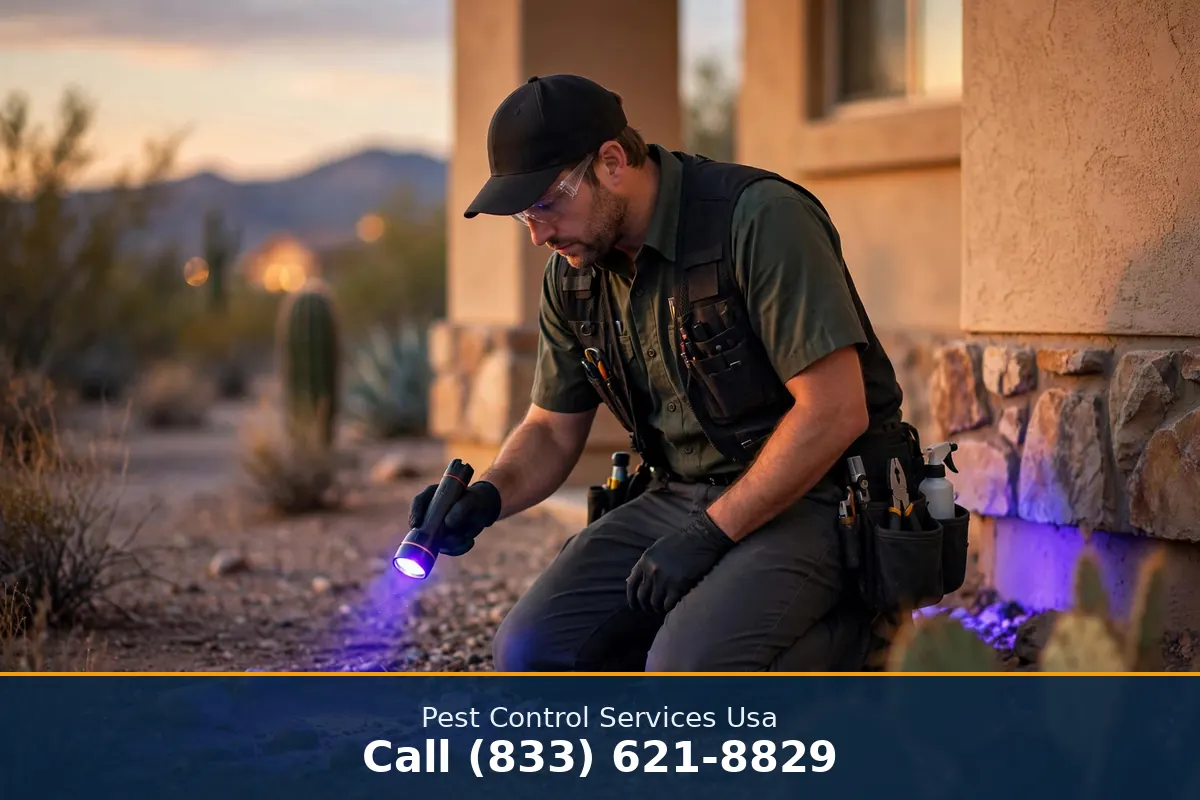
Scorpion control is a targeted program that finds where scorpions hide, removes what draws them in, and blocks the routes they use to enter your home. It goes well beyond a routine perimeter spray. Scorpions are nocturnal predators that spend daylight hours wedged into cracks, beneath bark and stones, behind block walls, and inside wall voids. A serious scorpion program hunts them after dark with ultraviolet light, since their exoskeletons glow under UV, and treats the exact pathways they travel.
Pest Control Services Usa tailors scorpion control to the species active in your area. Across the Southwest, that usually means the bark scorpion. It climbs stucco walls, block fences, and tree trunks with ease, then slips through gaps no wider than a coin's edge. In Texas and the South, striped bark scorpions and larger ground-dwelling species are more common, and they favor mulch beds, woodpiles, and cluttered storage areas. Each species hunts and hides differently, so our inspection looks for the signs that match local behavior instead of following a one-size-fits-all checklist.
The program also tackles the conditions that invite scorpions in the first place. Scorpions feed on other insects, so a yard busy with crickets, roaches, and spiders is prime hunting ground. Leaking irrigation, dense ground cover, stacked firewood, and packed garages give them cool daytime shelter. We address those attractants alongside direct treatment, because scorpions return to any property that keeps feeding and sheltering them. Do-it-yourself sprays often disappoint here: scorpions are nocturnal, avoid treated surfaces when they can, and hide where sprays never reach. Without night inspections and exclusion, the same scorpions simply wait out the treatment.
Scorpion control does not cover wildlife removal or general landscaping work. It focuses on scorpions and the insect prey and harborage conditions that support them around your home or business.
When you need scorpion control
- You find scorpions indoors, especially in bedrooms, bathrooms, or laundry rooms
- Neighbors report sightings or bark scorpions are known in your area
- A blacklight sweep at night reveals them on block walls, patios, or near doorways
- Children or pets use the yard and you want the sting risk lowered
- You keep finding them in garages, shoes, or folded towels and linens
- Your property backs up to desert, rocky slopes, or thick landscaping where they thrive
Even a single indoor sighting deserves attention. Scorpions do not multiply indoors the way roaches do, but where one finds shelter and food, others often follow. Bark scorpions in particular can appear in surprising numbers once they learn a route inside. Acting early keeps a small problem from becoming a seasonal pattern.
Seasonality matters. Scorpion activity climbs with warm weather and often spikes during humid stretches, including monsoon season in the desert Southwest. If sightings cluster in summer and early fall, a seasonal program timed to those months delivers the most protection for the effort.
How the process works
It starts with a call to (833) 621-8829. We ask where you have seen scorpions, what the yard looks like, and whether anyone has been stung. That shapes the inspection, so the technician arrives knowing which species to expect and which zones to check first.
The inspection covers the full property, inside and out. Outside, the technician walks the perimeter, checks block walls and fences, lifts debris, looks under bark and stones, and notes moisture sources and prey insect activity. Entry points get close attention: gaps under doors, weep holes, pipe penetrations, attic vents, and worn weather stripping. When conditions allow, part of the inspection happens after dark with a blacklight, which makes hidden scorpions glow and reveals the true population.
Next comes the treatment plan. The technician explains what was found, which species is involved, and what the plan will do about it. Perimeter barriers go down along the foundation and known travel routes. Crack-and-crevice treatments target the hiding spots the inspection uncovered. Prey insects get treated too, because fewer crickets and roaches means fewer hunting scorpions.
Exclusion is the other half of the job. The technician points out every gap worth sealing and explains which fixes matter most. That means door sweeps that need replacing, weep holes that need screening, and utility openings that need attention. Sealing those routes does more for long-term control than any single treatment, and most of the work is simple.
Follow-up visits keep the program on track through scorpion season. The technician re-checks treated zones, looks for new activity, and adjusts the plan as conditions change. If scorpions show up between visits, call (833) 621-8829 and we will return to address the activity.
What affects the cost
Property size is the biggest factor. A small patio home with a tidy yard takes less time and material than a large lot with block walls on three sides. Scorpion pressure matters too — an occasional wanderer needs less work than a property where nightly blacklight sweeps turn up many.
Harborage density changes the scope. Yards with woodpiles, dense ground cover, rock features, and cluttered storage give scorpions endless shelter, and each of those zones needs attention. Homes with extensive block walls or aging weather stripping need more exclusion work. The number of entry points found during inspection also shapes the plan.
Program length plays a role as well. A single intensive treatment handles an active problem, while a seasonal program with scheduled follow-ups protects through the months when scorpions are most active. Indoor scope adds to the work when scorpions have already reached wall voids or living spaces. For an exact quote on your property, call (833) 621-8829. The inspection findings determine the real scope, and we will walk you through every factor before any work begins.
How we serve your area
Pest Control Services Usa protects homes and businesses across scorpion country and beyond. In the Southwest, that means neighborhoods where bark scorpions climb block walls nightly and slip through the tiniest gaps. In Texas and the South, it means properties where striped bark scorpions hunt through mulch beds and ground cover. Wherever scorpions pressure homes, our process stays the same: inspect thoroughly, treat precisely, seal entries, and monitor through the season.
We serve single-family homes, townhomes, and apartments, plus restaurants, warehouses, and offices where a scorpion sighting disrupts the workday. Multi-unit properties get coordinated treatment so scorpions cannot simply move from one unit to the next.
If scorpions are part of life where you live, you do not have to share your home with them. Call (833) 621-8829 and let Pest Control Services Usa put a real plan in place.
Features
- Blacklight night inspections that reveal hidden scorpions
- Perimeter barrier treatment along foundations and walls
- Crack-and-crevice treatment in daytime harborage zones
- Entry-point inspection with sealing recommendations
- Prey-insect reduction that removes the scorpion food supply
- Yard harborage assessment for woodpiles, debris, and dense cover
- Seasonal follow-up visits that track activity through warm months
Benefits
- Lower sting risk for kids and pets in the yard
- Scorpions found at night before they surprise you by day
- Entry points sealed against future invasions
- Fewer prey insects means fewer hunting scorpions
- A plan matched to the species in your area
- Yard conditions improved so scorpions move on
- Steady monitoring through the months they are most active
Frequently asked questions
Are bark scorpion stings dangerous?
Their stings are painful, though most healthy adults recover without lasting effects. Small children, older adults, and anyone with a severe reaction should seek medical care promptly. After a sting, call (833) 621-8829 so we can inspect for more scorpions.
Can scorpions really climb walls?
Yes. Bark scorpions climb stucco, block walls, trees, and even ceilings with ease. That climbing ability lets them reach second-story windows and attic vents, which is why our inspection covers the full height of the home.
Why do I only see scorpions at night?
Scorpions are nocturnal hunters that hide by day and roam after dark. A blacklight makes their exoskeletons glow, so nighttime inspections reveal far more than daytime ones.
Do scorpions come up through drains?
Rarely. They prefer dry routes: gaps under doors, weep holes, pipe penetrations, and vents. Scorpions found in tubs usually climbed in from the rim, then could not climb the smooth surface back out.
What should I do if I find one inside?
Do not handle it. Keep children and pets away and call (833) 621-8829. One indoor scorpion often means entry points are open, and our inspection finds how they got in.
Will sealing entry points really make a difference?
Yes. Exclusion is one of the most effective parts of scorpion control. Door sweeps, screened weep holes, and sealed utility gaps block the exact routes scorpions use.
What can I do between visits?
Clear yard clutter, trim plants away from walls, fix irrigation leaks, and move firewood away from the house. Fewer hiding spots and less prey activity make your property far less inviting.