Spider Control Near Me
Starting price: Call for pricing
Pest Control Services Usa delivers spider control built around how spiders actually behave. We de-web eaves, porches, and corners, remove egg sacs before they hatch, and treat the spots spiders use for shelter. We also reduce the insects they feed on, so fewer spiders settle in around your home.
What Spider Control Is
Most spiders in and around homes are harmless, but that does not make webs across the porch or a spider dropping from the ceiling welcome. Spider control is a focused service: we remove the spiders that are there, take down their webs, and change the conditions that keep bringing them back. It is different from a general insect spray, because spiders do not eat bait the way ants or roaches do.
Pest Control Services Usa treats spiders directly. A technician walks the property, notes where webs keep returning, and identifies which spiders are present. Cellar spiders, house spiders, wolf spiders, and orb weavers each use a home differently, and that shapes the plan. Knowing the species matters more than most people expect.
The service covers interior and exterior spider activity, webs, and egg sacs. It also includes work on the insect populations that feed spiders, since a yard full of prey insects will keep drawing spiders in. It does not include wildlife removal or structural repairs, and we will tell you plainly when something falls outside this service.
When You Need Spider Control
You do not need to see dozens of spiders to have a spider problem. A few steady signs tell you it is time to act. Look for these:
- Webs that return within days of being knocked down
- Spiders showing up regularly in the basement, garage, or attic
- Egg sacs tucked into corners, window frames, or under eaves
- A noticeable increase in spiders as weather cools in fall
- Spiders near beds or anywhere children play
- Outdoor lighting that draws insects, and spiders that follow them
If one or two of these sound familiar, a single visit may be enough. If most of them do, an ongoing plan usually makes more sense.
How the Process Works
It starts with a walkthrough. The technician checks the exterior first — eaves, window frames, porch ceilings, foundation lines, and landscaping — because most home spiders start outside. Inside, the focus is on basements, garages, attics, and storage areas. Every web and egg sac found gets documented as a map of activity.
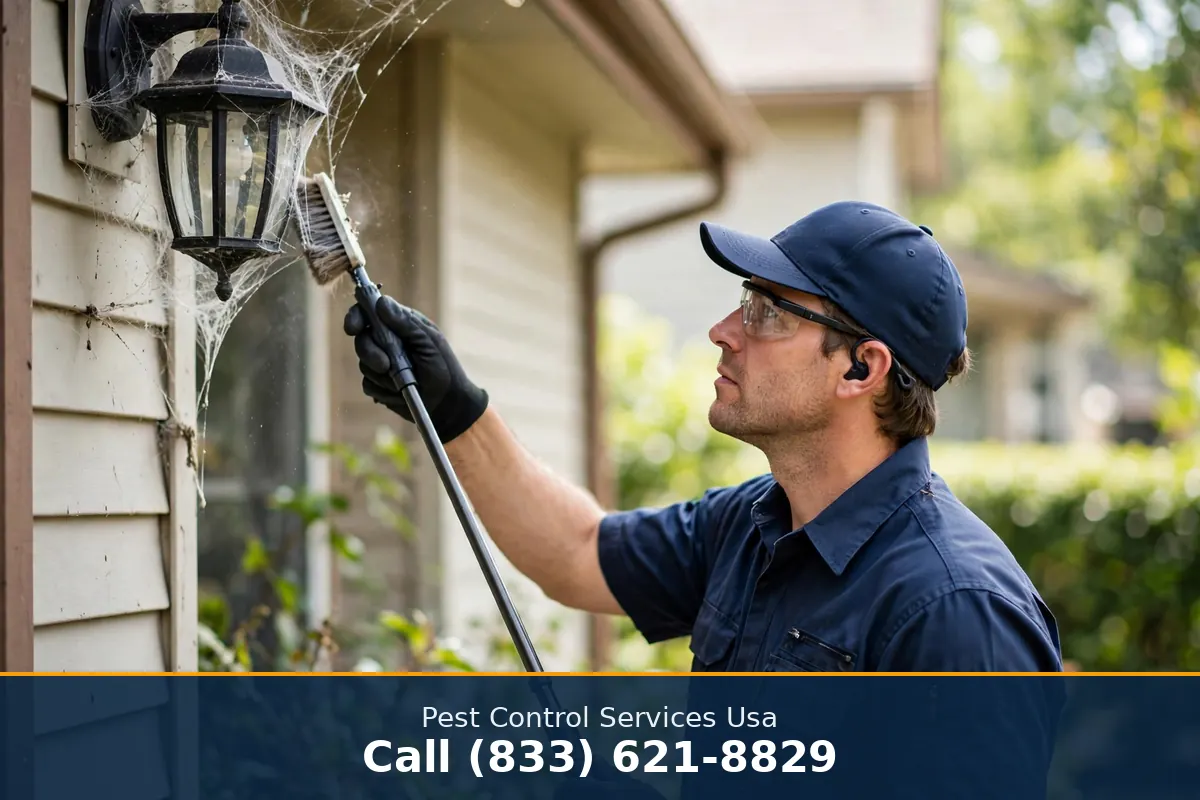
Next comes de-webbing. Using extendable web-removal tools, the technician clears webs from siding, soffits, light fixtures, and corners, and collects egg sacs by hand so they cannot hatch later. This step alone changes the look of a property right away.
Then targeted treatment. Spiders rest on treated surfaces as they move, so we apply product to the cracks, crevices, and harborages they actually use. The exterior gets a barrier band around the foundation that spiders cross as they travel. Interior work stays focused on non-living areas like basements and garages unless you ask for more.
Finally, the technician addresses the food source. Reducing insects around lights, in mulch beds, and along the foundation means fewer spiders take up residence. You get a short list of practical steps — sealing gaps, changing bulb types, trimming plants back from siding — and a schedule if you want ongoing visits.
What Affects the Cost
Every property is different, so pricing is built around the job itself. A small home with light webbing costs less to service than a large property with heavy landscaping, a detached garage, and a full basement. Access matters too: a clean, open crawl space is simpler to work in than a packed storage room.
The level of activity plays a role. A one-time de-webbing and treatment is straightforward; an established population with egg sacs everywhere takes more labor. Ongoing plans are priced by visit frequency and property size, not by guesswork. For an exact figure on your home, call (833) 621-8829 and describe what you are seeing — that short conversation is how real quotes get made.
How We Serve Your Area
Pest Control Services Usa provides spider control for homes, apartments, townhomes, and small businesses across the country. Suburban homes with landscaped yards, rural properties with outbuildings, and city apartments with basement storage all get the same careful approach. The plan adapts to the building, not the other way around.
Technicians schedule visits around your week, and seasonal timing is part of the conversation. Late summer and fall bring the biggest indoor spider movement, so many customers start service before that wave. Wherever you are, the goal is the same: a property where spiders are a rare sighting, not a daily one.
Keeping Spiders Out Between Visits
Professional service does the heavy lifting, but small habits stretch the results. Knock down new webs with a broom every couple of weeks — a spider that keeps rebuilding in the same spot eventually moves on. Keep storage in sealed bins instead of cardboard boxes, which spiders love for shelter.
Outside, pull mulch and ground cover back from the foundation and keep shrubs trimmed so they do not touch the siding. Warm-white or yellow bulbs near doors draw fewer night insects, which means fewer spiders hunting them. Stack firewood away from the house and off the ground. None of this replaces treatment, but together these steps make your home a much less inviting place for spiders.
Why Spiders Keep Coming Back
If spiders return weeks after treatment, it is rarely because the treatment failed. A single egg sac can hold hundreds of spiderlings, and sacs hidden in eaves, sheds, or crawl spaces keep hatching long after the adults are gone. Each sac is a fresh wave, which is why collecting egg sacs by hand matters as much as treating the spiders themselves.
New spiders also arrive from outside constantly. Young spiders disperse by ballooning — releasing silk threads that catch the wind and carry them surprising distances. Your treated home sits in a neighborhood full of untreated yards, so reinfestation pressure never fully stops. The barrier treatment around the foundation is what intercepts these newcomers.
Then there is the food supply. A porch light left on all night can draw thousands of moths and flies in a season, and where prey gathers, spiders follow. Homes near wooded lots, ponds, or bright commercial lighting face heavier pressure than average. Reducing that prey base — managing outdoor lighting, trimming vegetation, treating the insects spiders feed on — does as much for long-term control as anything applied for spiders directly.
This is why ongoing plans exist. Rather than reacting to each wave, a recurring schedule keeps the barrier fresh, removes new webs and sacs before they produce, and holds the property at a level where a spider sighting is rare. For homes with heavy pressure, that steady rhythm beats a single annual visit every time.
Features
- Complete de-webbing of eaves, porches, windows, and corners
- Egg sac removal before hundreds of spiderlings hatch
- Exterior barrier treatment around the foundation line
- Spot treatment of garages, basements, and crawl spaces
- Insect reduction that removes the spiders' food source
- Seasonal visits timed to the fall indoor migration
- On-site identification of the spider species present
Benefits
- Visibly fewer webs on siding, porches, and light fixtures
- A cleaner look and feel throughout the home
- Less worry reaching into dark storage or garage corners
- Egg sacs handled before new generations appear
- A steady plan instead of chasing spiders room by room
- Practical advice on sealing gaps and trimming harborage
- Service shaped to your property, not a one-size routine
Frequently asked questions
Why do spiders keep coming back after I knock down their webs?
The spider itself is usually still nearby, and the conditions that attracted it have not changed. De-webbing without treating harborage points and reducing prey insects just restarts the cycle. Professional service removes the spider, the egg sacs, and the reasons they settled in.
Are the spiders in my home dangerous?
Most common house spiders rarely bite and are not medically significant. The exceptions are black widows and brown recluses, which your technician will identify on sight. If you are unsure what you are seeing, take a photo from a safe distance and show it during the inspection.
Is spider treatment safe for my family and pets?
Applications are placed in cracks, crevices, and exterior harborages — not where your family lives and plays. The technician explains any re-entry guidance during the visit, and you can ask about product choices before anything is applied.
Will the treatment hurt my plants or lawn?
Applications are directed at structures, cracks, and harborage points — not broadcast across the yard. Tell the technician about vegetable gardens, pollinator plantings, or ponds before the visit so applications can be placed with extra care.
How often should spider control be done?
Many homes do well with seasonal or quarterly visits, especially through late summer and fall. A one-time de-webbing and treatment suits light activity. Your technician will recommend a schedule based on what the inspection finds.
Do you treat the inside of the house too?
Yes, when it makes sense. Interior work focuses on basements, garages, attics, and storage areas where spiders live — not on kitchen counters or living spaces. You can request interior treatment or keep the service exterior-only.
What does spider control cost?
Cost depends on your home's size, the level of spider activity, and whether you choose a one-time visit or an ongoing plan. Call (833) 621-8829 with a description of what you are seeing, and you will get a clear, honest quote with no pressure.