Spring Barrier Treatment Near Me
Starting price: Call for pricing
Spring is when ants, spiders, and cockroaches become active again and start searching for food and moisture inside homes. Our Spring Barrier Treatment creates a protective zone around your foundation, entry points, and the landscape areas where pests hide before pressure peaks. Pest Control Services Usa applies targeted treatments that keep insects outside where they belong, so you start the season with confidence.
What a spring barrier treatment is
A spring barrier treatment is a preventive pest control service applied to the exterior of your home at the start of the warm season. Instead of waiting for insects to appear in your kitchen or bathroom, the treatment creates a treated zone around the outside of the structure. Pests must cross that zone to get in. Most crawling insects that invade homes in spring travel along the foundation and through small openings near ground level. That includes ants, spiders, cockroaches, earwigs, centipedes, millipedes, crickets, pillbugs, and silverfish. A properly applied barrier intercepts them there, before they ever reach your living space.
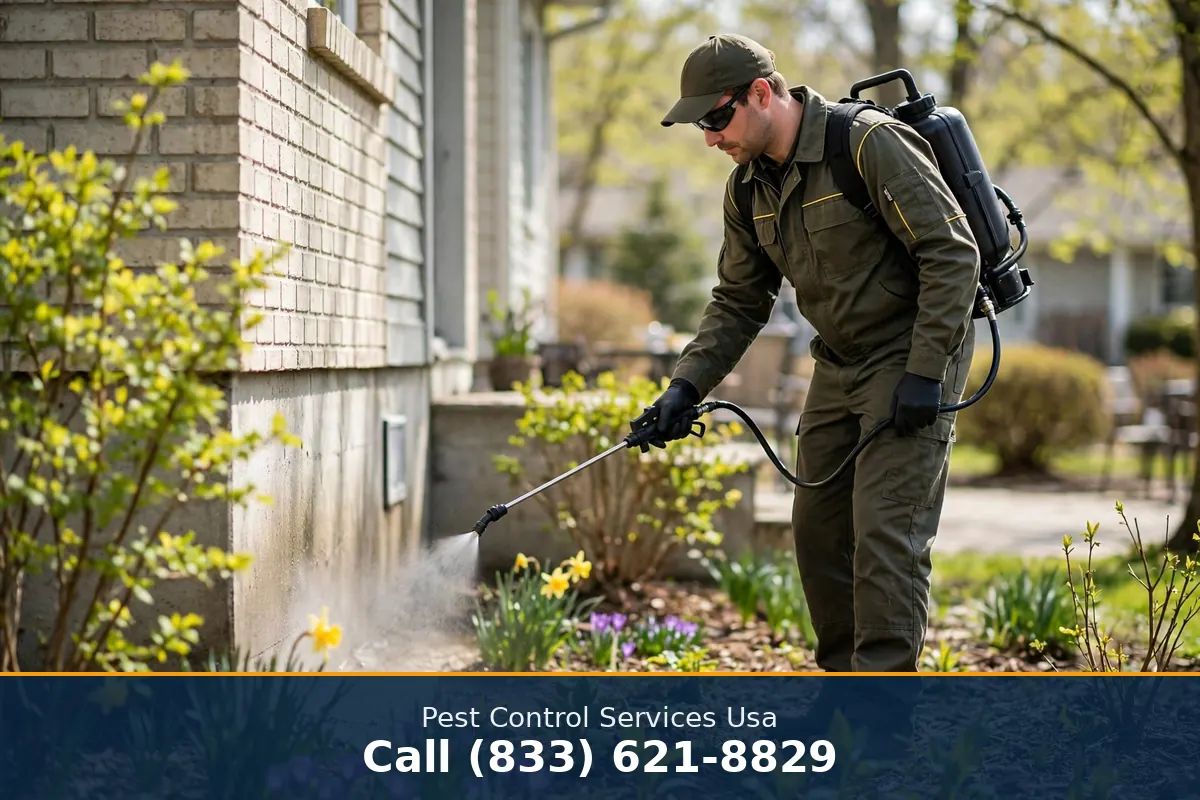
The treatment focuses on the areas where spring pest activity concentrates. Technicians apply product in a band around the foundation, extending up the exterior wall and out across the adjacent soil or mulch. Entry points such as door thresholds, window frames, weep holes, and utility penetrations receive targeted attention. Eaves, soffits, and overhangs are treated to discourage spiders and paper wasps from settling overhead. Landscape features that harbor insects are addressed as part of the same visit. That means mulch beds, ground cover, patio and deck edges, and firewood stacked near the house.
It is equally important to know what this service is not. It is not an interior extermination, and it will not resolve an infestation already established inside your walls. Those situations call for interior treatment plans. It is also not a substitute for structural repairs: torn screens and missing door sweeps should still be fixed.
Why spring timing beats reacting later
Treating in spring works with insect biology instead of against it. Colonies are smaller, queens are laying the season's first workers, and foraging trails are not yet established. A barrier applied now confronts insects at their weakest point in the yearly cycle. The same treatment applied in midsummer faces larger colonies, deeper nesting, and entrenched trails — which is why reactive visits rarely match the results of a well-timed spring application.
There is also a practical advantage to going first. A spring visit gives the technician a clean look at your property before vegetation fills in and hides entry points. Gaps around new utility work, winter damage to vent covers, and shifting mulch lines are all easier to spot in early spring. What the inspection finds now shapes smarter protection for the rest of the year.
When your home needs it
Timing is the whole point of a spring barrier treatment. Insects respond to temperature, and the first consistently warm weeks trigger foraging and colony expansion. Waiting until heavy activity appears means colonies are already established. The signs below mean the season has started and a barrier visit is due.
- Ants trailing along baseboards, countertops, or patio edges
- Spiders reappearing in corners, window frames, and ceiling junctions
- Cockroaches showing up near sinks, dishwashers, or floor drains
- Earwigs gathering under doormats or in damp bathroom corners
- Pillbugs and millipedes clustering along the foundation after rain
- Webs rebuilding under eaves, railings, and porch lights
If you dealt with any of these pests last year, expect them again. Insects return to the same harborage areas and entry routes season after season. A barrier applied before the pattern repeats breaks the cycle at its earliest stage.
How the process works
Every visit starts with a walk-around inspection of the property. The technician looks for active pest signs: ant trails, webbing, and droppings. They also note the conditions that invite pests, like mulch piled against siding, dense ground cover, standing water, or gaps around pipes. Entry points get special attention, because the barrier only works if the most-used doors for insects are covered.
Next comes the treatment itself. The technician treats the foundation band, entry points, eaves, and harborage areas found during the inspection, using residual products selected for spring insect activity. Ant mounds and active trails in the yard are treated directly so foraging colonies are hit at the source. The application is thorough but targeted: product goes where insects travel and rest, not broadcast across the whole yard.
After the treatment, the technician walks you through what was done and what to expect. You will hear which areas were treated, the drying time before kids and pets use the yard, and what normal post-treatment activity looks like. The visit ends with a follow-up recommendation based on the inspection findings.
What affects the cost
Several factors shape what a spring barrier treatment involves for your property. The size of the home and the length of its perimeter are the starting point. A sprawling ranch with multiple wings takes more product and time than a compact two-story. Denser landscaping means more harborage to treat: heavily mulched beds, ivy ground cover, and mature plantings against the foundation add surface area.
Current pest pressure plays a role: a home with active ant colonies or heavy spider webbing needs more intensive treatment than one with no visible activity. The number and condition of entry points factor in as well — older homes with settled foundations and original weatherstripping present more gaps to address. Finally, scope matters: a one-time seasonal barrier differs from a barrier visit that opens an ongoing protection plan. None of these are quoted on this page, because every property is different. The inspection determines the right scope, and the technician explains it before any work begins.
How we serve your area
Pest Control Services Usa provides spring barrier treatments for single-family homes, townhouses, and small residential properties preparing for the warm season. The service suits homeowners who want to get ahead of pest problems rather than react. It works well as the first step in a year-round approach. Rental owners use it to prepare units between tenants, when empty homes are most vulnerable to unnoticed entry.
Service areas span suburban neighborhoods, rural properties with heavy landscape pressure, and new developments where construction disturbed the soil and displaced insect colonies. Wherever your home sits, the approach is the same: inspect first, treat what the inspection finds, and explain everything in plain language. Call Pest Control Services Usa to schedule the season's most important pest control visit.
Features
- Perimeter foundation treatment extending up walls and out across soil
- Doors, windows, and utility penetrations treated against entry
- Eave and soffit treatment targeting spiders and paper wasps
- Mulch beds, landscape edges, and woodpiles treated as harborage zones
- Ant mounds and active trails treated where colonies emerge
- Residual products matched to spring insect activity patterns
- Family- and pet-conscious product selection for outdoor areas
Benefits
- Stops crawling insects before they reach your living space
- Reduces the need for interior treatments later in the season
- Protects kitchens and pantries from spring ant invasions
- Cuts down spider webbing around windows, doors, and eaves
- One well-timed visit covers the whole spring emergence
- Sets the baseline that summer protection plans build on
- Lets you enjoy the outdoor season without constant insect pressure
Frequently asked questions
How long does a spring barrier treatment last?
The treatment is designed to carry your home through the spring emergence, when insect activity peaks. Heavy rain, irrigation, and heat gradually break products down, so summer follow-up timing depends on local conditions. Your technician will recommend the right interval.
Do I need to be home during the visit?
No. The entire service is performed on the exterior of your home, so no interior access is needed. The technician will leave notes explaining what was treated and any drying-time guidance for kids and pets.
Is the treatment safe for children and pets?
Products are selected with families in mind, and applications target the areas where insects travel rather than play areas. Once the treatment has dried, normal yard use can resume. Your technician will confirm the specific drying guidance for the products used.
Will this get rid of ants already in my kitchen?
A barrier stops new insects from entering, but ants already established indoors may need a targeted interior treatment. The technician can identify whether indoor activity is a fresh invasion or an established colony and recommend the right next step.
When is the best time to schedule?
Early spring, as daytime temperatures climb consistently, is ideal. Scheduling before heavy activity gives the barrier time to be in place when foraging begins. If insects are already active, the treatment addresses current pressure too.
How is this different from quarterly pest control?
A spring barrier treatment is a single, season-opening visit focused on the exterior. Quarterly service spreads visits across the year with interior coverage included. Many homeowners start with the spring barrier and then continue on a plan for uninterrupted protection.