Stink Bug Control Near Me
Starting price: Call for pricing
Every fall, brown marmorated stink bugs mass on sunny walls and slip through tiny gaps to overwinter inside. Pest Control Services Usa treats the exterior before the invasion peaks, seals the entries they exploit, and handles the ones already hiding in attics and wall voids. Our stink bug control is timed to the season so your home stays quiet through winter.
What stink bug control covers
Stink bug control keeps brown marmorated stink bugs from turning your home into their winter shelter. These shield-shaped invaders arrived from Asia and spread across the country, and now they mass on sunny exterior walls each fall. When temperatures drop, they slip through tiny gaps around windows, vents, and siding, then settle into attics and wall voids until spring.
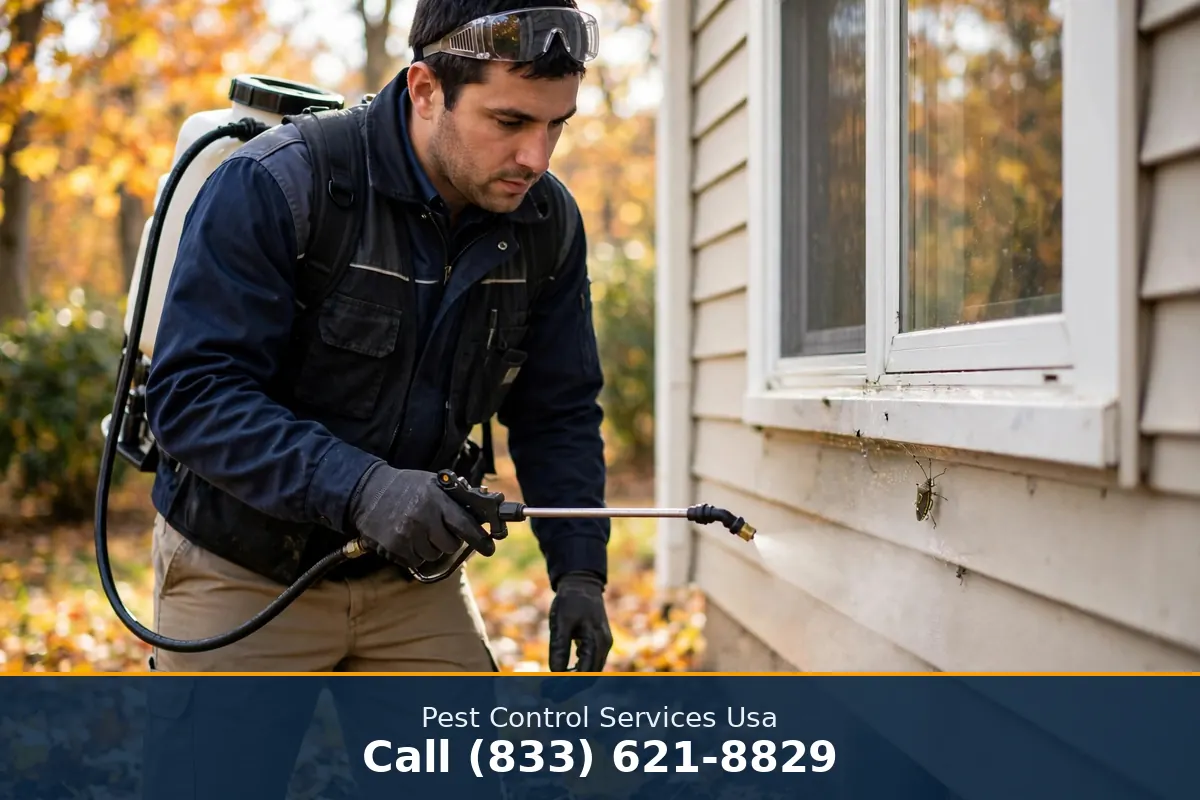
Pest Control Services Usa times stink bug control to their behavior. The key window is late summer and early fall, before the bugs move indoors. Exterior barrier treatments applied during that window intercept them as they gather on sun-warmed walls. Entry-point work seals the gaps they exploit: attic vents, soffits, window frames, and utility openings. For bugs already inside, we treat attics and wall voids directly rather than chasing individual insects from room to room.
The program also covers the habits that make homes more attractive. Bright exterior lights draw stink bugs toward entry points at night. Overgrown foundation plantings give them staging areas close to the walls. We flag those conditions and suggest practical changes that reduce pressure year after year.
Stink bugs do not bite, sting, or damage structures. They are a nuisance and an odor problem — crush one and it releases the foul smell that gives the insect its name. That is why our interior approach avoids crushing entirely and focuses on removal and exclusion instead. Vacuuming with a stocking over the hose lets you collect them without triggering the odor, and the bag gets sealed and discarded outdoors.
This service focuses on stink bugs around homes and businesses. It does not cover crop or orchard pest management, which is a different specialty with different methods, timing, and scale.
When you need stink bug control
- Clusters gather on sunny south- and west-facing walls in late summer
- You spot them on window screens, around door frames, or near attic vents
- A foul odor appears when bugs get crushed in curtains or laundry
- They show up indoors through fall and winter, then again in spring
- Previous falls brought invasions and you want this year to be different
- Your home sits near gardens or wooded edges where populations run high
Timing matters more with stink bugs than with most pests. Once hundreds have settled into wall voids for the winter, control gets harder and slower. The homes that stay clearest are the ones treated and sealed before the migration peaks. If you dealt with them last fall, this fall is the time to act.
Watch the sunny sides of your home from late August on. The first clusters on warm siding are the signal that migration has started. Calling (833) 621-8829 at that point — not after they are inside the walls — gives the barrier treatment its best chance to work.
How the process works
Call (833) 621-8829 in late summer for the best results. We will ask when you first notice the bugs, which sides of the home they favor, and whether they got inside last year. That history tells the technician where to focus the inspection.
The inspection concentrates on the exterior first. The technician walks the sun-facing walls, checks window frames and screens, examines attic vents and soffits, and looks at utility penetrations and siding gaps. Inside, attics and upper wall voids get checked for existing clusters. The findings shape a plan built around timing — what needs treating now versus what needs sealing before the migration.
Exterior barrier treatment goes on the walls and entry zones where stink bugs gather. Entry-point recommendations follow: screening vents, sealing gaps, repairing screens, and adjusting exterior lighting. For bugs already overwintering inside, targeted void treatments handle the clusters without filling living spaces with odor.
Exclusion work often continues after our visit. Screening an attic vent or sealing a run of siding gaps is straightforward, and the technician will show you exactly which fixes give the biggest return. Homes that combine our treatment with solid exclusion see far fewer bugs the following fall.
Follow-up visits track the season. The technician checks whether new bugs are pressing against the barrier and whether the exclusion work is holding. If activity spikes between visits, call (833) 621-8829 and we will come back to address it.
What affects the cost
Home height and size lead the list. Tall two-story homes with extensive sun-facing walls need more product and more ladder work than a single-story ranch. The number of entry points matters — older homes with original vents, worn screens, and gaps in siding need more exclusion attention.
Infestation history plays a role. A home that sees a few dozen bugs each fall is a different job than one where hundreds cluster on the siding. Interior scope adds work when bugs have already settled into attics and wall voids. Exclusion scope varies by home age as well. Newer homes with tight construction may need only vent screening and a few sealed gaps, while older homes with original siding and worn screens take more hands-on exclusion work.
Call (833) 621-8829 for an exact quote on your home. We will walk the property, explain what we find, and lay out the options in plain language.
How we serve your area
Pest Control Services Usa serves regions where stink bugs hit hardest: the Mid-Atlantic, the Northeast, and the Midwest. We also serve every other area where fall invasions occur. These bugs have spread steadily since their arrival, and local timing varies: southern areas see movement earlier, northern areas later. Our scheduling follows the local migration, not a one-size calendar, so treatment lands when it counts most.
We protect single-family homes, townhomes, and apartments, plus schools, offices, and hospitality properties where clusters on facades and in lobbies draw complaints. Multi-unit buildings get coordinated exterior treatment so bugs cannot simply shift from a treated unit to an untreated one.
If stink bugs claimed your home last fall, do not give them another season. Call (833) 621-8829 and let Pest Control Services Usa shut the door before they move in.
Features
- Late-summer exterior barrier timed to the invasion season
- Entry-point inspection of vents, soffits, and window frames
- Attic and wall-void treatment for overwintering clusters
- Lighting guidance that reduces nighttime attraction
- Crack and crevice sealing recommendations around the home
- Interior handling that avoids crushing and odor release
- Seasonal program covering the full fall migration window
Benefits
- Fewer stink bugs clustering on siding and screens
- No foul odor from crushed bugs on curtains and furniture
- Attics and wall voids cleared of overwintering clusters
- A sealed home that resists next fall's invasion too
- Treatment timed to when stink bugs actually move indoors
- Honest guidance on which DIY steps help and which don't
- A calmer home through the cold months
Frequently asked questions
Do stink bugs bite or sting?
No. Brown marmorated stink bugs do not bite people or pets and do not sting. They are strictly a nuisance pest, though their odor and numbers make them deeply unpleasant houseguests.
Why do they come inside every fall?
They are looking for a sheltered place to overwinter. As temperatures drop, they gather on sun-warmed walls and slip through tiny gaps into attics and wall voids, where they stay dormant until spring.
Why do they smell so bad?
The odor is a defense mechanism. When crushed or disturbed, they release compounds that smell foul to drive away predators. That same smell is why crushing them indoors is the worst way to deal with them.
Should I just vacuum them up?
Yes. Vacuuming is one of the best DIY responses. Use a stocking over the hose or empty the canister into a sealed bag afterward, since the bugs can release odor inside the vacuum. Then discard the bag outdoors.
When is the best time to treat for stink bugs?
Late summer, before the fall migration peaks. Exterior barriers work best when applied as the bugs start gathering on walls. Once they are settled inside wall voids, treatment shifts to targeted void work and exclusion.
Will they damage my house?
No. Stink bugs do not eat wood, fabric, or stored food, and they do not reproduce indoors. The harm is limited to nuisance, odor, and the occasional stained curtain or wall.
Do they leave on their own in spring?
Mostly, yes. They emerge from hiding and head back outdoors as it warms up. But without sealing entries, a new generation returns the following fall, so spring is a good time to plan exclusion work.