
Subterranean Termite Treatment Near Me
Starting price: Call for pricing
Subterranean termites live in the soil and enter buildings through mud tubes to feed on wood. They are the most destructive termite group in the United States, and their damage can stay hidden for years. Pest Control Services Usa treats active colonies with professional liquid termiticide applied as a continuous soil barrier around the foundation.
What subterranean termite treatment is
Subterranean termites nest in the soil and travel to buildings through shelter tubes built from mud and saliva. These tubes shield them from open air as they move between the colony and the wood they feed on. A single colony can hold hundreds of thousands of workers, and all of them are foraging for cellulose continuously. The treatment we apply is a professional liquid termiticide placed in the soil around the foundation. It forms a continuous treated zone that termites cannot detect as they pass through it. Workers pick the material up on their bodies and share it with nestmates through feeding and grooming. The effect spreads through the colony and reaches the queen, which stops new termites from being produced. This approach targets the whole colony instead of only the termites visible on the surface.
The most aggressive subterranean termites in the United States are Formosan termites, found along the Gulf Coast and in parts of the Southeast and Hawaii. Their colonies grow far larger than native subterranean species, and they can consume wood at a striking pace. Pest Control Services Usa treats Formosan and native subterranean colonies with the same soil-barrier method, adjusted for the size and behavior of the colony found on your property.
Homeowners sometimes try store-bought sprays when they see termites, but surface sprays only kill the workers in view. Repellent sprays can even scatter the colony into new areas of the structure, which makes the problem harder to treat. A professional barrier works differently because termites cannot detect it and carry it back to the nest. That transfer effect is what makes soil-barrier treatment the standard method for subterranean termites across the industry.
When you need it
Call Pest Control Services Usa for an inspection when you notice any of these signs. Early treatment limits the spread of damage and keeps repair work smaller. Do not disturb the tubes before we arrive, since intact tubes help us locate the colony.
- Mud tubes running up the foundation, along piers, or across cracks in the slab.
- Discarded wings near windowsills and doors after a spring swarm.
- Wood that sounds hollow when tapped or feels soft under paint.
- Tight-fitting doors and windows caused by moisture in termite-damaged frames.
- A real estate inspection that flagged possible termite activity.
- Live termites found in mulch, firewood stacks, or stumps near the house.
How the process works
Every job starts with a detailed inspection of the interior, exterior, and any crawl space or basement. We look for mud tubes, damaged wood, moisture problems, and the places where soil touches the structure. Moisture readings help us find conditions that attract termites, such as leaks, poor drainage, or wood stored against the foundation. You receive a written report that maps every finding and explains what each one means.
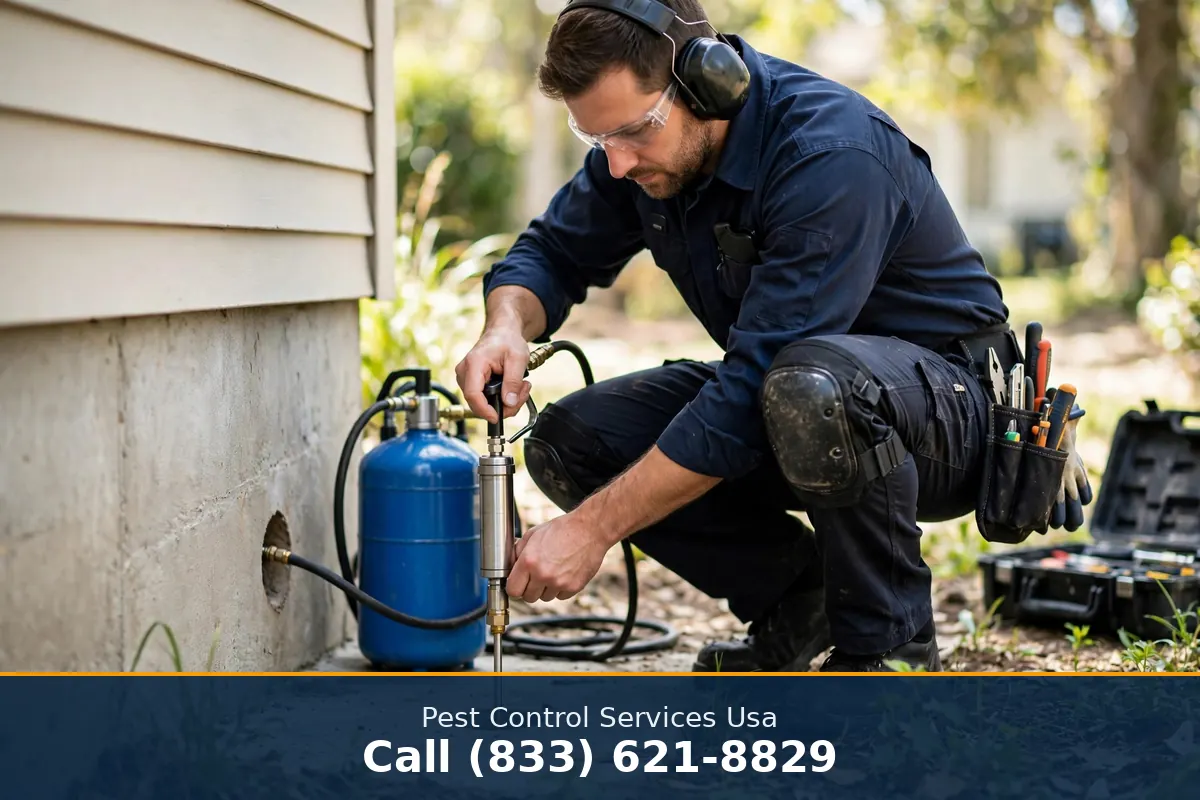
For the treatment itself, we dig a narrow trench in the soil along the foundation and apply termiticide to the trench before backfilling it. Where plants or hardscaping block trenching, we use a hollow rod to inject the product directly into the soil. Concrete slabs, patios, and porches are drilled with small holes so the termiticide reaches the soil beneath them. We patch every drill point after the application so the surface looks neat. Wall voids and active galleries near entry points may receive foam that expands to fill the hidden spaces.
After the barrier is complete, the nonrepellent product keeps working as termites cross through the treated soil. Workers carry it back and feed it to soldiers, nymphs, and the queen through their normal sharing behavior. Colony activity declines over the following weeks as the effect spreads through the nest. We return for scheduled follow-up visits to confirm the colony has collapsed and the barrier remains intact.
Before the treatment day, we ask you to move items away from the foundation so the crew can reach the soil line. Firewood, mulch piles, and stored lumber should be pulled back from the walls. Inside, clearing access to the garage, basement, and crawl space openings helps the inspection move along. We confirm every preparation step with you in advance, so there are no surprises when the crew arrives.
What affects the cost
The size of the structure is the biggest factor, because a larger footprint needs more trenching and more product. Foundation type matters too, since slab homes need drilling while homes with crawl spaces or basements need different access points. Soil conditions, landscaping, and hardscaping change the amount of labor required to create a continuous treated zone. The extent of the infestation also plays a role, because widespread activity may call for foam applications inside wall voids. Pest Control Services Usa explains every cost factor in writing before any work begins, so you know exactly what the treatment includes.
Retreatment needs can also influence the overall investment, since disturbed soil from later construction or landscaping may need attention. Homes near wooded areas or with chronic moisture problems sometimes need a more thorough application plan. What never changes is our approach to quoting: every factor is listed in plain language on your written estimate. There are no vague line items and no pressure to decide on the spot.
How we serve your area
Pest Control Services Usa serves homes, rental properties, and commercial buildings across the country. Subterranean termites are active in every state, so our soil-barrier treatment is available wherever these colonies threaten structures. We schedule around your availability and keep you informed at every step of the process. To start, call (833) 621-8829 and tell us what you have seen. A trained technician will inspect your property and recommend the right treatment for the termites found there.
Property managers and landlords use our service to protect rental portfolios from hidden structural damage. Real estate agents schedule pre-listing inspections so termite findings do not delay a closing. No matter who owns the building, the treatment plan is built from the inspection findings on that specific property. That is how Pest Control Services Usa delivers termite control that fits the building, not a generic package.
Features
- Thorough foundation perimeter inspection with moisture readings
- Undetectable nonrepellent termiticide applied to treated soil
- Trenching, rodding, and drilling methods matched to the structure
- Slab and patio drilling with sealed, patched drill points
- Wall-void and gallery foam applications at active entry points
- Transfer effect that reaches workers back at the colony
- Detailed written report of findings and treated zones
Benefits
- Eliminates the active colony, not just the termites you see
- Creates a continuous treated zone around the foundation
- Protects framing, subfloors, and structural wood from further damage
- Targets termites with minimal disturbance to landscaping
- Application products chosen for their label-directed use
- Clear explanation of every treatment step before work begins
- A service plan built around your building type and soil conditions
Frequently asked questions
How do I know if I have subterranean termites?
Look for mud tubes on the foundation, discarded wings near windows, and wood that sounds hollow when tapped. Swarmers emerging indoors are a strong sign of an established colony.
How long does the treatment take?
Most homes take a single day, though larger or complex structures can take longer. Your technician confirms the schedule before work begins.
Will I need to leave my home during treatment?
Usually not, since the work happens in the soil around the exterior and under slabs. The technician explains any access needs during the inspection.
How long does a soil barrier last?
Modern nonrepellent termiticides remain active in undisturbed soil for years. Follow-up inspections confirm the barrier stays intact.
Can subterranean termites come back after treatment?
New colonies can arrive from neighboring soil, which is why monitoring matters. Disturbed soil from later digging or construction should be inspected and addressed.
Is the treatment a concern for my garden and pets?
We apply professional products according to their label directions, which include guidance for landscaped areas. Your technician reviews any precautions for your property.
Do I need treatment if I only saw swarmers once?
Yes, because swarmers mean a mature colony is feeding nearby. An inspection locates the colony so treatment reaches the source.