
Termite / WDO Inspection Near Me
Starting price: Call for pricing
Buyers, sellers, and homeowners need a clear picture of termite risk before they commit. A WDO inspection from Pest Control Services Usa examines the structure for termites and other wood-destroying organisms and delivers a written report lenders and escrow officers accept.
What a termite / WDO inspection is
A WDO inspection is a detailed visual examination of a property for the pests and fungi that damage wood. WDO stands for wood-destroying organism, and the category covers subterranean and drywood termites, wood-boring beetles, and wood-decay fungi, along with the visible damage each one leaves behind. The result is a written report that documents what was found, where it was found, and which conditions could invite future problems.
This is not the same as a general home inspection. A home inspector evaluates the overall condition of the property but does not specialize in wood-destroying organisms, and most lenders want a dedicated WDO report from a pest control company. The inspection covers accessible areas: the exterior and foundation, the interior rooms, the attic framing, and the crawl space or basement where one exists. Anything hidden behind walls or under slabs cannot be seen without destructive work, so the report describes exactly which areas were accessible and which were not.
Reports typically sort findings into two buckets. The first covers active infestations and existing damage — live termites, damaged wood, fungal decay already in the structure. The second covers conditions that make future infestation more likely, like soil contact at the sill plate, standing moisture, or firewood stacked against the siding. Both matter, because a clean report on the first with warnings on the second still gives the property owner a to-do list.
When you need it
The most common reason is a real estate transaction. Buyers order a WDO inspection during escrow to make sure they are not purchasing a home with hidden termite damage. Sellers order one before listing so they can address problems on their own timeline instead of under closing pressure. Many lenders, particularly for VA and FHA loans, require a WDO report or a clean Section 1 clearance before they fund the loan.
Homeowners outside of a transaction need inspections too:
- After spotting swarmers, discarded wings, or mud tubes around the property
- When a neighboring home has been treated for termites
- As part of a regular checkup every year or two in termite-active regions
- Before a major renovation that will open up walls or framing
- When refinancing, if the lender requests updated documentation
- After years without any pest inspection on an older home
Termites are called silent destroyers because they can feed for years without visible signs. An inspection is the only way to know what is happening inside the wood.
How the process works
Scheduling is straightforward. You tell us the property address and whether the inspection is for a purchase, a sale, or your own peace of mind. We then arrange a time that fits the escrow calendar or your schedule. For real estate inspections, the listing agent or homeowner usually provides access to the attic, crawl space, and garage.
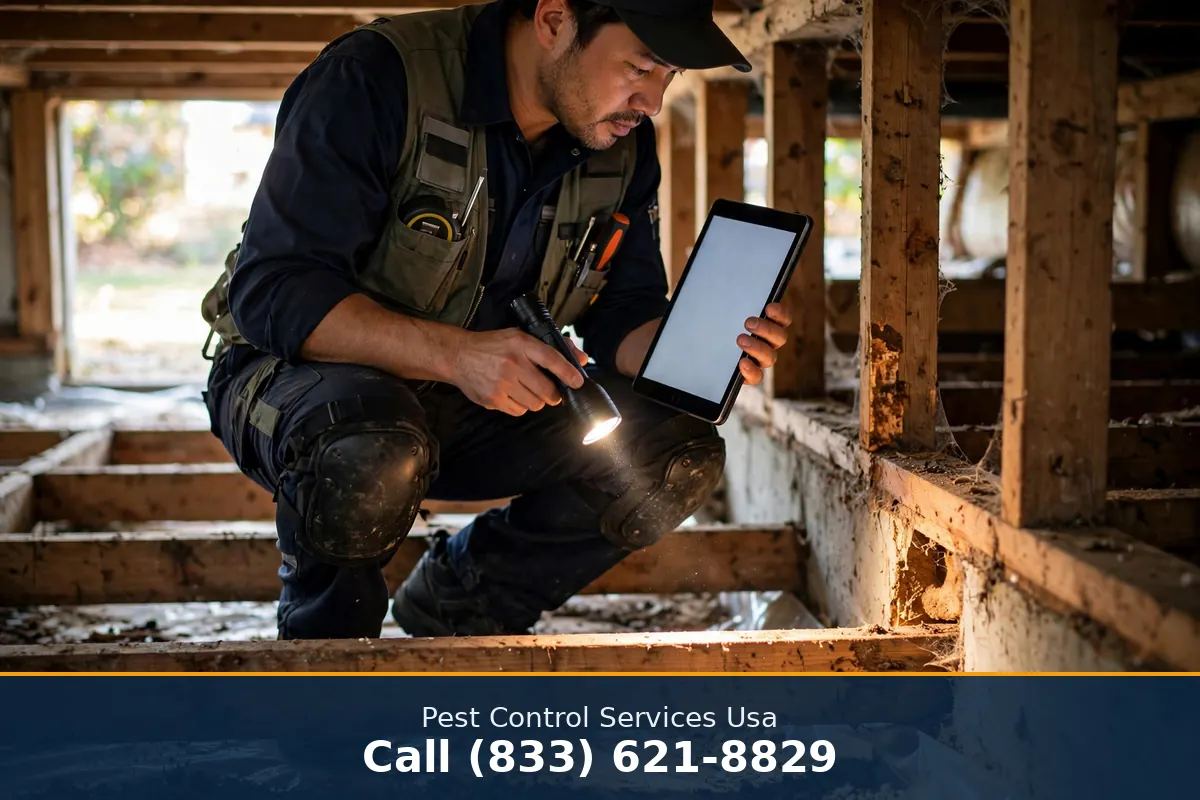
On site, the inspector works methodically from the outside in. The exterior gets a full walk-around: foundation walls, siding, window and door frames, decks, fences attached to the structure, and the grade around the home. Inside, the inspector checks accessible framing in the attic and crawl space. Plumbing areas get attention too, since moisture collects under sinks and around penetrations. Suspicious wood is probed with a tool to test its soundness.
Every finding is photographed and noted with its location. After the walkthrough, the inspector compiles the written WDO report, separating active findings from conducive conditions and describing each one in plain language. You receive the report promptly so escrow timelines stay on track. If the inspection turns up an active infestation, we can provide a separate treatment proposal so the transaction keeps moving.
What affects the cost
WDO inspection pricing reflects the work involved, and several factors shape it. The size of the property is the biggest one. A small single-story home on a slab takes less time than a large two-story with an attic, a basement, and a detached garage. Foundation type matters because crawl spaces and basements add accessible areas that must be examined closely.
The purpose of the inspection also plays a role. A formal report for a lender or escrow, with full documentation and photographs, involves more work than a homeowner's walkthrough for peace of mind. Properties with outbuildings, decks, or additions expand the area to cover. Limited access — a sealed attic hatch, a crawl space with no entry, or rooms blocked by stored belongings — can require a return visit. What never changes is the thoroughness: every accessible area gets the same careful look.
How we serve your area
Pest Control Services Usa performs termite and WDO inspections for buyers, sellers, agents, and homeowners across the country. Our inspectors understand the termite pressure in different regions, from subterranean-heavy markets to coastal areas with drywood activity, and they know what local lenders expect to see in a report. Real estate professionals rely on us for prompt scheduling and reports that keep escrow moving.
We explain every finding in plain language and answer questions before, during, and after the inspection. Whether you are buying your first home or selling your fifth, you deserve to know exactly what is happening in the wood. Call (833) 621-8829 to schedule your termite and WDO inspection.
Features
- Visual inspection of the exterior, interior, attic, and crawl space
- Identification of subterranean and drywood termite activity and damage
- Detection of wood-boring beetles and wood-decay fungi
- Findings separated into active issues versus conducive conditions
- Written WDO report formatted for lenders and escrow officers
- Photo documentation of every finding and area of concern
- Clear, plain-language explanation of what the report means
Benefits
- Meets the WDO report requirements many lenders set for closing
- Protects buyers from inheriting hidden termite damage and repair bills
- Lets sellers fix problems before they threaten the sale
- Creates a written record of the property's wood condition
- Gives agents and clients leverage to negotiate repairs or credits
- Flags moisture and wood-to-soil contact before they invite infestation
- Delivers answers without jargon so decisions stay simple
Frequently asked questions
What does WDO stand for?
WDO stands for wood-destroying organism. The term covers termites, wood-boring beetles, and wood-decay fungi — anything that eats or breaks down the wood structure of a building.
Is a WDO inspection different from a general home inspection?
Yes. A general home inspector evaluates the whole property but does not specialize in wood-destroying organisms. Lenders usually want a dedicated WDO report from a pest control company, so the two inspections complement each other rather than overlap.
Do I need a WDO inspection to buy a home?
It depends on the loan. VA and FHA lenders commonly require a WDO report or clearance before funding, and conventional lenders often request one too. Even when not required, an inspection protects you from inheriting hidden damage.
What happens if the inspector finds termites?
The findings go into the written report with their locations, and we can provide a separate treatment proposal. In a transaction, the buyer and seller then negotiate who handles the treatment and repairs before closing.
How long does a WDO inspection take?
Most residential inspections take one to two hours, depending on the size of the property and how many accessible areas need examining. Larger homes with attics, crawl spaces, and outbuildings take longer.
What are conducive conditions on a WDO report?
Conducive conditions are situations that invite future infestation, such as wood touching soil, moisture around the foundation, or debris piled against the structure. They are not active infestations, but addressing them lowers the risk of one starting.
How long is a WDO report good for?
Lenders set their own freshness windows, so reports are typically ordered early in escrow to stay current through closing. If a transaction drags on, the lender may ask for an updated inspection.