Tick Control Near Me
Starting price: Call for pricing
Ticks hide in tall grass, brush, and leaf litter, waiting to bite your family and pets. Pest Control Services Usa applies targeted tick treatments to the areas where ticks live and travel. Our seasonal program reduces tick activity so your yard stays safer all season long.
What tick control is
Ticks are eight-legged parasites that attach to people and animals to drink blood. They wait on grass blades, shrubs, and low branches with their front legs raised, ready to grab a passing host. A single bite can pass along Lyme disease, anaplasmosis, babesiosis, or other serious illnesses.
Professional tick control is a seasonal yard service built around where ticks actually live. It targets the shaded edges, brush lines, woodpiles, and leaf litter where ticks gather. Open, sunny lawn is rarely the problem, so treatments concentrate on the perimeter zones instead.
The service combines targeted product applications with habitat changes that discourage ticks. Clearing leaf litter, trimming low branches, and moving woodpiles away from living areas all help. The goal is to break the tick life cycle on your property, not to soak the entire yard.
Ticks do not fly or jump. They climb to the tips of grass and wait, a behavior called questing. Understanding where they wait is exactly why professional treatment focuses on edges and borders.
When you need tick control
Call for tick control when you pull ticks off your dog after routine yard time. Schedule a visit when someone in the household finds a tick on their skin. Homes that border woods, fields, or greenbelts face the heaviest pressure and benefit most from a seasonal program.
- Ticks found on pets after time outdoors
- A family member with a recent tick bite
- Property bordering woods, trails, or open fields
- Deer or rabbits moving through the yard regularly
- Children playing outside in grassy or wooded areas
- Leaf litter and brush piling up along fences and borders
Tick activity peaks from spring through fall in most regions. Ticks can still quest on warm winter days when temperatures climb above freezing. Starting treatment early keeps populations low before the spring surge.
How our tick treatment process works
Every program starts with a property walk-through. We map the hotspots where ticks gather: brush lines, stone walls, woodpiles, and the shaded edges of the yard. Play areas, pet zones, and patios get special attention so protection lands where your family spends time.
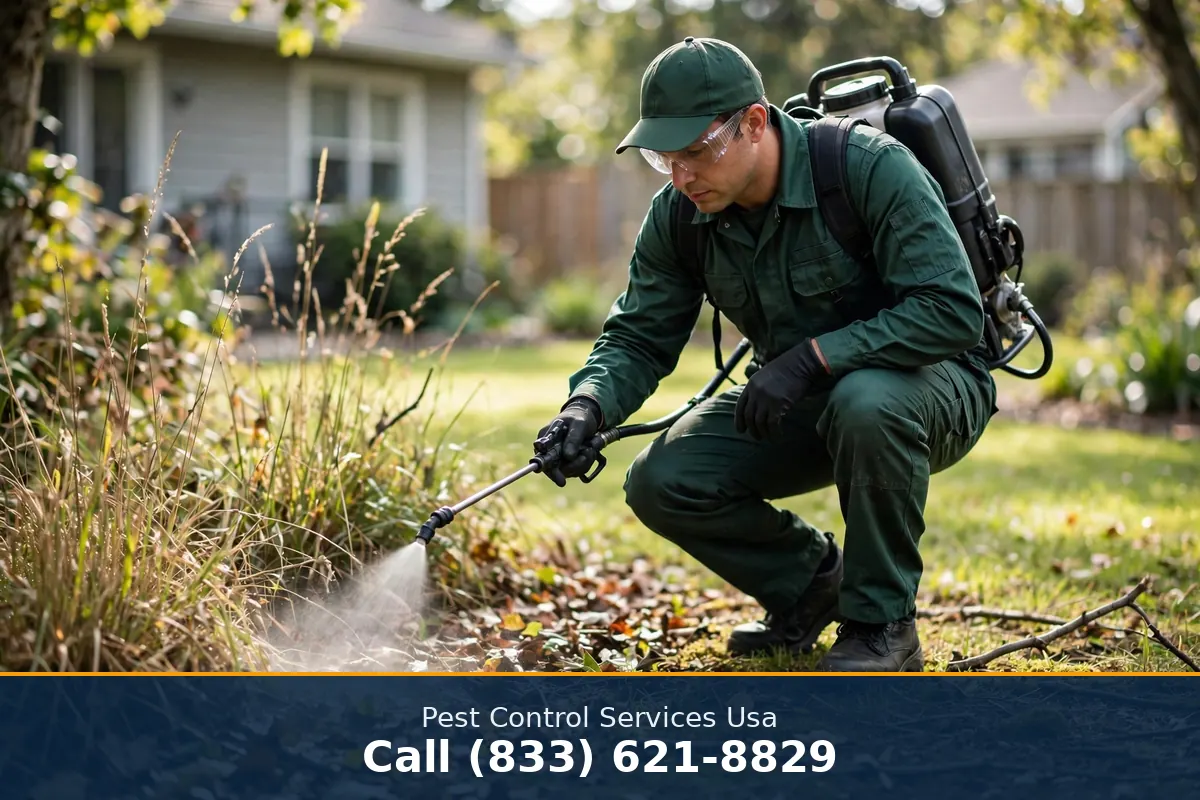
Next we apply targeted treatments to those zones, following the product label to the letter. Applications go under shrubs, along fence lines, around woodpiles, and across the perimeter where lawn meets woods. We avoid broadcasting product across open lawn where ticks rarely gather.
After treatment we explain re-entry timing for children and pets. We also leave habitat advice, such as raking leaf litter and trimming grass along edges. Return visits follow a schedule matched to tick life stages through the season. Between visits we monitor activity and adjust coverage as conditions change.
What to expect after treatment
Tick numbers drop noticeably in the weeks after the first application. You may still spot the occasional tick, since no outdoor treatment creates a perfect barrier. Activity should trend down with each visit as the seasonal program takes hold.
Habitat work on your end makes treatments last longer. Keep grass trimmed along edges and rake leaves away from play areas. Move firewood and brush piles to the far corners of the property.
Tick safety habits for your household
Check everyone for ticks after time in grassy or wooded areas. Look behind ears, along the hairline, under arms, and around waistbands where ticks like to attach. Shower within a couple of hours of coming indoors to wash off unattached ticks.
Dress for protection when hiking or working near brush. Tuck pants into socks and choose light-colored clothing that makes ticks easier to spot. Toss clothes in a hot dryer for ten minutes to kill any ticks you missed.
How tick treatments protect your pets
Dogs pick up ticks simply by running through the yard. Ticks crawl onto fur during play and attach where the coat is thin, such as ears, paws, and bellies. A treated yard means fewer ticks ever reach your dog in the first place.
Outdoor treatments work alongside your veterinarian's tick prevention plan. Yard control reduces the number of ticks in the environment, while collars or topicals protect the animal directly. Together they close the gap that either method leaves on its own.
We pay special attention to the areas your pets use most. Fence lines where dogs patrol, shady corners where they nap, and paths they run daily all get coverage. Tell us where your pets spend time so we can prioritize those zones.
What affects the cost of tick control
Yard size is the biggest cost driver because treatments follow the perimeter. A quarter-acre lot has far less edge habitat than a wooded acre. Heavy brush, thick groundcover, and deep leaf litter take more time and product to cover properly.
The number of seasonal visits also shapes the total. High-pressure properties near woods may need more visits than open suburban lots. Access issues like locked gates, steep slopes, or dense plantings can add time to each visit.
The condition of your yard also matters. Properties with years of accumulated leaf litter or overgrown borders take longer to treat on the first visit. Regular seasonal service keeps each visit simpler than a one-time rescue treatment.
Ask your technician about combining tick visits with your other seasonal yard services. One coordinated schedule keeps every treatment working at its best. Your technician can explain which services pair well with tick control.
How we serve your area
Pest Control Services Usa protects homes with shaded lots, new developments next to woods, and neighborhoods where deer pass through. We work with families with young children, dog owners, and anyone who gardens or plays outdoors. Outdoor living spaces like patios, decks, and playsets are included in every treatment plan.
Rental properties and homeowners associations can set up consistent seasonal coverage across multiple yards. Camp-style properties and rural homesteads with heavy brush get plans built around their specific habitat. Call (833) 621-8829 to schedule a walk-through and start your seasonal tick program.
Features
- Targeted treatments along yard edges, brush lines, and wooded borders
- Perimeter barrier applications around patios, play areas, and pet zones
- Tick habitat reduction guidance for leaf litter and overgrown areas
- Seasonal treatment schedule timed to peak tick activity
- Pet-aware application practices with clear re-entry guidance
- Follow-up checks to monitor tick activity between visits
- Recommendations for fencing and landscaping that deter tick hosts
Benefits
- Lower risk of Lyme disease and other tick-borne illnesses
- A yard your kids and pets can play in with confidence
- Fewer ticks brought indoors on shoes, clothing, and fur
- Treatments focused where ticks actually live, not the whole lawn
- Peace of mind through every warm-weather month
- Clear, honest advice on keeping ticks down between visits
- One call handles inspection, treatment, and ongoing prevention
Frequently asked questions
When is tick season?
Ticks are most active from spring through fall in most regions. They can still emerge on warm winter days when temperatures climb above freezing.
Are tick treatments safe for my pets?
Yes, when applied according to the product label. We give you clear guidance on when it is safe for pets and children to return to treated areas.
Will tick control also handle mosquitoes?
Tick treatments focus on ticks, and mosquito treatments use different products and timing. Yards with both problems usually need a combined program.
How many treatments do I need each year?
Most properties do best with a seasonal program of several visits timed to peak tick activity. Your technician sets the schedule based on your yard and local conditions.
Can I prevent ticks without professional help?
Yard maintenance like clearing leaf litter and trimming brush helps. Professional treatment adds targeted product applications that do-it-yourself efforts cannot match.
What should I do if I find a tick on my dog?
Remove it with tweezers, clean the area, and save the tick in a sealed bag. Watch for lethargy, loss of appetite, or joint stiffness in the following weeks.