
Warehouse & Distribution Pest Control Near Me
Starting price: Call for pricing
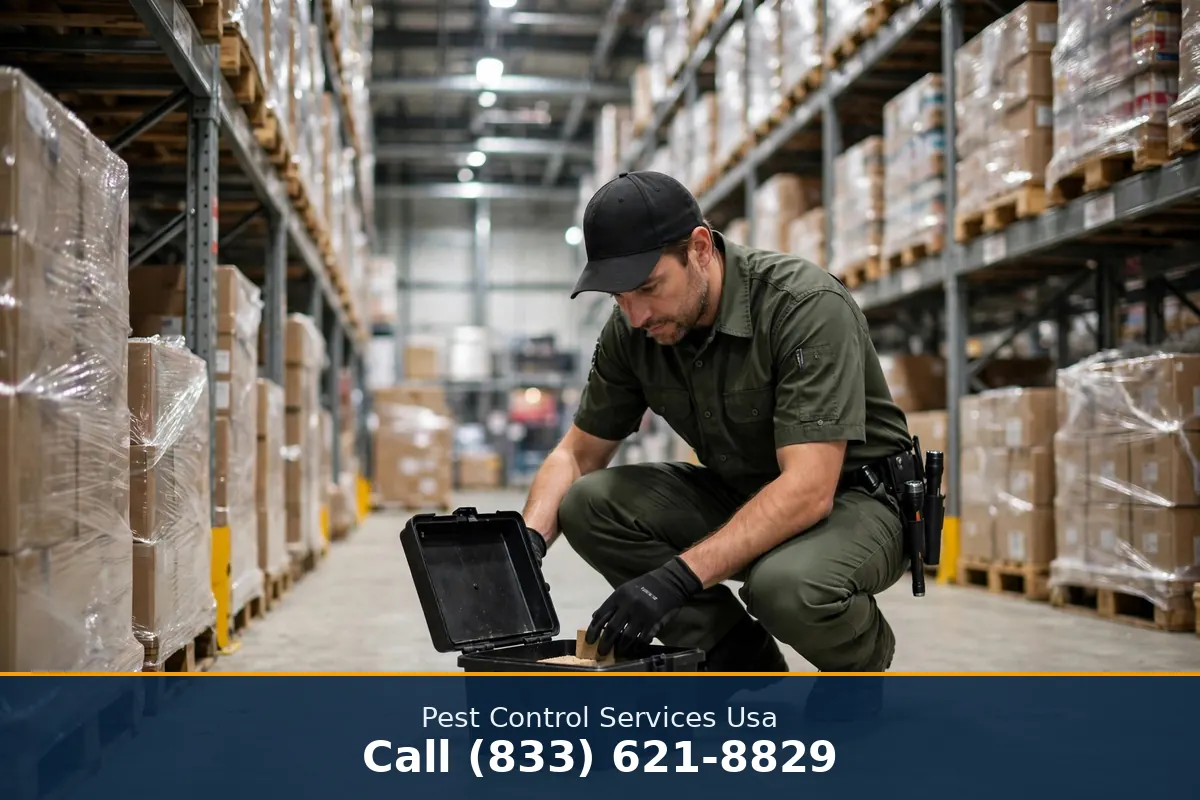
Warehouse and distribution pest control from Pest Control Services Usa protects inventory, packaging, and racking from rodents and stored-product insects across large footprints. We build monitoring networks with mapped stations, trend reports, and audit-ready documentation that stand up to client and regulator reviews.
Why Warehouses Are Prime Territory for Pests
A warehouse is a city built for pests. It offers food, water, and shelter on an enormous scale. Rodents find grain dust between pallets and nesting space above racking. Stored-product insects ride in on incoming freight and multiply inside sealed cartons.
Dock doors open dozens of times a day. Each opening is an invitation for mice, flies, and birds. Gaps around dock levelers and seals give rodents a permanent doorway. Overhead doors left ajar during night shifts do the rest.
The cost of inaction shows up quietly. A chewed corner on a pallet of cereal can condemn the whole pallet. One live insect in a shipment can trigger a customer rejection. Contaminated product rarely announces itself before it ships.
Distribution centers face extra pressure from constant turnover. Product arrives from dozens of suppliers with different standards. Pallets stack and move before anyone inspects them. A monitoring program turns that chaos into data.
Cold storage adds its own twist. Condensation on dock doors and cooler walls gives pests drinking water. Insulation panels hide nesting space that inspectors rarely open. Temperature swings near doors create the moisture rodents seek.
Racking creates vertical neighborhoods for pests. Upper beam levels collect dust and spilled product that no one cleans. Birds and rodents both exploit the height. Inspections include the top levels, not just the floor.
Signs Your Warehouse Has a Pest Problem
Droppings along walls tell you mice are traveling the perimeter. Gnaw marks on pallet wrap show where rodents tested the packaging. Webbing or clumping in dry goods points to stored-product insects. Each sign maps to a different zone of your building.
Employee sightings matter more than you think. Forklift drivers cover every aisle and notice movement first. Night-shift crews see what daytime misses. A simple reporting habit turns your whole staff into early detection.
Packaging damage often shows up before pests do. Chewed shrink wrap, stained cartons, and fine dust under pallets all tell a story. Receiving teams that log damage create an early warning system.
Odors and sounds give quiet clues. A sweet, musty smell near grain storage suggests beetle activity. Scratching inside wall voids at night means mice. Stale air around a dock seal hints at a gap you cannot see.
Audit findings are the most expensive sign of all. A single pest-related finding can stall a customer contract. Regulators treat repeated findings as a system failure. A steady monitoring routine keeps findings from ever reaching that point.
Trailer and container staging areas need watching. Sealed trailers sit for days with product inside. We inspect the staging lanes and the seals on every cycle.
Birds roost where docks meet the roofline. Droppings foul packaging and create slip hazards on the dock. Netting and ledge treatments keep them off without harming them.
How We Build a Warehouse Monitoring Program
We begin with a baseline survey of the entire facility. Technicians walk every aisle, dock, and storage zone. They map entry points, moisture sources, and harborage. The survey becomes the blueprint for your station network.
Stations go where data says they should. Exterior bait stations ring the building at mapped intervals. Interior traps line walls along rodent travel routes. Insect monitors sit near receiving, dry storage, and break areas. Every device gets a number and a location on your facility map.
Exclusion work closes the building envelope. We seal gaps around dock levelers, utility penetrations, and overhead doors with materials rodents cannot chew through. Every sealed gap removes a doorway pests used for years.
Service follows a rhythm your operation can plan around. We schedule visits during shift changes or low-activity windows. Technicians check every station, replace attractants, and log findings on the spot. You receive a trend report that shows activity by zone over time.
Treatments stay targeted and documented. We use crack-and-crevice applications where insects harbor. Every product applied gets logged with the zone, the date, and the reason.
Cold-chain and food-grade zones follow stricter rules. We use only methods suited to food-adjacent areas in these zones. Documentation notes the zone classification on every record. Your auditor sees the distinction without asking.
What Shapes the Scope of a Warehouse Plan
Square footage sets the starting point. A 50,000-square-foot warehouse needs a different station density than a 500,000-square-foot distribution center. Taller racking adds vertical harborage most plans overlook. Mezzanines and offices inside the warehouse need their own coverage.
What you store changes everything. Food, pet food, and grain attract stored-product insects and rodents. Electronics and paper goods face lower pressure but still need rodent monitoring. Temperature-controlled zones add condensation that pests exploit.
Your customers may set the bar. Many retailers and food companies require documented monthly service from their suppliers. Third-party audit standards often dictate station spacing and record formats. We build your program to satisfy the strictest standard you face.
Seasonality shifts the pressure. Harvest season pushes rodents toward grain storage. Cold snaps drive them toward heated buildings. Warm months raise insect activity near docks and waste areas. Your plan flexes with the calendar.
Staff turnover affects every program. New hires need the same reporting habits as the veterans they replace. We refresh the training whenever your roster changes.
- Total square footage and ceiling height
- Number of dock doors and their condition
- Product types and storage methods
- Surrounding land use, from fields to rail yards
- Audit standards your customers require
Documentation Your Auditors Will Accept
Pest Control Services Usa treats documentation as part of the service, not an extra. Every visit produces a dated service report with station-by-station findings. Trend charts show whether activity is rising or falling by zone. Corrective actions get logged with completion dates.
Audit day becomes uneventful. Your file holds the program description, the facility map, and every service record. Findings link back to corrective actions already completed. Auditors see a system that manages itself.
We also brief your team. Warehouse leads learn what to watch for on daily walkthroughs. Receiving staff learn to inspect incoming pallets before they enter storage. A short training session each year keeps everyone aligned.
Records also protect you with customers. When a client asks about your pest program, you share the plan and the trend data. Confidence in your supply chain becomes a selling point, not a scramble.
Call (833) 621-8829 to start with a baseline survey. We map your facility, build your station network, and put documentation on autopilot.
Multi-site operators get consistent reporting. Every facility follows the same station numbering and report format. Regional managers compare trends across locations with confidence.
Features
- Mapped rodent station networks across the full footprint
- Stored-product insect monitoring and identification
- Dock-door and penetration exclusion work
- Trend reporting from every monitoring cycle
- Audit-ready documentation for client reviews
- Sanitation coaching for warehouse staff
- Scheduled service around shift changes
Benefits
- Inventory stays protected from contamination
- Audit findings drop with documented proof
- Small issues get caught before they spread
- Client confidence in your supply chain
- Less product loss and fewer rejections
- Clear records for every inspection
- A plan that scales with your square footage
Frequently asked questions
How often should a warehouse receive pest control service?
Most warehouses need monthly service with monitoring checks on every visit. High-risk facilities or those under strict audit standards may need more frequent attention. We set the schedule after your baseline survey.
What is a monitoring network?
It is a mapped set of bait stations, traps, and insect monitors placed at key points throughout your facility. Each device is numbered, checked on schedule, and logged so trends become visible over time.
Can you help us pass a third-party food safety audit?
Absolutely. We build documentation that matches common audit standards, including station maps, service reports, and corrective-action logs. Your records show a managed program, not a reactive one.
Do treatments put our inventory at risk?
They do not. We apply products in cracks, voids, and locked stations, never on open product or packaging. Stored goods stay untouched while the building around them gets protected.
What should our receiving team look for?
They should check incoming pallets for droppings, gnaw marks, webbing, and damaged packaging before goods enter storage. We train your team on a quick inspection routine during onboarding.
How do you handle dock doors that stay open all day?
We strengthen monitoring near the docks, recommend door discipline and seals, and use exclusion work on gaps around levelers. Open doors get managed rather than ignored.