Yellow Jacket Control Near Me
Starting price: Call for pricing
Yellow jackets build large, aggressive colonies underground, in wall voids, and around patios and playgrounds. Pest Control Services Usa locates the nest entrance and treats the colony directly, eliminating it at the source. Your yard becomes usable again without the danger of DIY removal.
What yellow jacket control is
Yellow jackets are social wasps that build enclosed paper nests housing colonies of hundreds of workers. Unlike paper wasps, which hang open-comb nests in the open, yellow jackets prefer hidden sites: abandoned rodent burrows, wall voids, soffits, and the soil beneath porches. A single colony grows all summer, and by late season it defends its territory with real aggression.
What makes yellow jackets the most feared common stinger is behavior, not just the sting. Their stingers are smooth, so each worker can sting repeatedly without dying. They scavenge protein and sugar, which is why they crash picnics, raid trash cans, and hover around soda cans in August and September. Pest Control Services Usa treats the colony at its nest instead of chasing individual wasps around your yard.
Professional yellow jacket control starts with identification, because the method depends on the species and the nest site. German yellow jackets and eastern yellow jackets nest differently, and a wall-void colony needs a different approach than a ground nest. Our service covers the full job: finding the entrance, eliminating the colony with targeted products applied directly into it, and sealing the entry so nothing moves back in.
When you need it
Call Pest Control Services Usa when you see steady wasp traffic to a single spot, especially at dusk when foragers stream home. Mounds of loose soil with several round entry holes, wasps squeezing under siding, or a loud buzz inside a wall all point to an active colony. If yellow jackets are working your trash cans, grill, or pet food bowls every day, a nest is close by.
- Wasps flying in and out of one ground hole or wall gap
- A loud, steady buzzing sound inside walls or ceilings
- Yellow jackets swarming food, trash, or fallen fruit
- Stings happening repeatedly in the same area of the yard
- Nests near doorways, patios, play equipment, or pet areas
- Anyone in the home with a known sting allergy
Do not ignore a nest near high-traffic areas. Colonies keep growing until the first hard frost, and a colony that seemed small in June can hold hundreds of defensive workers by September. Call (833) 621-8829 and let technicians who handle these colonies every week of the season take it on.
How the process works
Every visit starts with an inspection, usually scheduled for late evening or early morning when foragers are inside the nest. The technician watches flight paths at dusk, because a stream of wasps flying in one direction reveals the entrance better than any tool. Ground nests, wall voids, attic colonies, and eave sites each get a plan matched to the location.
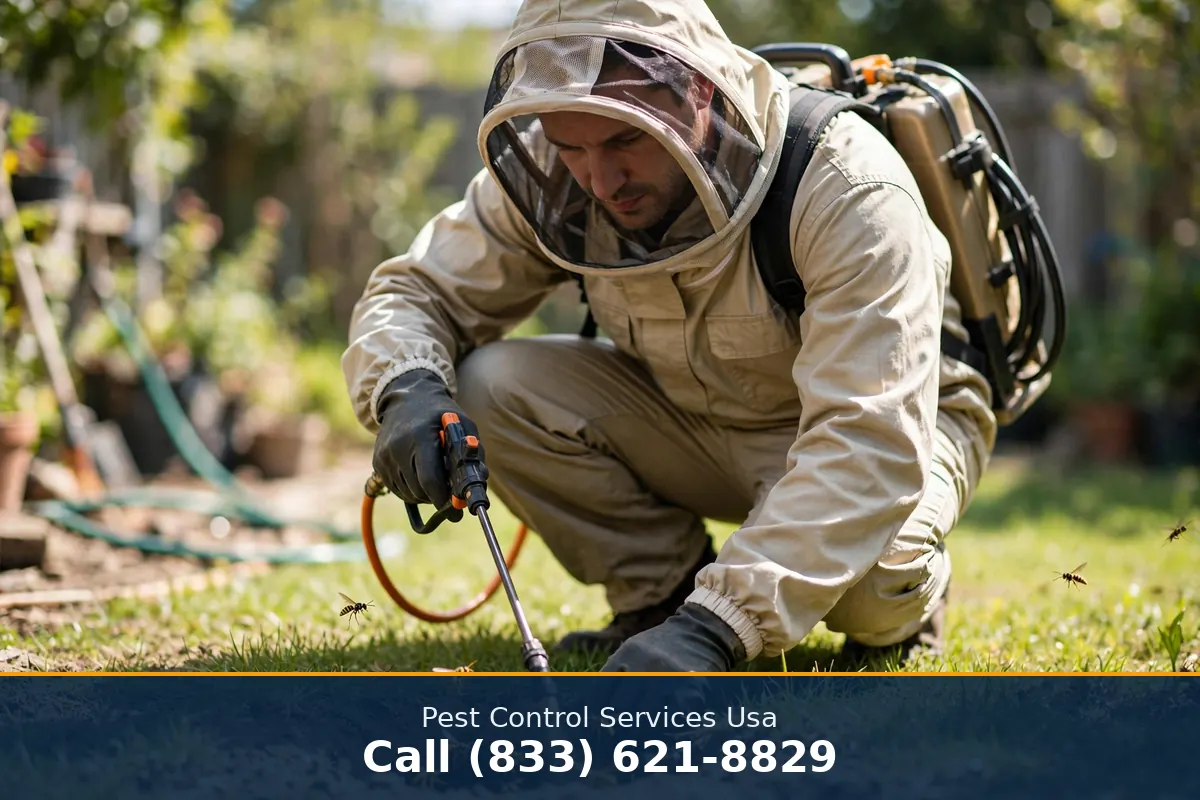
Treatment goes directly into the nest entrance with the technician in full protective gear. We use targeted dusts and foams that ride deep into the galleries and transfer between workers, collapsing the colony from the inside. We never just spray the outside of a nest, which only angers the colony and leaves the queen alive to rebuild.
After treatment comes the exclusion step, and timing matters here. Sealing the entrance too early is a classic DIY mistake: trapped wasps chew through drywall and emerge inside the house. We wait until activity has ended, then seal entry points with caulk, mesh, or repair material. Accessible nests are removed where possible, and you get guidance on reducing attractants like uncovered trash and fallen fruit.
What affects the cost
Location drives the job more than anything else. A single-entrance ground nest in an open lawn is straightforward work. A colony inside a second-story wall void, an attic, or a chimney takes more time, more material, and sometimes a return visit to confirm the colony is gone.
Colony size and timing matter too. Spring colonies are small and resolve with a single treatment; late-summer colonies with multiple entrances need heavier treatment and closer follow-up. If a nest has more than one active entrance, each one must be treated for the colony to collapse. Structural repairs to siding or drywall sit outside pest treatment, and we will tell you plainly when a nest site needs a contractor rather than more product.
The number of nests on a property also affects scope. Large properties with wooded edges sometimes host two or three colonies in one season. A full-property inspection catches the extra nests before they become the next problem.
How we serve your area
Pest Control Services Usa handles yellow jacket problems for homes, rentals, restaurants with outdoor seating, schools, and parks departments across our service areas. Ground nests along fence lines, wall-void colonies behind brick veneer, and nests under pool decks are the calls we run most. Each technician arrives prepared for stinging insects, with the protective equipment and products the job requires.
If yellow jackets are keeping you off your own patio, call (833) 621-8829. We will find the nest, eliminate the colony, and seal the entry so your outdoor season belongs to you again.
Features
- Dusk and dawn treatments when foragers are inside the nest
- Direct dust and foam application into nest entrances
- Ground nests, wall voids, and eave nests all handled
- Full protective gear on every stinging-insect visit
- Entrance exclusion sealing after colony elimination
- Attractant reduction guidance for trash, pet food, and fallen fruit
- Colony mapping that traces flight paths back to the entrance
Benefits
- Reclaim patios, decks, and play areas from aggressive foragers
- Lower sting risk for children, pets, and allergic household members
- The colony is destroyed at the nest, not just repelled
- No handling of stinging insects or chemicals yourself
- Fewer scavengers crashing cookouts and outdoor meals
- Sealed entry points keep new colonies from moving in
- Clear advice on what attracted them and how to stop a return
Frequently asked questions
How can I tell yellow jackets apart from paper wasps?
Yellow jackets are stocky, bright yellow and black, and nest in hidden enclosed sites like ground holes and wall voids. Paper wasps are slender with long dangling legs and hang open umbrella-shaped combs in the open. Yellow jackets also behave more aggressively around food and nests.
Can a yellow jacket sting more than once?
Yes. Yellow jackets have smooth stingers that do not tear off, so a single wasp can sting repeatedly. That is why disturbing a colony can mean dozens of stings in seconds. Professional treatment keeps you out of that danger.
When are yellow jackets most aggressive?
Late summer and early fall, when colonies are at their largest and natural food sources run short. That is when they turn to trash cans, picnics, and outdoor drinks. It is also when nest defense is at its fiercest.
Should I seal a nest entrance I find in my siding?
No, not before treatment. Sealing a live colony traps the workers, and they will chew through interior walls to escape. That brings the problem inside your home. Let Pest Control Services Usa eliminate the colony first, then we seal the entry.
What time of day do technicians treat nests?
Late evening or early morning, when foragers have returned to the nest. Treating at these hours means the product reaches the whole colony, including the queen. It avoids catching only the few wasps active outside.
Someone in my home is allergic to stings. What should we do?
Treat every nest near the home as a situation you do not handle yourself. Keep everyone away from the nest area, and do not disturb it. Call (833) 621-8829 so a protected technician can resolve it.
Will yellow jackets come back to the same spot next year?
Old colonies die out over winter, but new queens often scout the same sheltered sites in spring. Sealing the entry points after treatment is the best way to keep the next colony from choosing your home.